Showing posts with label Reviews. Show all posts

Tuesday, January 7, 2014

'Disney Infinity' in Progress… (Part 2)


I'm almost done with the starter pack, actually, though that's nothing considering all the toys and play sets out there. Currently, I plan on getting at least one play set before winter break ends. I'm thinking either Toy Story or Cars; the space fan in me wants the former, the race fan in me wants the latter.

Anyways, I've finished The Incredibles play set and like Monsters University, it delivers on wide variety fun. One disappointing aspect, however, was the size of Metroville. I expected something a little bigger, since Monsters University's titular setting was divided into various sections, and you could even visit rival university Fear Tech! In Metroville, there are a few bridges to other parts of the city and whatnot. Nothing really spectacular, but visually it's pulled off well.

Music-wise, it immediately plunged me back to the autumn of 2004, when the film roared into theaters. Michael Giacchino's score always stuck with me, and when I got The Incredibles video game for Christmas, I had constantly played the scenes from the film. However, I remember not particularly enjoying that game despite some great ideas in it; this game made up for it. Anyways, you tear through Metroville's streets fighting endless Omnidroids (based on the different versions we saw in the film during the sequence where Mr. Incredible discovers everything via that giant computer!) and taking down three criminals before you get to Syndrome.

A lot of it is pretty easy, much like the Monsters University play set, it could use a little more challenge. Thankfully, the metal-banging, missile-blowing thrills make up for it. The different power-ups and weapons you get? Awesome. Driving the Incredibile that's only in the opening sequence of the first film? Satisfying. You also get a copter of all things! The missions themselves involve thwarting the schemes of a bunch of criminals, one of which uses machines that turn people into monstrous giants while another one uses a sleep inducing plant to put Metroville's civilians to sleep. The only downside to defeating each? You have to do a monotonous "escort the [insert whatever here]" mission to the wagon carrying them to the supers' headquarters. Those missions were not to my liking, but the rest were good fun.

And… I will also admit… I kinda thought, "Man, an Incredibles sequel would be soooooo cool!"

If you've been here long enough, you'll know that I don't ask for sequels. When one is announced, I simply say "well, we'll see what happens" (Finding Dory, for instance) and spare the negativity. An Incredibles sequel would be lovely, but I think it should only happen if Brad Bird wants it to happen. As in "really wants". Bird, to me, seems kind of "Yeah one day, maybe" on it. Either that, or he's essentially telling fans, "It's not happening."

Anyways…


Pirates of the Caribbean, to me, is much more challenging than the other two play sets. I haven't finished it yet, but some of the missions feel a bit longer and a little more difficult this time around. Also, you're encouraged to really explore in some missions. Your range of weapons is super cool, plus the setting is the least toy-ish of the three. Lush jungles, swamp, lagoons and towns make for this play set's backdrop, and the music definitely adds to the atmosphere.

You know what else rocks about this play set? Being at the helm of a ship, of course! Fire at enemies, sail the seas, discover different areas, you could not ask for more!

This particular world is massive too, given its oceanic setting. You can sail to small little islands or pretty big shores, there's so much to explore. Racking up tons of coins never felt so satisfying either, for some reason. If there's one slight downside, it's the speed of the dinghy. You go slow, which is important for certain missions, but what if you want to row around like a madman? I have very little complaints about this play set, though some missions do tend to fall to the easy side. The side-challenges are expectedly fun and make for in-between mission enjoyment.

So after finishing up with the fort mission on Pirates, I headed over the Toy Box. Now, I had added a lot to my Toy Box world that I showed in the last review, but to my horror… There was a limit! I decided to create a new world instead, but first, I took on the Toy Box challenges.

Considering my history with building games like Zoo Tycoon and Sim City, I jumped right into building a new toy box rather than doing the tutorials or adventures. Thankfully, the adventures give you some ins and outs that are useful to know, but some of the challenges are great and you keep coming back if you didn't win a gold medal the first time.

Anyways, here's my new Toy Box world so far. This time it comes with a commentary; didn't feel the need to record one for the last video…

Wednesday, January 1, 2014

'Disney Infinity' in Progress… (Part 1)


Well folks, I got it… Yep, Disney Infinity.

Instead of doing a sort of complete review or "overall thoughts" thing, I thought I'd review it as I get through it. So far, I have completed the Monsters University adventure. I did quite a few of The Incredibles levels, and just began working on Pirates of the Caribbean. Suffice to say, I'm well enough into it.

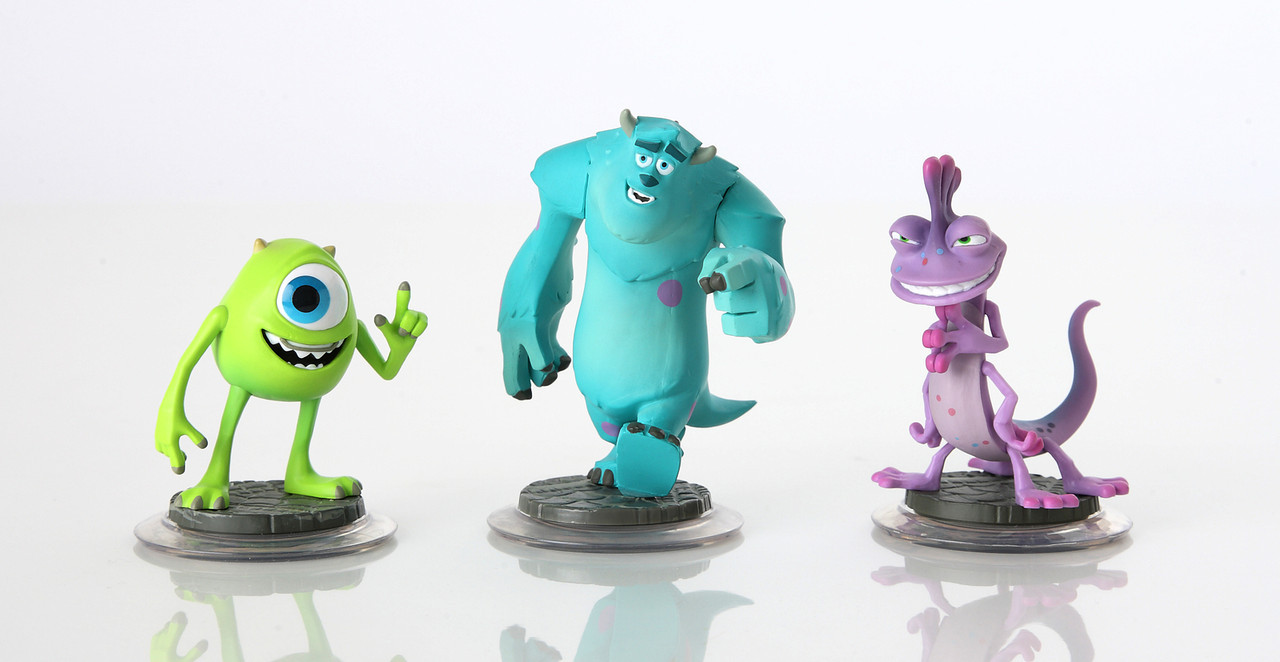
Before I get started, I got this for PlayStation 3 and of course the starter pack comes with Mr. Incredible, Sulley and Jack Sparrow. I haven't bought any other characters or play sets yet, though I plan to very soon. Right now, I'm thinking of getting Mike Wazowski, Wreck-It Ralph and Lightning McQueen.

So what do I think of it?

I love it.

When Disney Infinity was announced, I saw a lot of potential in it because it was going to bring multiple Disney characters and their worlds together. Crossovers are always fun and all, but this is actually a great opportunity for Disney to popularize some characters from their more "obscure" (or "lesser", as they would apparently think) films and shows. So far, they seem to be doing that little by little. For example, in a promo image, The Lone Ranger's Tonto is riding the goofy elephant Tantor from Tarzan. While Tarzan was a popular hit for Disney back in the day, for some reason they treat it like the rest of the post-Lion King Renaissance films. Unfair, but Disney could boost that film through this game.

In fact, Tarzan should be a play set soon given the jungle setting and tree-surfing action. It made for a solid movie-based video game back when the film came out (I had the PlayStation version), and a decade before this game was released, Disney gave us the underrated Disney Extreme Skate Adventure. Sure it was pretty much a family-friendly Tony Hawk's Pro Skater with Disney characters, but Tarzan was one of the three films they chose for settings. The other two were the Toy Story films and The Lion King. Imagine that, Disney actually giving something like Tarzan something of a popularity boost…

But enough babble about Tarzan and the way Disney treats their not-Lion King films, the point is, Disney Infinity could help popularize some of the Disney films that Disney tends to push aside. I would certainly love to see worlds or toy box items based on Treasure Planet or Atlantis, or maybe even 20,000 Leagues Under the Sea. Infinite possibilities, they say…

To start off, what I like about Disney Infinity is how open-ended it is. For the remainder of the review, I'll be focusing on the Monsters University adventure since I beat it. Next review will focus on The Incredibles…


Monsters University's adventure of course lets the player go around the campus itself, and you can also climb buildings and whatnot, getting a good look at everything. Like any good sandbox-style game, there's missions you have to take and there are also side challenges, and they're pretty damn fun! The story here is enjoyable too, basically you have to help Monsters University beat Fear Tech. Fear Tech is mentioned a few times in the film itself, though the rivalry between the two universities is ultimately minor: Sulley steals their freakish pig mascot, we see MU take them on in a football game and young Mike sees a Fear Tech graduate tell Frightening Frank McCay (the monster who Mike watched scare when he was little) monster that Fear Tech is better.

Anyways, you actually get to go to Fear Tech in this game and I must say, the designers did quite well with bringing it to life. It makes me want to see it in Pixar form, so I'm hoping the studio makes a Monsters University special or short film where we actually visit this competing campus. Will Party Central, whenever that comes out, take us there? Maybe. At Fear Tech, you have outsmart their students with pranks, get the message across that MU rules and for a grand finale… Steal Archie the Scare Pig!

In the mean time, you got to get the frat houses up, compete in a paintball tournament with Fear Tech students, undo the messes they brought to MU and many other things. It keeps you busy, and the story is surprisingly a little short. I'm hoping they expand it in some ways, because the setting alone is good-sized. Maybe we'll get more levels set in the Monster World outside of the university, maybe even Monsters, Inc. itself! One can dream, right?

The missions bring a lot of variety to the table, as they should. They test your abilities, too, from sneaking to climbing to bike riding. I admit it was pretty cool to run around roaring at things, and it's neat how you can ride across campus. (Surprised there's no skateboard for someone like Mike. That's a no-brainer, methinks!) If there's one complaint I have, it's that the missions are at times a bit too easy. I understand this is a family-friendly game, but I think it could've been a little more challenging. Some missions are just that, particularly some of the Fear Tech ones where you have to avoid the tough guy security guards. Non-mission activities such as challenges consist of timed puzzles and whatnot, making for some extra fun. You can also have a field day pranking your rivals with various objects that end up knocking the opponents across campus or something. Not to mention the ongoing search for Toy Box pieces and whatnot!

The graphics? They are impressive, and I think by making everything into toys, they were able to pull off a decidedly simplistic and cartoonish look. It's nice to look at, and of course, it's bursting with color and great art direction. The music at times can be repetitive, but what they have is a treat to the ears. Monsters University's backdrop recalls the jazzy tone of the first film's opening credits, rather than the bombastic score that Randy Newman did for the prequel. When you hit frat row, you get some rock while you get 80s synths when you visit Fear Tech (after all, Monsters University takes place in the mid-to-late 80s), other times… It's silent. This happens in Toy Box Mode too, the music just goes away for a while. But you know what? I kind of like that, a little breather and some silence, ya know?

Overall, while the Monsters University adventure was mostly a breeze in terms of the difficulty, it was undeniably fun. It was great to explore the campus, frat row and Fear Tech. The story was cool enough, and I'm hoping Pixar does some kind of special or something about MU vs. Fear Tech. I think that would be pretty cool.

As for Toy Box Mode, I'm already a huge fan.

I grew up playing games like Sim City, Rollercoaster Tycoon and Zoo Tycoon, so this is my kind of thing. Yes, I began building a world, though it is in its very early stages. I need to wait until I get even more toys and whatnot, but here it is so far… (If you are interested…)


What are your thoughts on Disney Infinity? Sound off below!

Friday, December 13, 2013

The Big No-No


Many people will say that Walt Disney Feature Animation went through something of a dark age or two at some point in time. The first dark age is usually said to be the post-Walt/pre-Second Golden Age years, roughly the late 1960s up until 1986. The second, well… Was a little more recent. The post-Renaissance era, namely an era that contained most of the films produced after Tarzan and before John Lasseter took over Walt Disney Animation Studios in 2006.

That certainly was a dark age. The early-to-mid 1970s was a period of stagnation and uncertainty, Disney made lower budget features like The Aristocats and Robin Hood, which both seemed closer to Saturday morning shenanigans than the epics of Pinocchio or Bambi, or the storytelling greatness of Cinderella or Lady and the Tramp. Both films were subpar, showing that Disney was only in it for the money at that point. The success of The Jungle Book proved to executives that - Walt or not - animated features still needed to be made and were very viable in the long run. This laziness was soon counteracted by the likes of Don Bluth and many young animators, who were hungering for the day they made their own Snow White. A transitional time, if you will… Not necessarily a dark age, because we still got a bright gem like The Rescuers out of the era along with some other impressive work. A "rough" age. At least the company's integrity wasn't completely stripped away…

Then there's the post-1999/pre-2006 era… This is when executives were given more control over Walt Disney Feature Animation, and as a result, their films began showing major weaknesses and problems. By this time, then-CEO Michael Eisner morphed Disney into a soulless corporation, steering it away from the "standard bearer of family entertainment" status. The executives did get their way during the Renaissance to some extent, as many of those films stuck to the Broadway break-out-and-sing/cute animal sidekick/epic love story/comedy formula that obviously didn't suit stories like Pocahontas or a decidedly dark novel like The Hunchback of Notre Dame, to say nothing of Greek myth Hercules or the legend of Hua Mulan. You can't just take those stories and apply the Little Mermaid template to it.

So after the formula wore thin, the plan was to now tackle new genres. Always good, right? Well, unfortunately, Disney's artists, story people and animators were merely allowed to experiment. They had to get their ideas past hordes of executives in order to get them to the boss (nowadays, they only have to present the ideas of to John Lasseter), and most of the time, their best ideas were supplanted by inferior ones. Executives having too much power over a studio is a nightmare to begin with, executives who only saw animation as kiddie stuff ruling over the animation powerhouse that is Disney is an even bigger nightmare.

Thus we got films like Atlantis: The Lost Empire, Treasure Planet, Brother Bear and this. Lilo & Stitch nearly dodged the bullet, but the very little meddling that went on behind the scenes still hurt it in some ways. The other three are films that can't be what they want to be, because the artists' ideas were outweighed by what the executives wanted. Atlantis isn't allowed to be a work of compelling storytelling, it's pretty much forced to be a summer blockbuster blow-em-up extravaganza. It isn't allowed to be a little more intense and violent despite all the action and gunfire, not to mention the really high body count. Atlantis also loses its steam completely once they get to the lost city, because the executives had the team throw out an hour's worth of material that probably would've made the film better, perhaps more fleshed out. Treasure Planet is creative as hell (I mean, c'mon, 17th century pirates-and treasure-adventure… In spaaaaaaaaaaace!), and the story isn't too bad either, but then you get the feeling that it's trying too hard to appeal to the extreme sports crowd and teenagers, much like Don Bluth's Titan A.E. Then it also tries to please kids with a constantly shouting robot side character, who could've very well been funny without acting obnoxiously. Brother Bear also has a good story with a good amount of depth, some creative sparkle and jaw-dropping art direction… But then you have Koda gabbing every second he can, belting out modern slang and toilet jokes that make the film feel like an older DreamWorks film. Were they trying to one-up the potty humor in Shrek? I think so. Imagine if Bambi was like that? *shudder*

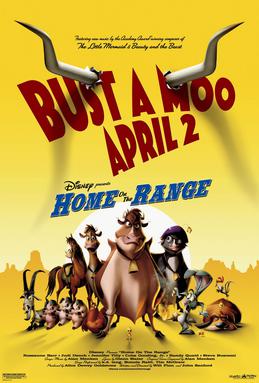
Then we get to Home On The Range…


By the time this film entered production, Disney executives had already botched so many films that could've been great and consequently ran the animation studio - one of the most important players in animation and cinema history that gave us the likes of Snow White and Pinocchio - into the ground. This film was not going to be any exception whatsoever, and this film already had a troubled history behind it. It began life as Sweating Bullets around the time Pocahontas was finished, which that film's director Mike Gabriel was set to direct alongside Pocahontas art director Mike Giaimo. The story went through multiple changes and by 2002, the two directors were off the project. Will Finn and John Sanford, first-time directors, replaced them. They had inherited a mess, and they were going to make a mess… They had to.

Sanford himself confirmed this in a 2008 interview, saying that the executives - upset with how the teen-chasing Atlantis performed - had him and Finn gear the film towards toddlers. The very audience that you should never ever aim a family-friendly film towards, especially a Disney film…

The Disney executives were essentially similar to the general public, the average joe who doesn't know much about animation or the rich history of Walt Disney's company. These people assume that anything by Disney or anything animated is for kids first and foremost, of course one of life's greatest lies.

"We don't make movies for children." - Walt Disney

Walt and other people in the animation world will tell you that making a film for everyone, not just a certain age group, is the winning option. If you make a film for kids only, it fails… Because it's only for kids. It's simple, really. Why do so many adults enjoy Disney? Why do you, the reader, enjoy something from Disney? Because it's also made for you. Then they'll say, "Yeah it's for adults, but it's really more for kids." Lies. Walt himself outright said that he made films for the whole family. He made them suitable for kids, but he really aimed the stories and heart and intellect at the adults. "Our most important audience out there are those freethinking adults". Pixar does the same, any good animation studio does the same…

The executives at Disney did not want to do this, they wanted to make kids films and Home On The Range is a perfect example of their mindlessness. Its existence is kind of a good thing, as it could be used to teach people how not to make an animated feature… Especially a big-budget Disney animated feature!

Home On The Range's biggest problem is that it's a kids-only film, not made to engage adults in any way. It's something that's more suited for a kids TV channel like Nickelodeon or Cartoon Network. Of course, talent like Will Finn and John Sanford plus all of Disney's artists wouldn't want to make a film like this for Disney Feature Animation. If it was for a kid channel or something else, they'd probably be fine with that.

What's worse is that you can see a decent, if not good movie buried under all the pap. Home On The Range, when you dig deeper, shows that it wants to be the next Emperor's New Groove. A wacky, Warner Bros.-esque Western for the entire family loaded to the brim with witty jokes, an irreverent edge and broad cartoony humor. This could've been gold, really. The Emperor's New Groove is the cult classic that it is because it not only pushes the 90s Disney formula aside, but it also has this energy to it that's irresistible and it's genuinely funny, but not without characters you care about or heart.

Home On The Range doesn't have characters that you really care about. Its story isn't terrible, nor is it any great shakes. In fact, the story is well put together and it's not really all that bad… The problem is, your plot could be as good as anything, but you need good characters to make you care about what's going on. Home On The Range's story, I'll admit, is okay. It could've been a very good story had our leads been likable characters, but the screenplay is bad. Because the film aims to be kiddie fare, the characters just aren't that interesting. Maggie is essentially Roseanne in animated (cow) form, who specializes in painful comedy routine-esque one-liners. Mrs. Calloway is the prim and proper who scoffs at Maggie's behavior. Grace on the other hand, is just kind of there to crack a one-liner, if no one else will.


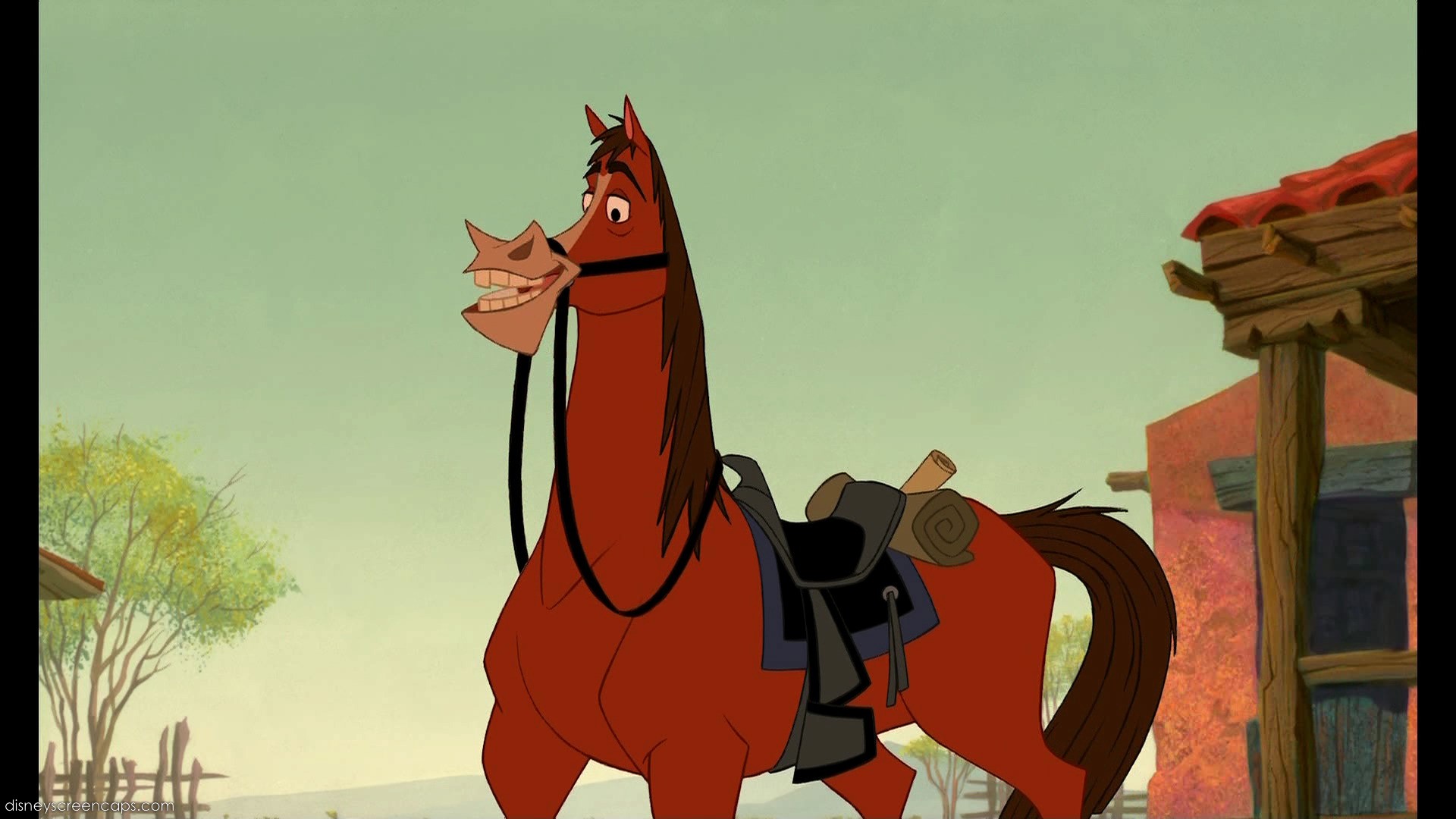
Then there's Buck, the sheriff's horse who is a fanboy of the rather cool bounty hunter Rico who also just wants to kick butt… Gee, doesn't that sound like a character created by a focus group? A horse screaming "Hi-yah!" and doing kung fu? The kids will dig him! Toys will fly off the shelves in no time! Man, how many times have we seen that character or that attitude in kid shows? Actually, to be fair, there is a pretty neat daydream sequence where the horse takes out a few gunslingers. A moment that suggests how different this film could've been.

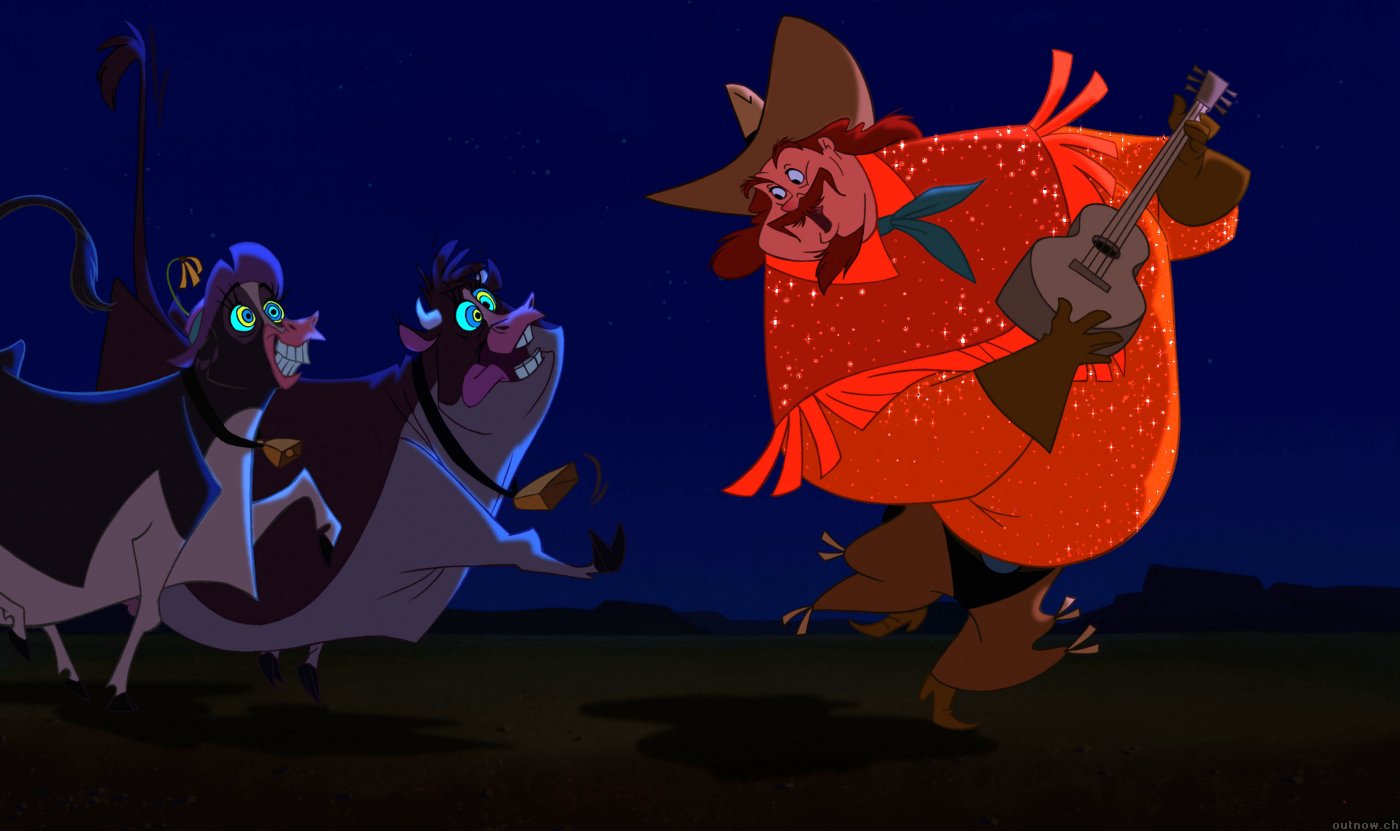
The rest of the cast is mostly forgettable. The villain, Alameda Slim, boasts an interesting character design but he's got no real depth. He's just a cattle rustler who hypnotizes cows (through yodeling!) and sells them because… Of course… Money!


His yodeling's power over cattle was a decent idea for the story, it's just too bad that the story doesn't move you! Earlier versions of this villain were actually much more interesting. In Sweating Bullets, he was a vengeful undead who lead cows to their demise by having them fall off of cliffs because he was trampled to death by them. Another version had him hypnotizing cows because he wanted to form an army of them, storm the White House and become President. Honestly, they should've went with that because the goal they ended up giving him is, in a storytelling sense, too safe. I mean, a guy wanting to become President and obtain power is too 90s Disney-ish, but it's way more interesting than just making mountains of money. ("Mine! Mine! Mine!") Plus, forming an army of cattle to take over the White House already given the fact that he can manipulate them through yodeling? C'mon, that sounds insanely awesome!


Nope, big bad guy looking to make money it is. Thus we have to worry about our bland characters possibly getting sold and eaten, because apparently Disney should be in the business of making animated movies about animals that meat-eaters eat in a comical adventure about escaping a dinner plate fate. Chicken Run you are not!

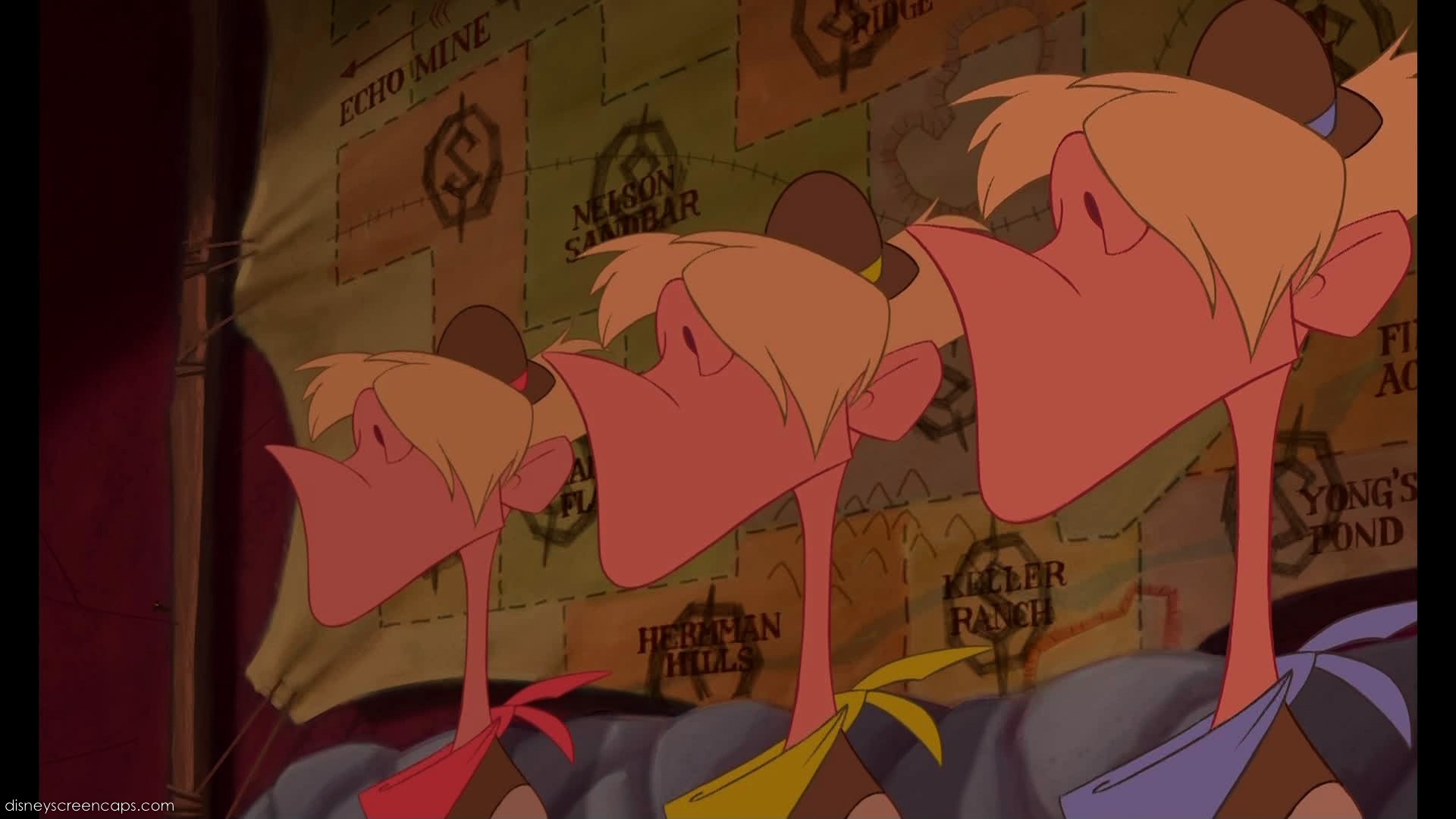
Anyways, the villain is mostly dull. Wesley, the slimy fellow who buys the cows also has a weird, interesting character design but he's only in it for like a few minutes. Rico is badass, but there's really not much to him and there is a twist that reveals he's just two-faced. The rest of the cast is either cutesy-wootsy farm animals (well, I did like the goat, that's about it) or boring human characters, such as the Patch of Heaven's owner who isn't all that developed either… In fact, she only has a few lines, too. There's also Lucky Jack, a peg-legged rabbit who could've been funny but he's not well-used either! I guess the best character in this movie was the Patrick Warburton-voiced horse who Buck tricks into running from Rico, that was actually one of the funnier bits in the movie. It's kind of telling when your film's best character is one who appears for less than a few minutes.

So with poor character work comes an equally poor screenplay. Again, the executives wanted this one to be a toddler picture, much like Brother Bear before it. While it's not loaded with unnecessary toilet humor like Brother Bear was, it's mostly a peachy-keen story with gags that just don't work. Sanford said the best jokes were cut out after the studio test screened the film for toddlers, and boy does the film validate what he said. Most of the jokes in this movie feel like a little kids show trying to be funny, sure the youngest of audiences will laugh, but everyone else? Ughhhhh…


There are some jokes that are funny that come out of nowhere, but most of the film is littered with these lame attempts at being funny alongside Roseanne's stupid one-liners. In many scenes, it feels like there's a funny joke waiting to happen, but it doesn't occur. There's this running gag, for instance, where Slim's nephew henchmen can't tell who he is when he puts on a disguise and they freak out. This could've been hilarious, but the way it's written and the way it's acted is just awkward and smacks of poor timing. The rest of the comedy is pretty much this, and then there's Roseanne's lines. Comedy club reject lines more like. I bet that "Stallion of the Ci-Moron" line was thrown in by executives, because DreamWorks - or more appropriately Jeffrey Katzenberg - wanted to stick it to Disney at the time, and Shrek did have some mean-spirited jabs at them. Having that line in there makes it look like Disney was part of the little mud-slinging match, when they could've been mature and just avoided poking at DreamWorks altogether. The script is just a really bad mix of these jokes.

The animation on the other hand is mostly solid, going for that style that New Groove went for but with a mix of the 1950s Disney style, which can be seen in the art direction of the desert, which is for the most part pretty decent. The color work, at times, is pretty impressive. After all, some of the finest of them all worked on this very film. The problem is, the character animation doesn't do much and a lot of it is rather forced. The character animation is about as interesting as the characters themselves. Everything just looks so flat and uninteresting, and when an animal does something cartoony, it just doesn't elicit any laughs. The movements just don't work. A lot of computer animation is also used. Even mere backgrounds, such as the interior of the farm owner's house during the rainstorm or just trees, rock formations even! It makes the settings look awkward, and many random objects are done in CGI as well, and they stand out a little too much. Conspicuous CGI to a tee.

It would've been nice if the film worked off of its limited budget and went for a minimalist style, which it tries to do, but all of that unnecessary CGI makes it look very cheap. Some shots of the non-CGI parts also look like something out of a Disney Television Animation show from the era. There's penny-pinching everywhere, and it's not pretty. It's just not all that great-looking, and the other big problem is that many of the character designs are way too cute. Yes, Disney has mastered the art of making such cute, appealing characters, but they were never overdone. They didn't look like things you'd see on baby toys or whatever, but in this film, the designs come a little too close to looking like that. It just makes the film look like a preschooler show, though some character designs rise above that a bit: Alameda Slim, Wesley, Rico, Lucky Jack, Jeb and Buck. It's just sad because, again, Disney's animators and artists had to make this. I feel bad that they had to…

At least it doesn't look terrible. Working within a limited budget does restrain in many ways, and like I've said, the look of it does have some positive qualities to it. An all-out minimalist style without much CGI or anything would've been just fine. After all, this is Disney Animation, so if it can't look great, it's at least going to try very hard to look great.

Limited budget you say? Well, the film was reported to have cost $110 million, but that's because the previous incarnations of the film added to the finished film's cost, which must've been somewhere around $60 million… Maybe even less. The Emperor's New Groove began life as Kingdom of the Sun - which was a radically different film from the finished product - in 1997. As it was entering physical production, it was canceled and a good $25 million had already been spent on the picture. The Emperor's New Groove itself cost $75 million, hence the $100 million budget. This is basically the same deal. Tangled, also.

This shot is beautiful...

So… Weak characters, kiddie-flick tone, poor writing, mostly underwhelming visuals… Does anything else work in this film? Well, Alan Menken's songs are actually good. They're not the most memorable, but they aren't cringeworthy either. "Patch of Heaven" is a fun, country-esque ditty, but it doesn't leave you humming. The opening song is pretty good, recalling the Disney films of the 1950s and we do get a fun chase sequence to go along with that. (Also, clever use of the Walt Disney Pictures logo at the beginning!) Alameda Slim's yodel tune tries too hard to emulate the surrealism of "Pink Elephants on Parade" and "Heffalumps and Woozles" in the visual department (it's too simple, colorful cattle really isn't enough), musically it's just okay. "Will The Sun Ever Shine Again?" is a nice, lightly somber number, but since the story gives you little to care about, it almost feels like it's all for naught. A decent soundtrack to say the least…

In fact, the score is pretty decent too, as it feels like it belongs in a big animated Disney movie for the most part. Too bad the visuals and writing don't match it. Poor Alan Menken, all that talent slapped onto this mediocrity.

That's pretty much what Home On The Range is. Mediocrity. Boring, often cringeworthy mediocrity. As a kids-only movie, it's the best it can be. If you're a kid, it's probably for you, though kids should be shown the best Disney films, the ones that don't talk down to them. Home On The Range is essentially the very definition of pandering, and it's so unfortunate because this could've been something really fun. Something bursting with energy and all-out wacky humor, again - a Wild West Emperor's New Groove! It would've been awesome! But it isn't allowed to be, all thanks to clueless executives who knew very little about animation and saw very little in it. The same executives who approved of the Disney direct-to-video sequels that also badly hurt hand-drawn animation, the Disney brand and the original films… All for a quick buck, no less! They didn't "get" animation, nor did they get Disney animation. You might as well assign someone who sees comic books as trivial kids' stuff to write a superhero film. In the process, you get something like Catwoman.

Of course, the biggest stab in the heart is the fact that this is one of the very reasons why American traditional animation was shown the door, in the very country where it blossomed from the very studio who made it blossom the way it did. I really wish that Bob Iger and all the people running Disney right now would get it through their heads that lame movies like this and terrible management were the reasons why hand-drawn films sunk at the box office, not the medium. People avoid lame computer animated films in this day and age, now that the fad has ended a long time ago. (Shark Tale would've tanked hard if released today, ditto Chicken Little.) People avoid lame animated movies, period.

People also avoid animated movies that look lame, movies that look lame as opposed to being lame. Case in point, The Princess and the Frog! Do I have to keep bringing its slipshod marketing campaign up? Do I need to keep reminding Disney of how badly they marketed this film? Do I need to remind them of the dunderheaded title change?

Get… It… Through… Your… Heads… Audiences like traditional animation! Audiences don't like BAD traditional animation!

Audiences liked The Princess and the Frog! It had very, very strong legs at the box office and fought the tidal wave that had Avatar, Sherlock Holmes and the Chipmunks sequel! Making $104 million domestically off of a weak $24 million is nothing to scoff at! It sold very well on home media! Tiana is everywhere on effing merchandise! People like the movie very much! That has nothing to do with it being hand-drawn or computer animated!

People see good movies, people see movies that look good!

Do I need to spell it out in any other way?!

*deep breath, deep breath*

Anyways, Home On The Range got mixed reviews at best, it didn't quite get the critical beating that Brother Bear kind of unfairly got. It opened low, as expected, and crept its way up to a weak $50 million domestic total and made $103 million worldwide. Now, I don't know if Michael Eisner, David Stainton and everyone else engaged in a big conspiracy to kill hand-drawn by making the films poor, marketing them badly and having them fail, but the way Disney Feature Animation was beaten to a pulp during this era makes for a painful part of Disney history. Thank goodness the madness stopped (I think a lot of people take what Lasseter and Catmull have done for the studio for granted), but hand-drawn remains something of a casualty of this era.

I wish the business people realized for one minute that Eisner's mismanagement of the company and the decision to swamp Disney Feature Animation with ignorant executives hurt hand-drawn. I wish they'd realize that poor marketing hurt films like The Princess and the Frog. I really wish they would… John Lasseter, Ed Catmull and everyone at Disney wants to bring hand-drawn back… They really do! It finds its way to theater screens via short films like Paperman and Get A Horse!, Disney's computer animation goes for a painterly style, but that really is not enough… The traditional Disney animation style should never be a thing of the past… Never…

Home On The Range was a weak film, un-Disney in many ways. Disney Animation should never pander to toddlers, never. It should never be for toddlers or kids first and foremost. Worse, in addition to the fact that it could've been good, it helped hurt a beautiful art form. A beautiful medium that Walt Disney worked so hard to bolster… The film provides an excellent lesson: Executive meddling should be kept at a minimum in animation, or better yet… It should be banished from feature animation in its entirety. Never let people who don't give a damn about animation be the heads of animation film production. That goes for other studios, too!

A debacle of epic proportions…

"Home On The Range" is in the fifth tier of my ever-changing best-to-worst Disney animated classics list. What are your thoughts on this Disney animated feature? Sound off below!

Saturday, December 7, 2013

A Little Poor… But A Lot of Fun


With the success of The Aristocats behind them, the once-groundbreaking Disney animation studio would continue to thrive. The suits realized that animation wasn't something that had to be sent packing; The Jungle Book was a record-breaking hit and The Aristocats kept the success streak going. However, The Aristocats also showed the suits that you really didn't have to set the bar too high. The Aristocats got mixed reviews upon release, but it still made money and was considered a good diversion for family audiences. The next feature would also resort to that kind of storytelling laziness.

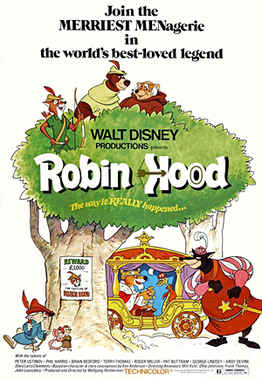
Robin Hood evolved out of many attempts to tell the story of Reynard the Fox, a character who Walt Disney deemed unsuitable for a lead heroic role. After Walt's death in 1966, production on a Robin Hood film began and the studio decided the tell the story with an all-animal cast. This film is actually a classic example of this trope, one that Disney Animation will be revisiting for the upcoming Zootopia, it was also explored by DreamWorks in their Kung Fu Panda franchise. Art director Ken Anderson went all out, coming up with several great character designs, only for them to be watered down into the kind of designs you'd find in a Saturday morning cartoon. He actually cried when he found out that his works were turned into such by-the-books designs! In addition to this, Robin Hood would turn out to be one of the most cost-efficient films in the Disney canon, and not in a good way. The studio really cut the budget this time around, and in turn... It really affects the whole production, making it a very middling effort from the studio - both visually and narratively.


Fortunately, Robin Hood boasts a very appealing cast despite the streamlined character designs. Making Robin Hood a fox was a great idea from the start, and Brian Bedford (Tommy Steele was originally considering to voice the titular character) brings out his sly trickster demeanor. He's smart as a whip and he is good at giving the bad guys a run for their money, but he's also very likable. Little John is fun, but he's really a recolored Baloo - he's also voiced by the same voice actor, Phil Harris! It doesn't help that a lot of animation from The Jungle Book is recycled in this film, it just doesn't really set the character apart from the two-bit bum bear from Walt's swan song.


Also, aside from Phil Harris, Robin Hood's cast is half-American. There's quite a few British actors in the film, but a lot of the characters have Southern accents. So is this Robin Hood: Bayou Edition? Andy Devine voices the portly badger Friar Tuck. Roger Miller and the animators transform minstrel Allan-a-Dale into a country singing-and-whistlin' rooster. Pat Buttram voices the Sheriff of Nottingham, who is portrayed as a pudgy but suitably mean-spirited wolf. (Taking a birthday present farthing from a child? Cruel.) John Fiedler voices the sexton, a borderline tough-guy mouse, probably just to have Piglet's voice in there for the sake of it being there. This side of the cast clashes with the British cast, which is all well-picked.


Peter Ustinov makes Prince John the wimpiest of Disney villains, and one of the funniest. A bratty, whiny adult child who comically sucks his thumb when his mother is mentioned, he's a delight to watch. His banter with Sir Hiss (voiced by Terry-Thomas, and he even has Thomas' teeth gap!) is also hilarious, making up for what doesn't work in the film. These two are pretty much a riot, and it's fun to see a villain who cowers when the hero is swings a sword in his direction, a nice little change of pace. Monica Evans and Carole Shelley, after voicing the two silly geese in The Aristocats, return to voice Maid Marian and Lady Kluck. Maid Marian is pretty much a bland damsel-in-distress in many ways, Lady Kluck is spunky, loud and one tough chicken. She's one of the most enjoyable characters in the film as a result.

In addition to such an American-flavored cast, the film goes a very cartoony route. Robin Hood isn't trying to be a lavish, fairly serious fairy tale like Snow White and the Seven Dwarfs or Sleeping Beauty. Instead, it's trying to be freewheeling comic fun like The Jungle Book and The Aristocats. There's lots of goofy slapstick, no real dramatic tension and lots of anachronisms. During the archery tournament fight scene, Lady Kluck takes down Prince John's rhinoceros guards like she's playing football, complete with the University of Southern California fight anthem! It's a very bizarre moment, but yet it's so strangely amusing because the film doesn't even present itself as nothing more than a giddy full-length cartoon to begin with.

If one takes Robin Hood on those terms, they could enjoy it very much. It's not really a retelling of the classic legend, but just a fun romp based on some of the tale's elements. Like many have pointed out, it's really a good extended Saturday morning cartoon episode more so than a Disney animated feature, one that bests most of the Saturday morning cartoons made in the early 1970s. As a work of cinematic storytelling, it just falls flat because it isn't really trying to be anything more than just a comical cartoon adventure…


Robin Hood is essentially The Sword in the Stone all over again, oddly enough since both of them are set in the Middle Ages and came out nearly ten years apart. Robin Hood is a compilation of sequences, episodes really. It's all strung together, feeling incomplete and also a bit incoherent. The Sword in the Stone didn't have much a plot with a goal, neither does this. Robin Hood robs from the rich and helps the poor, that's about it, really. Now looking at the different sequences, they are competently-made and well-told sequences. Very entertaining and enthralling at times, too. But where's the center? Where's the heart? It doesn't really resonate.

The first thirty minutes of the film are a complete mess, with two "day in the life" exploits of Robin Hood and Little John supplying the levity and fun. But then we also get an inconsequential sequence where young rabbit Skippy loses his arrow and goes to retrieve it with his friends, thus meeting Maid Marian and Lady Kluck. The picture takes a while to really take off, but it starts coming together thanks to a great archery tournament sequence that comes in during the halfway point. This whole sequence is well-paced, the lack of music makes it exciting and there's some great inventive stuff thrown into the mix: Robin Hood's stork disguise is fun, Sir Hiss puts his head in a balloon and flies around like a helicopter, and Robin's attempt to undo the Sheriff messing up his final shot. All good stuff right there.

Then a really action-packed chase follows when Prince John shows that Robin Hood faked everyone out, making this whole section of the film even more exciting. From here until the climax, Robin Hood begins to start clicking. In fact, it starts to get really intriguing when Robin Hood carries out his most elaborate plot ever: Get all the money back, save Friar Tuck from being hanged and break the poor out of prison. Like the archery tournament sequence, there's very little musical accompaniment and it's actually pretty suspenseful - almost like the mice and key sequence from Cinderella. After all the build-up, we get a lot of fast action and this really great escape sequence that just gets bigger and bigger... Then it's all thrown out the window.

All of it.

After Robin Hood escapes the burning castle, Prince John has his last "mommy" freakout and chases a frightened Sir Hiss. Then the scene ends, and then the next morning comes ... Alan-a-Dale tells us that King Richard returned and "straightened everything out". Originally, there was going to be a sequence where King Richard enters the castle right after Robin escapes, angered at what Prince John had done in his absence. To save money, they cut this nearly-completed sequence at the eleventh hour. This decision only showed how low Disney had sunk at the time, and it was a move that truly hurt this film in many ways. Having that would've been the perfect capper to the climax, and it would've given the film's episodic structure something an ending, and a little bit of a center that it was so lacking. The return of King Richard should've been triumphant, considering the build-up, something that would've ended that climax with a real bang.


Alas, we didn't get that thus we have to be told what happened. Fine for a kids Saturday morning cartoon, but this is a full-length animated Disney production. Might as well not show the dwarfs chase the hag to the cliffside, just have them run after her and fade to black. Saving money by recycling animation from several Disney films for the bulk of the film is one thing, but completely cutting this ending is another. There's also an earlier storyboarded alternate ending where a wounded Robin Hood escapes the castle and Prince John hunts him down, but he is stopped just in time by King Richard. (This can be seen on both the Most Wanted Edition DVD and the recently-released Blu-ray.) Was the studio that low on money that they couldn't make a roughly 2-3 minute conclusion for the film? It takes such great build-up and soils it with an anticlimax... That's not how you resolve something, especially something big!

Had Robin Hood been made at another time in the studio's history, it would've been much better. This film wonderfully captures the situation that Disney was in at the time, and many animation historians have noted the many instances of traced animation in the film. I'm personally not a fan of it, as I feel that it doesn't differentiate these films from one another. Thankfully, this "recycle animation" thing was ditched after the 1980s (save for Beauty and the Beast's inexplicable recycling of the final Sleeping Beauty dance for that film's final seconds). It was something that producer-director Wolfgang Reitherman really latched onto, among other things.

Much has also been written about the quality of Woolie's work after Walt's death and during the Ron Miller era of Disney. He was actually ousted from The Black Cauldron during early pre-production. probably because of his "touches" to these films (Phil Harris, the Southern vibe), and the young animators especially hated the disco musical number that was in his early treatment of The Fox and the Hound. But Woolie really had a love for recycling animation, others however, didn't. Animator Milt Kahl angrily declared that the animators were "garbagemen", and proceeded to say some not-so-polite stuff about what they were doing to Disney animation. Newly-recruited Don Bluth (his second time at the studio) was also not happy with the direction Disney's animation wing was going... Major changes would ensue, of course.

Robin Hood would have to be right down there with Disney's 1960 featurette Goliath II when it comes to recycling animation. So much of the film is cut-and-paste, it even recycles itself! For instance, Prince John's rhino guards marching? You'll be seeing that a ton of times in the film, along with Alan-a-Dale's walking and whistling. The credits, like The Aristocats' credits, is composed entirely of scenes from the film, but without the backgrounds so that they don't spoil anything.

Technical problems aside, Robin Hood is hurt by its lack of a good resolution to such a good climax. It also fails to resonate. Maid Marian is a bland love interest, and she's one of the only Disney heroines that I'd call a shallow damsel-in-distress. To those who complain about how Snow White and Cinderella don't pick up swords like Mulan and fight others, why not get upset over this character instead? She always needs saving, and she's not that interesting to begin with! Robin and her have a brief but pointless "romance stroll" through the woods, accompanied by the film's weakest song and perhaps one of the blandest of Disney songs... Simply titled "Love". It's weird-sounding early 70s AM pop meets strings-heavy syrup, and I never remember much of the lyrics after each viewing.


The other songs, however, are actually pretty good. Where this film lacks in story and visuals, it completely packs a punch with the songs. All fun ditties in their own right, even if the Southern country flavor doesn't particularly fit in with Merry Old England. Roger Miller's "Whistle Stop" is intoxicating, "Not in Nottingham" is fairly dour but it works (it's used where it's needed, of course). "Oo-de-lally"? Fun, hummable. I also really love "The Phony King of England", despite the scene's rampant animation recycling. At least the songs serve a purpose here, and they help bolster the cartoony exuberance of the film.

Other than that, there is not much else to say. It's economic as hell, lacking in a good story and often falls flat with too much cutesy pap (the whole "lost arrow" sequence, I didn't even like that bit as a kid) and schmaltziness. It at least has something of a decent story compared to The Aristocats, and it doesn't plod like that one. It's surprisingly more engaging, but still very weak in structure and its scope is also limited by the low costs. Nottingham Forest looks more like the Hundred-Acre Wood than the forests in The Fox and the Hound. Some of the art direction just looks basic, almost TV animation-level. I understand that they had a budget, but this decidedly more minimalist style leaves one wanting more.

Robin Hood... Is that you?

Robin Hood opened in the fall of 1973 to generally less-than-enthusiastic critical response, but it was the biggest animated film on initial release back then. It only proved to Disney management that you could be ho-hum and still turn out a hit, even in the changing animation landscape. Yellow Submarine, Ralph Bakshi's first two films and Fantastic Planet only made this and the film before it seem dull. The re-releases of Walt's greatest films also made these two films pale in comparison in many ways. Luckily, a certain someone wanted to take action and would come to dominate a good chunk of the next feature... Don Bluth.

Despite its myriad problems, Robin Hood has always had a fanbase. The charm of the characters and humor is irresistible for many, even me. With all the problems I have with it, it's still fun to watch and I do find myself enjoying a lot of it. So... A poor-but-enjoyable movie? I guess so. In 1984, it would be the first of the "moratorium" Disney animated classics to be released on home video, and the release did sell very well (according to Disney). It seems like Robin Hood got a lot of popularity on video over the decades, given that this film does appeal more to children than it does to adults than most Disney animated films. Still, its video sales never got it any Platinum status or anything of the sort. But aside from the young, the film seems to have many older fans, too. There's just something about it that calls you to it... Heck, someone like director Wes Anderson must be a fan because he used "Love" in his brilliant Fantastic Mr. Fox!

Robin Hood in the end may not be a good film, but it isn't without merit. The film doesn't really aim to be a great classic to begin with, you can get that vibe easily from the first half hour or so. The film basically had the intentions - like The Aristocats before it - to give the audience, young and old, a fun time at the cinemas. Nothing more, really. It just wanted families to come in and leave happy. It's like a rather okay local amusement park, you get a kick out of some of the rides and whatnot but let's face it, it's not Disney World or Universal or Six Flags! Does it have to be? No, not really.

Robin Hood works well when taken on terms like that, it's decent, entertaining and memorable family fare. Its problems are quite glaring, but you can still have a good time watching it. Stacking it up next to the other Disney animated classics can be a bit unfair, as it's leagues below many of them. There could've been some good tweaks made in order to make this film much more solid.

"Robin Hood" is in the fourth tier of my ever-evolving best-to-worst Disney animated classics list. What are your thoughts on this Disney animated feature? Sound off below!

Wednesday, November 27, 2013

An Ice Movie and Mickey's Return


Sorry, I could not resist that ice pun.

*Warning: The following review contains spoilers*

Walt Disney Animation Studios' latest is good, and since a certain holiday is around the corner, I can say… I'm thankful for that! I'm thankful for Walt Disney Animation Studios in general because of how good they are now that the shackles have been off since the big change in 2006. Frozen continues to show that animated films are good or great when you let the artists and creatives handle the ship, not suits, not focus groups, not consumer products people…

Frozen is classic Disney fairy tale goodness in pretty much every sense, but it doesn't fully go the Renaissance route. It doesn't reheat elements, there is no major love story where the leads share a ballad together… Oh wait, Anna and suitor Hans fall in love just moments after they have met, but the film is merely riffing on the short-term romances that tended to define some Disney classics (note: Some of the Renaissance ones where they develop a great relationship in a matter of 2-3 days, nothing wrong with those, though). I mean, she declares she wants to marry the man in a single night's worth of hanging out. Elsa writes it off, and by extension, so does the film. Kristoff hammers it in a little more… That was definitely a nice touch!

But at the same time, it does try on some Disney Renaissance-era favorites, mainly… Broadway songs! Penned by Robert and Kristen-Marie Lopez (Avenue Q, The Book of Mormon), the songs are surprisingly kind of a mixed bag. First of all, "First Time in Forever" and "Let It Go" are awesome. Definitely instant Disney classic songs right there, "Frozen Heart" also kicks things off to a nice start, but "Let's Build a Snowman" is simply good, "Love is an Open Door" is also just alright. "In Summer", I honestly did not care for. "Fixer Upper"? The one song that I actually disliked…

"Fixer Upper", to me, recalls those unnecessary goofball songs from the 90s films, mainly "A Guy Like You" and "Trashin' the Camp". The song just butts itself into the story, a scene where Kristoff needs to explain to his weird troll family that Anna is in dire need of help… But no, a silly song! Complete with lyrics about tinkling in the woods! Talk about a tonal imbalance, in fact this film had a quite a few. Something I had a problem with. Luckily, most of that jarring stuff is in the film's middle part. It is at times cringeworthy, but definitely not detrimental to the film as a whole.

Frozen's main strengths lie within the story and the characters, the story is very well-crafted but its our two leads that really make it shine. Anna and Elsa's relationship is very strong, it ends up carrying the film and producing all of the heartfelt moments. Every moment where they are onscreen together is just fantastic, Elsa is a very complex character and someone who is very scared. It's a nice change of pace, as always. I give the current Disney team props for trying new things with each story, Frozen is definitely no Tangled.


The story throws a core romance out the window, just when you think that there is going to be one, with build-up to boot! I was a little let down at one point, when it's implied that Anna's curse that Elsa accidentally gives her can only be cured by a true love's kiss. I thought to myself, "Oh no… That's kind of typical!" But no, she gets back to Arendelle only to find out that Hans is a two-faced jerk who would just let her die and would also kill Elsa so he can rule Arendelle. That's right there on the level of Wreck-It Ralph's great third act reveal. The audience reaction was also very audible. It all makes for an incredibly great third act that makes up for what I did not like in the second act.

The second act isn't bad by any means, it's just that it has a bigger dose of that overly-modern slang dialogue that I'm just not a fan of. I didn't care for it in Tangled, nor did I care for it in the 90s films. Olaf's number, "In Summer", while not terrible, doesn't really add much. There's also too many modern touches and details, this is a fairy tale setting! Also, comedy is inserted where it shouldn't be and thus it does feel cheap at times. The comic relief is handled much better in the first act and the third act. That being said, the second act does give us a few good scenes with Anna and Kristoff, a fun scene in a summer shack shop and best of all… Anna seeing Elsa for the first time since her exit from Arendelle.

Most importantly though, Frozen packs an emotional punch and has a very rock-solid story. I just wish that the screenplay's dialogue was a little better, and that the comedy and drama were balanced a lot better in the second act. When the comedy works, it really works. Most of the songs suit the film, while some are a little disposable and then there's that one I don't care for, but it's mostly a good soundtrack with a good score by Christophe Beck. The piece "Vuelie", which opens the film, immediately plunges you into the setting… They even played it over the Disney and Walt Disney Animation Studios logos instead of the typical soundtracks for those! Please do that with more films, Disney, please?

Do I even need to praise the animation? From the art direction to Elsa's powers to the character animation, it all shines. From snowy mountains to Elsa's elaborate new home to kingdoms with a Norwegian flair, it's all nice to look at, as usual for a Disney animated film. Some shots are just strikingly beautiful. Color is used to the film's advantage as well, with some striking use saved for the more dramatic moments. Also, the film's snowier color palette during the third act kicks all those teal-and-orange "gritty" live action films in their collective faces; that's how you do scenes that are a little bit on the darker side!

It ends well, with an excellent resolution to everything that had gone down in the film. Its heart is right there on the surface, and overall… It's another Disney animated classic. It has some bigger flaws, but as a whole? It's very enjoyable.

The hyperbole surrounding it, however… Well, I can't say I'm happy with that. That's another story for another post for another day, but the time is not right.

Now… To say nothing of Get A Horse!


My oh my… This is how a modern Mickey Mouse cartoon should be done! This is more than a great return for the character - he hadn't graced the silver screen in a roughly 6-minute short since 1995's Runaway Brain - it's just a blast and it does something different for a change. It begins like a Golden Age-era Mickey short, as it was an unearthed scrapped Mickey short from 1929, but then our characters go in and out of the movie theater screen. The film throws one fun inventive thing on top of the other, with the characters turning into computer animated versions of themselves when they come out of the screen!

But the best thing is, it's really funny. This is the real Mickey Mouse, not the politically correct preschool show version that's aggressively shoved down your throat. This is the old Mickey, with the energy and personality that made him so instantly likable. The cartoon was full of raucous slapstick and lots of inventiveness… It's a whole lot of fun and it's definitely worth the price of admission!

Saturday, November 16, 2013

Thor's Second Outing Offers Fun


Thor: The Dark World is a solid addition to the Marvel Cinematic Universe, one that's better structured than the first Thor, which I still loved. Thor at times tended to feel like it was a bridge to The Avengers, rather than a full-fledged Thor film with its own identity. That being said, director Kenneth Branagh had a lot to juggle with that film. The story-centric stuff works, the characters are good and the tone is handled well enough, it's just that the story does tend to hit some bumps on the road but it all ends nicely and is overall hugely entertaining.

The sequel, directed by Game of Thrones episode director Alan Taylor, fares better in the consistency department as the film does feel like a Thor film, and not an Avengers link. Asgard looks even better this time around, much more vibrant and elaborate. We saw a little bit of Svartalfheim, which looked interesting but we could've seen a little more. The designs of the Dark Elves' ships are great, Malektih's design is also very good (Christopher Eccleston nails the role). The action is better shot and much more exciting, and there are nice little twists along the way. The earthbound scenes are surprisingly delightful too, and the other human characters make a nice welcome return and supply a majority of the comic relief although it does get a little too goofy at times.

What I was also happy to see was that the color scheme was actually nice on the eyes, the trailers and posters (the marketing for this film was pretty bland and by-the-books) mostly implied that this was going to be another boring, desaturated, teal-and-orange spectacle. I especially didn't want another one of those after Man of Steel's washed out quasi-depressing color palette. Thankfully I was wrong, Asgard pops and the action shines. Asgard is a lot more inviting this time, along with other scenes. Give Marvel props for making movies that don't try to be needlessly gritty and "grounded".

Unfortunately, its first hour tends to drag a little too much and the second half is way too fast. The final battle is inconsistent, especially with the technology Jane, Darcy and Selvig are using. Selvig also comes into the picture out of left hand and not much is really done with him, which is a shame considering how good of a character he was in the first film. Even Jane feels a bit underused at times, and Malekith - despite his great menacing looks - is kind of a dull villain. He's basically an obstacle seeking to fulfill a goal that Asgardians prevented him from getting. Not bad, but I expected a little more. On the other hand, Loki steals the show and plays the usual tricks.


The only problem with this film is that it feels rushed, they didn't flesh too many of its ideas out: Thor's relationship with Odin, Loki being something of a good guy, Thor and Jane's relationship, Selvig going nuts after the events of The Avengers, even the death of Frigga. The Warriors Three were underused, too - I loved them in the first film, they made a great team with Thor during the fight with the Destroyer. It just seemed too lean and too fast, maybe it should've been a bit longer (112 minutes is surprisingly short for a Marvel film like this, 130 minutes would've sufficed) and more developed, because there are great ideas in this film. Surprisingly, not much was shown of the dark world itself…

Now the mid-credits scene is great (the credits themselves are lovely to look at), where we get a weird-but-good taste of the craziness that'll be Guardians of the Galaxy. The post-credits scene is an okay stinger, nothing too special. It's about on par with Iron Man 3's final seconds; amusing and brings a good laugh. Speaking of which, it was cool to see a Jotunheim beast appear as well! Also, Marvel Studios' new logo is neat.

If you see the film in 3D or IMAX 3D, you'll get a five-minute sneak peek of Captain America: The Winter Soldier. The trailer for this film was great to begin with, this blows it away. The piece promises us that this next Phase 2 chapter will bring intense action, a great plot and high stakes thrills. To be honest, I was really looking more forward to this than this film.

That all being said, Thor: The Dark World delivers a good dose of Asgardian action, humor and fun. It doesn't quite rock the Marvel Cinematic Universe, but it's an entertaining ride and it at least feels like its own film. Again, I would've liked a much more fleshed out film that wasn't racing its way to the pretty short finale, but it's enjoyable in its own right and a worthy addition to the growing shared cinematic universe. Recommended...

Saturday, November 9, 2013

Regrading "Monsters University"


Monsters University was perhaps a film that didn't really need to be made, or even thought up… But you could say the same about the Toy Story sequels. We often look at sequels or prequels as unnecessary, especially to things that aren't broke, Pixar's films being prime examples. Far too often, sequels only exist to cash in on the success of the original and thus don't function as good companion pieces to the originals.

There are some fine exceptions. Pixar happened to make two, Toy Story 2 and Toy Story 3…

It's also worth noting that both were films that they pretty much had to make. The former was commissioned as a direct-to-video production by the higher ups at Disney, during their DTV sequel binge. It ran into the wall, and John Lasseter and crew had to literally retool it in less than year as it went from video-only release to big budget theatrical production. It's a miracle that Toy Story 2 turned out to be as good as it was, even under such circumstances.

Toy Story 3 on the other hand started life as blackmail, Disney was going to make it along with a Monsters, Inc. and Finding Nemo sequel, and afterwards, sequels to other Pixar's films without Pixar's involvement. Pixar and Disney were close to splitting in 2004, Pixar was definitely planning to break away from the Mouse House given how the power really had gone to then-CEO Michael Eisner's head. The Circle 7 fiasco it was, but luckily Eisner resigned in late 2005 and Bob Iger took the reigns. Knowing how badly Eisner had messed up the company, he sought to get Pixar back and he did. With the studio under Disney, Toy Story 3 was redone and Pixar made the Toy Story 3 that they wanted to make. (Yes, Pixar had ideas for a third Toy Story as far back as 2002.)

But why did Pixar resume production on a third Toy Story after the acquisition took place? They had to…

Toy Story 3 and two more sequels - Monsters, Inc. 2 where Sulley and Mike get lost in the human world looking for Boo, and a Finding Nemo 2 - were far along by 2005. Scripts were prepared and copyrighted, now Pixar had to overwrite all three. This explains the sequel trio of Toy Story 3, Monsters University and Finding Dory. These films had to be made, no matter what… Plus, with such a huge empire owning Pixar, nudging did happen. Andrew Stanton himself even said this when interviewed about Finding Dory.

As for that other sequel? Disney cattle-prodded Pixar into making that one, obviously. $5 billion worth of merchandise sales speaks volumes…


A Monsters, Inc. follow-up could've gone many ways… Many, many ways. Pixar could've possibly blemished the original and its perfect ending by continuing Mike and Sulley's adventures. They also could've taken a very risky path and introduced a whole new cast for the sequel that was set in a different part of the monster world (this would've been great, if you ask me) with a story that had nothing to do with Mike and Sulley. Then there's the prequel route…

You could say it was a pretty safe bet, considering that it gave them a reason to bring Mike and Sulley back to the big screen. One upside was that they weren't going to taint that ending, the downside is that we know the outcome and we know several things. One fine example being the belief that humans are toxic is false… We'll get there!

Monsters University goes for a classic story that is simple and can easily resonate. We love Mike and Sulley in the first film, so a story of how they met makes perfect sense. We know they'll become the best of friends… But how? Why were Mike and Sulley at odd ends with each other in the past?

Mike is ambitious, Mike is a dreamer, Mike is dedicated. When he was a child on a field trip to Monsters, Inc., he followed a scarer into a kid's bedroom and watched him do his work - his fearlessness and desire to be a scarer is all laid out in the first five minutes. He wants to be a master scarer, but he's simply not scary. By contrast, Sulley comes from a long line of scarers and is scary much like his ancestry, terrifying even. He makes others around him jump, from Waternoose in the first film to the students on the first day of class. Unlike Mike, Sulley has no ambition and prefers to coast, thinking that his natural scariness will do everything. Because of this, Sulley is something of a jerk and is incredibly cocky. It's a good dynamic they build up, and it's never handled badly. The emotions and beats are all there from the minute they first meet up until the final seconds. Sulley also wants to get into the Roar Omega Roar fraternity, all the rich, respected and frightening monsters who are also jock-like. Problem is, his grades are shoddy and they don't let those kinds of students in - scary or not.


However, Monsters University's first act (roughly the first half hour) is a bit sloppy in its execution. Sure we meet the leads again, but the film didn't really give us enough time to sink into the college setting. It goes by very quick, much like the majority of Brave. Reportedly, there *was* a director change but very early on in development, Dan Scanlon apparently replaced Doug Sweetland. (Which could explain his departure from the studio in 2010, when Scanlon was announced as director.) Maybe Sweetland had a longer first act in his version that really explored Monsters University itself and even injected more college elements into the script.

I'm not saying the first act is weak, it just feels like it goes by a little too fast. I didn't quite get all of the college atmosphere, we zip through multiple things from orientation to a brief scene showing the rivalry between the titular university and rival Fear Tech. How about more scenes of Mike and Sulley on campus? Once class begins, we get very little between the first day and the exam. It's true that a good story is lean, and it cuts all of the superfluous stuff… But I think this portion of Monsters University is perhaps a little too lean. Not that it greatly derails it the film, more content just would've added to it and made for an excellent, near-perfect film. I think a longer running time would've been fine, it does inch past the 100-minute mark. Perhaps it should have been somewhere closer to two hours long.

What works in our first act? The characters all get proper introductions, especially Dean Hardscrabble. At least in rushed form, Pixar's crew can still develop characters and bring them into the picture suitably. Mike's dream and his rivalry with Sulley is also very well set up, especially during the thankfully quiet first act's capper where the two inadvertently get themselves shut out of the scare program.

Monsters University begins to click once the second act slowly rolls in, slowly being the key word. The film now takes its time a bit, and it brings out the Oozma Kappa fraternity. This rather ho-hum bunch of non-frightening scarers is socially unsafe to be a part of, but the members are welcoming and mean well. Their disadvantages and how they are perceived do launch the film into Revenge of the Nerds territory, as many have criticized the film for being that film and Animal House rather than a fresh new take on those stories. I felt that they took on the tried-and-true quiet well, much like how they did the story that was told over and over before Cars, or A Bug's Life's new spin on The Magnificent Seven.

Anyways, the Oozma Kappa members are all very likable and brimming with personality. Art would have to be one of my favorites, being the most enigmatic ("I can't go back to jail!") and certainly the weirdest of the bunch. The animators have loads of fun with this character because of what he can do, one of my favorite bits being when he makes himself into a fuzzy purple ring to avoid the fierce and monstrous librarian. Terri and Terry make for a fun two-headed monster with different personalities, Scott "Squishy" Squibbles is fun too - his method of scaring caught me by surprise. (Just staring? You got to admit, that's cool!) Don Carlton boasts a mishmash design (plump body, tentacles and bat beard) but a cool mature student demeanor - of course you have to a student his age in this story! Another fun gag is the fact that Squibbles lives with his mother, who is constantly embarrassing him - she makes for some very funny jokes.

For me, the best new characters would have to be them and Dean Hardscrabble. I love how she's intimidating without actually raising her voice or trying to frighten someone, particularly in the sequence where Mike and Sulley destroy her souvenir of a once-in-a-lifetime record-breaking scare. ("You're taking this remarkably well…") She could snap, but she doesn't. She's authoritative in a quiet but effective way, and she cuts you to the quick. When she tells Mike that he's simply not scary, it's quite a punch in the gut. She's stoic, but not without a personality. Other new additions such as Professor Knight and the two Greek council members are also fun and add to the atmosphere.


The Scare Games sequences make up for it if you ask me. They are inventive, fun and thrilling. The game concerning a roughly 50-foot gargantuan librarian makes for an incredibly fun sequence, the toxicity challenge also brings out the laughs and crazy distortions of the characters' designs. A visit to Monsters, Inc. itself is also a nice, slow and uplifting moment where we see Mike and Sulley starting to bond - then they begin to prepare themselves for the last couple of challenges, despite the odds. (i.e. the ROR members humiliating them and the other OK members by pulling a Carrie-esque plan on them.) The writers do a fine job with developing the Oozma Kappa characters and having their abilities under Mike's stewardship surprise everyone around them and us. Who would've thought they were good and impressed Dean Hardscrabble during the finale of the Scare Games? Meanwhile, the unfortunate reality still looms… Mike is not scary.

It's this reality that strengthens everything around what's going on, as we have a feeling that Mike will get the rug pulled out from under him in a very upsetting way. Since it is a prequel, we do know that he's not going to be a scarer, but it's done well because the emotional punch is expectedly strong. This is all thanks to great build-up, Mike's spirits are raised very high. The other Oozmas doing pretty well in the games also adds to it greatly; a lot is riding on Mike for his scare… And then we find out that Sulley rigged the scare simulator for Mike's turn. Mike is hit with a double-whammy of disappointment; finding out that he's not fearsome and that his friend did not really believe in him. Ouch…

This sets up a brilliant third act, which really rockets the film into high gear. Though no one would be afraid of Mike, the cyclops is fearless. He breaks into the door lab and attempts to scare an actual human child, only to realize that he has failed once again and he's now stuck in a cabin in a camp full of kids. The Dean, of course, won't reactivate the door until the CDA shows up. (Nice to see them return for a brief sequence! Plus, a nice Roz cameo!)

Sulley then goes after his friend that he let down, and the two have a brief, quiet and heartwarming conversation. Here, the master scarer reveals how frightened he is deep down inside and how he has a lot to live up to being a Sullivan. But then they find themselves on the run once again…


In fact, this entire third act could've been something of a disaster because we all know that human beings aren't toxic to these monsters, which would greatly lower the stakes. If it was Mike versus one child, then it would be a major letdown because we know he isn't in grave danger, nor is the monster world as a whole. Having him get into a camp full of kids who don't find him to be frightening at all makes things more interesting, plus adults aren't supposed to know of the monsters or the monster world. Add the police getting involved, Pixar successfully raised the stakes. Big time.

Not only are Mike and Sulley in jeopardy, but the monster world could be as well. Pixar pulls a Toy Story on us, having Mike and Sulley work together to scare the adults so that they could power the door themselves - again, all Mike's brilliant idea - and literally get out of the mess. Consequently, they scarred a bunch of human world police officers for life… But they could've made off like Sid, because Toy Story 3 shows that he's apparently A-OK as a garbageman, who seemingly isn't freaking about toys coming to life or telling people about what he experienced without getting the stamp of insanity thrown at him.


Mike's scheme does the impossible (and no, not saving him and Sulley), it impresses the Dean. Unfortunately, Mike and Sulley are expelled because they broke the rules. The seemingly cold Dean bids them a friendly goodbye and wishes them the best of luck; Mike and Sulley restart their adult life in Monsters, Inc.'s mailing room and… Well… You know the rest.

Monsters University's ultimate message was the subject of praise, one of the elements that a lot of its more critical observers had approved of. Like Disney Animation's Wreck-It Ralph before it, it slams the door on the "you can do it if you dream it" mentality that is applied to family films and kids-only films. (Planes and Turbo being good, recent examples.) Mike is repeatedly told that he can't be what he wants to be, regardless of his sheer dedication… And guess what? He doesn't become a scarer!

But what makes Monsters University's ending even better than it is is that Mike ended up succeeding elsewhere, greatly. Mike finds a forte in making children laugh at the end of Monsters, Inc., because laugh is much more powerful than scream - thus effectively ending a crisis and finding out something along with his good friend that no one else in the monster world from elites to scarers did not even know or had the guts to find out about. Monsters University's ending completes Monsters, Inc.

I will say it again… Monsters University's ending completes Monsters, Inc., a film that was already complete… And it does it with a bang, with a strong message to boot that's never hammered onto the audience.

That being said, it's not a high work of excellence like Pixar's best, and that's not a bad thing. Like I've stressed millions of times over, Pixar can't just make masterpiece after masterpiece.

Like I said earlier, Monsters University's first act is too quick and thus it doesn't really immerse one into the college setting. Much more could've been done with the campus itself since it's so massive and sprawling; the first film really set up the factory and the monster world as a whole and didn't rush. This one rushes a bit, and you can't rush art as a fictional chess player-turned-toy cleaner once said fourteen years ago. In fact, the Blu-ray contains a tour of the university… Some of the buildings I didn't even really see or notice in the film!

Since the first act doesn't really give us the full MU experience, the film feels a bit safe. There's nothing wrong with Pixar going for something conventional or a little safe once in a blue moon (not everything has to be some extravaganza), but I think they could've gone a little more "all out" with the college setting and the monster world in general, but what they do here is alright. More college-related shenanigans would've brought some PG humor to the table too. Not saying that the film needs PG or adult-level humor to be good or mature, it's just that given this film's college setting, it would've been nice to see some of that on display.

Early versions of the film had Mike meeting Sulley briefly in the fourth grade (expanding on that line from the original, before Scanlon essentially said that Mike was exaggerating) before moving, which would've been interesting as well, but that kind of slowed the beginning down a bit. There was also an interesting deleted scene showing flying insect-like monsters going into rooms and getting information on the children that the monsters scare (i.e. what they fear), which explained a few things in the first film and this film as well. Why did they cut that scene? They should've kept it! I'm sure there are other scenes like that where you saw more of the campus and MU's campus life.

Other than the first act, Monsters University has everything else down pat. It may not have all of the inventiveness or cohesiveness of the original, but it's a very worthy follow-up. Its heart is there, it's just not as potent as the other Pixar films. It's a more quiet, subdued emotional badge than anything, one that doesn't make for too many misty-eyed moments, but it does draw reaction from time to time. There's no center like Boo, but the film isn't weak without something like that. Monsters, Inc. was mostly about Sullivan to begin with, this is about Mike and his story arc is the glue that holds most of this together.

The new faces are welcome, too. All of them are fun, funny and well-developed over the course of the second act. Many found fault with the way they handled Randall, but I personally felt that he was handled well enough. Randall was nothing more than a bitter rival at the beginning of Monsters, Inc. before he became diabolical, so simply having him start off as Wazoswki's friend then shedding his geeky sheen in order to be in the "in" crowd to being an actual jerk to getting a deserved comeuppance from Sulley was all good to me. Again, if the first act had been longer, Randall could've gotten more screen time and a little more development. Even though Sulley was the one who ruined his big scare, he was a jerk to Mike… Hence why he is bitter towards both in Monsters, Inc. I was okay with how they used Randall in this film.

Monsters University succeeds on a technical level, being the first Pixar film done using the Global Illumination lighting system. This, to me, took computer animation to a new height. I'm often skeptical of photo-realism in computer animation, as I think that having a film look too real defeats of the purpose of telling a story in the animation medium. Gore Verbinski's Rango was also hyper-realistic, but yet you still knew you were watching an animated film and it didn't feel like it was shot with real cameras; initially some shots threw me off - I was thinking, "Okay… That's a little too realistic!"

Pixar once faced that problem over a decade ago when starting work on Finding Nemo, their initial water renderings were way too realistic and that it had to be toned down to where it felt real but you knew it was a work of art you were looking at. It's why I'm not fond of things like performance capture being used for everything in certain animated films (The Polar Express or other Zemeckis mo-cap films) or animation that tries to be realistic. Might as well make a painting that's essentially a painted photograph. Walt Disney found the right blend of realism and naturalism in his films, of course when we watch something like Bambi or Lady and the Tramp, we know it's an animated movie, but… We feel and connect with those drawings and paintings. In computer animated films, we feel for what is essentially something created on a machine. The power of animation at its finest!

Monsters University is very real-looking, but it never feels like a live action film or something that's actually happening on a set; it's not supposed to of course… But the realism is staggering, jaw-dropping even. This was also pushed in the accompanying short film, The Blue Umbrella, a masterwork of visual artistry that only suffers from having a simplistic storyline. That film has shots that look a little too real. But there are some standout shots in Monsters University, Mike and Sulley at the campsite lake is one, some of the full shots of the university are also amazing. Again, I don't feel like I'm looking at a photograph when I pause it.

Fortunately, this system's look isn't trying to make something look as if it were actual. It's just a leap for computer animation in general, it hits the right spot between photorealism and naturalism. You could say Pixar found what Walt had found back in the 1940s and 1950s with his films. Visually, Monsters University is like their Lady and the Tramp. Now it makes me even more excited for their future films… Inside Out, The Good Dinosaur and Finding Dory in particular are going to look stunning in many new ways that Pixar has not stunned before.

Meanwhile, Walt Disney Animation Studios is taking computer animation in a different direction. They seek to continue improving the painterly look that was first introduced in Bolt and is currently being used in their computer animated films, and though it has recently been said that Paperman's tech is not quite ready to carry a feature-length film (Moana will be an extension of the painterly CGI that Disney uses), it will be one day and we'll see where Disney brings CGI. Both studios are differentiating their films in the visual department, and from the competition as well. That's good…

As long as Pixar doesn't make what is essentially an animated live action film, I'll be fine. Monsters University isn't anything of the sort, The Blue Umbrella almost is. Other than the realistic coating, Monsters University is pure eye candy like every other Pixar film: Clever architecture, monster world variations of real world things, the character design, Dice Tsutsumi's extraordinary color work… Peerless. Randy Newman's score? It's typical Newman at times, but at other times its appropriately bombastic and energetic. A very good score with hummable parts, that's for sure. The cast also gives it their all, typical for Pixar films. They find the right people, and that talent immerses themselves into the story.

Monsters University doesn't quite sit on the top peak that the best Pixar films occupy, but it's on one that's just a few feet lower. Storytelling and character development win the day here, as Pixar proves, story is king. I know some would rather prefer experimentation and just going for quirkiness, feeling that story restrains too much... But experimenting only gets you so far. Monsters University is not bland, but it isn't anything new since we're revisiting a world that we once had the opportunity to take a trip to. This isn't WALL-E or Up, and it does not have to be. It wasn't trying to be weird or different or unexpected to begin with, so why knock it for not "scaling the heights" of the other Pixar films? A Bug's Life is no WALL-E, and I still think it's an excellent film.

The new saw amongst some is now that story is overrated and whatnot, meanwhile they go praise something like The Croods while knocking this film. The Croods might've been all-out wacky and at times weird, but where was the story? Where was the core? All I saw was a bland tale with bland stereotype characters taking a backseat to constant sight gags and noise, thus I found it forgettable. Story is king, methinks. Many filmmakers would tell you so, story and characters… I think Monsters University nails it in those departments.

It's great to see the new generation at Pixar finally going through with a film they can call their own, though it does have the first generation's stamp. While John Lasseter, Pete Docter, Andrew Stanton and all of them certainly aren't Nine "Old Men", they are passing the baton to younger Pixarians who are hungry for challenges and ambition. A more simple tale like this was the perfect place for them to start, as it seems like Pixar is now comfortable with letting new people take shots at directing films. Hopefully the recent director change (Bob Peterson with The Good Dinosaur) is the last one for a long while…

For me, Monsters University was more than a fun little companion piece to Monsters, Inc. It's a well-made and strong effort, with a fine mix of Pixar's brand of heart, humor and thrills. It adds to the monster world quite a bit and it does expand on our characters in a great way...