Showing posts with label Disney Animated Classics. Show all posts

Friday, December 13, 2013

The Big No-No


Many people will say that Walt Disney Feature Animation went through something of a dark age or two at some point in time. The first dark age is usually said to be the post-Walt/pre-Second Golden Age years, roughly the late 1960s up until 1986. The second, well… Was a little more recent. The post-Renaissance era, namely an era that contained most of the films produced after Tarzan and before John Lasseter took over Walt Disney Animation Studios in 2006.

That certainly was a dark age. The early-to-mid 1970s was a period of stagnation and uncertainty, Disney made lower budget features like The Aristocats and Robin Hood, which both seemed closer to Saturday morning shenanigans than the epics of Pinocchio or Bambi, or the storytelling greatness of Cinderella or Lady and the Tramp. Both films were subpar, showing that Disney was only in it for the money at that point. The success of The Jungle Book proved to executives that - Walt or not - animated features still needed to be made and were very viable in the long run. This laziness was soon counteracted by the likes of Don Bluth and many young animators, who were hungering for the day they made their own Snow White. A transitional time, if you will… Not necessarily a dark age, because we still got a bright gem like The Rescuers out of the era along with some other impressive work. A "rough" age. At least the company's integrity wasn't completely stripped away…

Then there's the post-1999/pre-2006 era… This is when executives were given more control over Walt Disney Feature Animation, and as a result, their films began showing major weaknesses and problems. By this time, then-CEO Michael Eisner morphed Disney into a soulless corporation, steering it away from the "standard bearer of family entertainment" status. The executives did get their way during the Renaissance to some extent, as many of those films stuck to the Broadway break-out-and-sing/cute animal sidekick/epic love story/comedy formula that obviously didn't suit stories like Pocahontas or a decidedly dark novel like The Hunchback of Notre Dame, to say nothing of Greek myth Hercules or the legend of Hua Mulan. You can't just take those stories and apply the Little Mermaid template to it.

So after the formula wore thin, the plan was to now tackle new genres. Always good, right? Well, unfortunately, Disney's artists, story people and animators were merely allowed to experiment. They had to get their ideas past hordes of executives in order to get them to the boss (nowadays, they only have to present the ideas of to John Lasseter), and most of the time, their best ideas were supplanted by inferior ones. Executives having too much power over a studio is a nightmare to begin with, executives who only saw animation as kiddie stuff ruling over the animation powerhouse that is Disney is an even bigger nightmare.

Thus we got films like Atlantis: The Lost Empire, Treasure Planet, Brother Bear and this. Lilo & Stitch nearly dodged the bullet, but the very little meddling that went on behind the scenes still hurt it in some ways. The other three are films that can't be what they want to be, because the artists' ideas were outweighed by what the executives wanted. Atlantis isn't allowed to be a work of compelling storytelling, it's pretty much forced to be a summer blockbuster blow-em-up extravaganza. It isn't allowed to be a little more intense and violent despite all the action and gunfire, not to mention the really high body count. Atlantis also loses its steam completely once they get to the lost city, because the executives had the team throw out an hour's worth of material that probably would've made the film better, perhaps more fleshed out. Treasure Planet is creative as hell (I mean, c'mon, 17th century pirates-and treasure-adventure… In spaaaaaaaaaaace!), and the story isn't too bad either, but then you get the feeling that it's trying too hard to appeal to the extreme sports crowd and teenagers, much like Don Bluth's Titan A.E. Then it also tries to please kids with a constantly shouting robot side character, who could've very well been funny without acting obnoxiously. Brother Bear also has a good story with a good amount of depth, some creative sparkle and jaw-dropping art direction… But then you have Koda gabbing every second he can, belting out modern slang and toilet jokes that make the film feel like an older DreamWorks film. Were they trying to one-up the potty humor in Shrek? I think so. Imagine if Bambi was like that? *shudder*

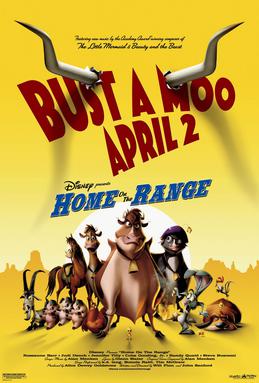
Then we get to Home On The Range


By the time this film entered production, Disney executives had already botched so many films that could've been great and consequently ran the animation studio - one of the most important players in animation and cinema history that gave us the likes of Snow White and Pinocchio - into the ground. This film was not going to be any exception whatsoever, and this film already had a troubled history behind it. It began life as Sweating Bullets around the time Pocahontas was finished, which that film's director Mike Gabriel was set to direct alongside Pocahontas art director Mike Giaimo. The story went through multiple changes and by 2002, the two directors were off the project. Will Finn and John Sanford, first-time directors, replaced them. They had inherited a mess, and they were going to make a mess… They had to.

Sanford himself confirmed this in a 2008 interview, saying that the executives - upset with how the teen-chasing Atlantis performed - had him and Finn gear the film towards toddlers. The very audience that you should never ever aim a family-friendly film towards, especially a Disney film…

The Disney executives were essentially similar to the general public, the average joe who doesn't know much about animation or the rich history of Walt Disney's company. These people assume that anything by Disney or anything animated is for kids first and foremost, of course one of life's greatest lies.

"We don't make movies for children." - Walt Disney

Walt and other people in the animation world will tell you that making a film for everyone, not just a certain age group, is the winning option. If you make a film for kids only, it fails… Because it's only for kids. It's simple, really. Why do so many adults enjoy Disney? Why do you, the reader, enjoy something from Disney? Because it's also made for you. Then they'll say, "Yeah it's for adults, but it's really more for kids." Lies. Walt himself outright said that he made films for the whole family. He made them suitable for kids, but he really aimed the stories and heart and intellect at the adults. "Our most important audience out there are those freethinking adults". Pixar does the same, any good animation studio does the same…

The executives at Disney did not want to do this, they wanted to make kids films and Home On The Range is a perfect example of their mindlessness. Its existence is kind of a good thing, as it could be used to teach people how not to make an animated feature… Especially a big-budget Disney animated feature!

Home On The Range's biggest problem is that it's a kids-only film, not made to engage adults in any way. It's something that's more suited for a kids TV channel like Nickelodeon or Cartoon Network. Of course, talent like Will Finn and John Sanford plus all of Disney's artists wouldn't want to make a film like this for Disney Feature Animation. If it was for a kid channel or something else, they'd probably be fine with that.

What's worse is that you can see a decent, if not good movie buried under all the pap. Home On The Range, when you dig deeper, shows that it wants to be the next Emperor's New Groove. A wacky, Warner Bros.-esque Western for the entire family loaded to the brim with witty jokes, an irreverent edge and broad cartoony humor. This could've been gold, really. The Emperor's New Groove is the cult classic that it is because it not only pushes the 90s Disney formula aside, but it also has this energy to it that's irresistible and it's genuinely funny, but not without characters you care about or heart.

Home On The Range doesn't have characters that you really care about. Its story isn't terrible, nor is it any great shakes. In fact, the story is well put together and it's not really all that bad… The problem is, your plot could be as good as anything, but you need good characters to make you care about what's going on. Home On The Range's story, I'll admit, is okay. It could've been a very good story had our leads been likable characters, but the screenplay is bad. Because the film aims to be kiddie fare, the characters just aren't that interesting. Maggie is essentially Roseanne in animated (cow) form, who specializes in painful comedy routine-esque one-liners. Mrs. Calloway is the prim and proper who scoffs at Maggie's behavior. Grace on the other hand, is just kind of there to crack a one-liner, if no one else will.
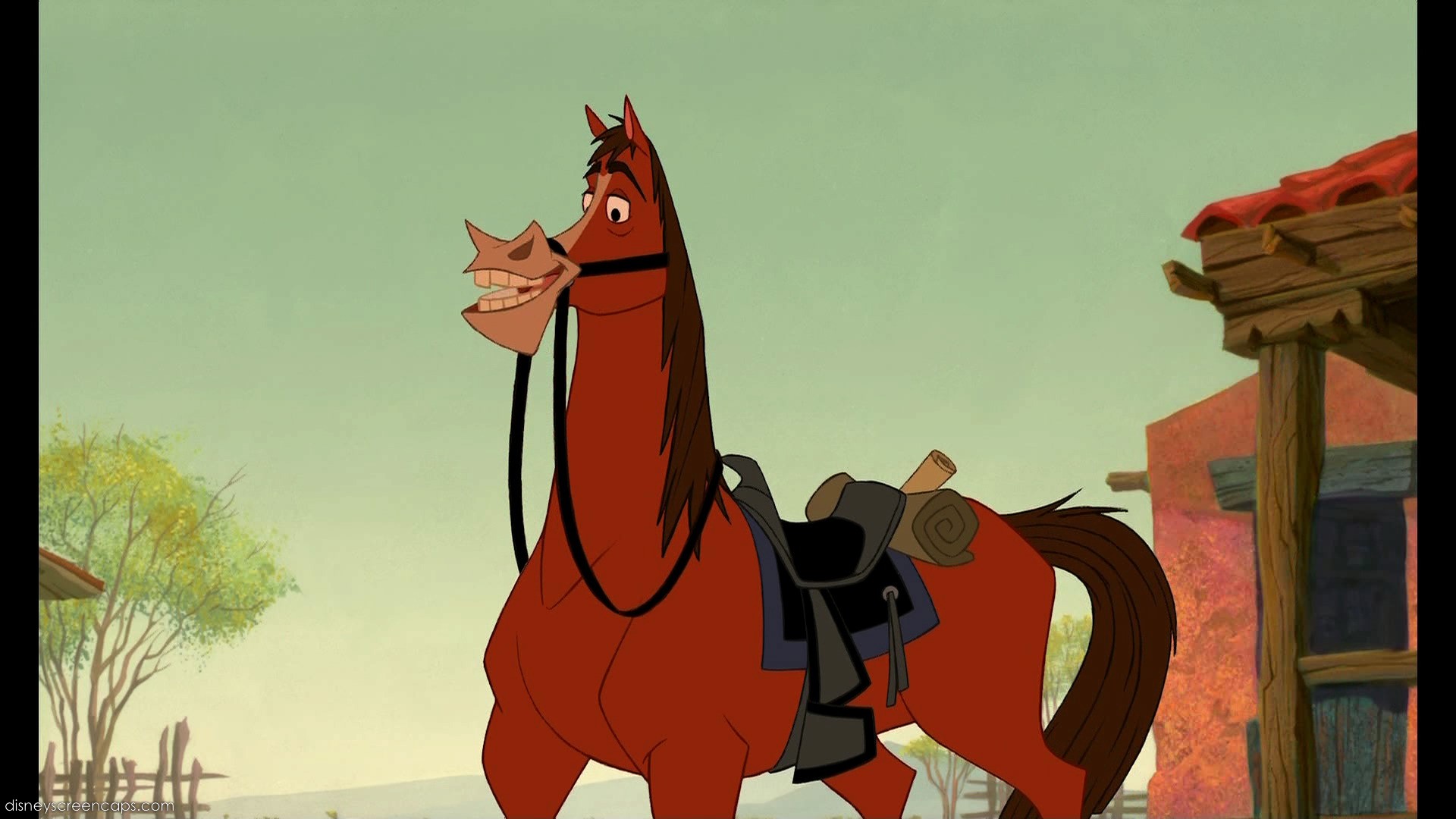

Then there's Buck, the sheriff's horse who is a fanboy of the rather cool bounty hunter Rico who also just wants to kick butt… Gee, doesn't that sound like a character created by a focus group? A horse screaming "Hi-yah!" and doing kung fu? The kids will dig him! Toys will fly off the shelves in no time! Man, how many times have we seen that character or that attitude in kid shows? Actually, to be fair, there is a pretty neat daydream sequence where the horse takes out a few gunslingers. A moment that suggests how different this film could've been.

The rest of the cast is mostly forgettable. The villain, Alameda Slim, boasts an interesting character design but he's got no real depth. He's just a cattle rustler who hypnotizes cows (through yodeling!) and sells them because… Of course… Money!


His yodeling's power over cattle was a decent idea for the story, it's just too bad that the story doesn't move you! Earlier versions of this villain were actually much more interesting. In Sweating Bullets, he was a vengeful undead who lead cows to their demise by having them fall off of cliffs because he was trampled to death by them. Another version had him hypnotizing cows because he wanted to form an army of them, storm the White House and become President. Honestly, they should've went with that because the goal they ended up giving him is, in a storytelling sense, too safe. I mean, a guy wanting to become President and obtain power is too 90s Disney-ish, but it's way more interesting than just making mountains of money. ("Mine! Mine! Mine!") Plus, forming an army of cattle to take over the White House already given the fact that he can manipulate them through yodeling? C'mon, that sounds insanely awesome!
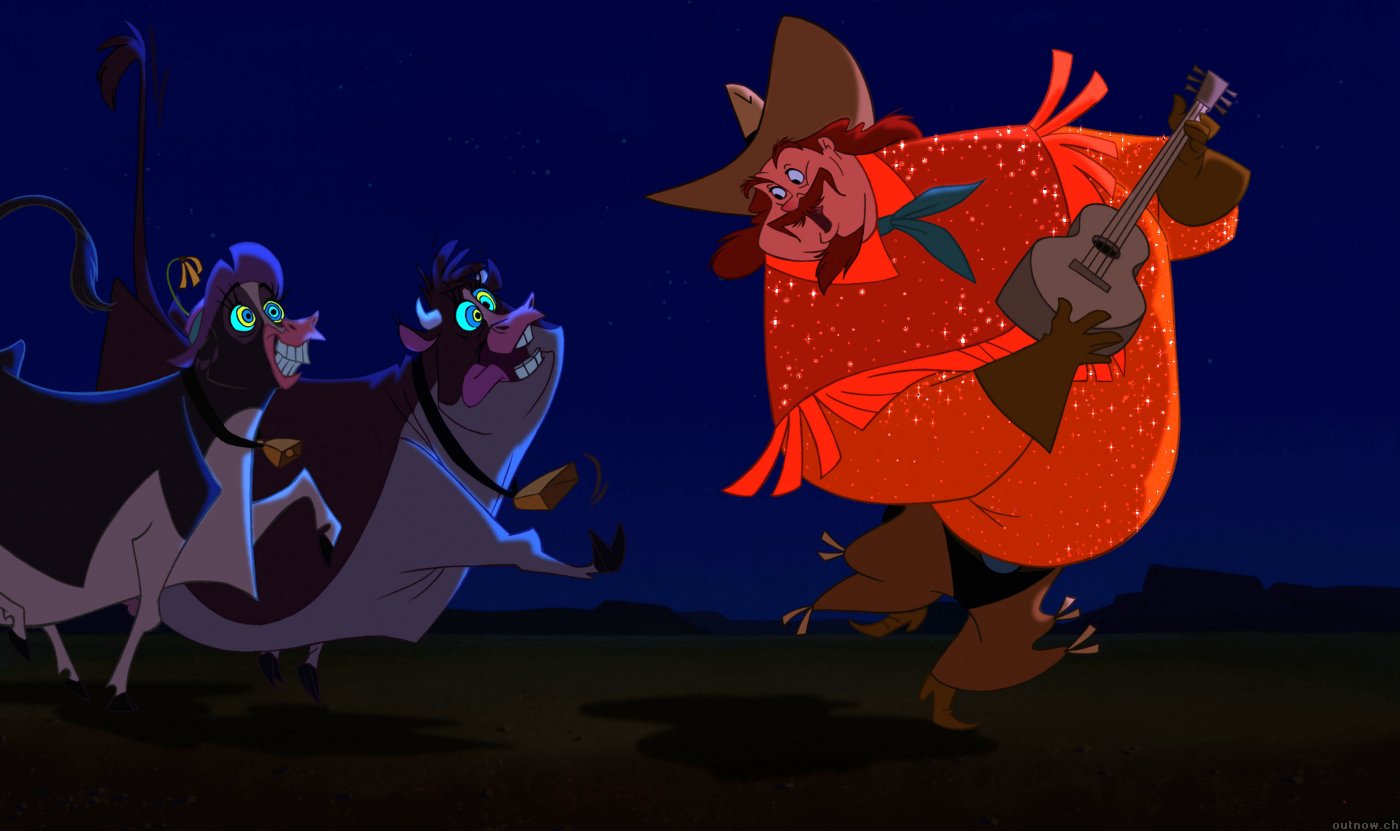

Nope, big bad guy looking to make money it is. Thus we have to worry about our bland characters possibly getting sold and eaten, because apparently Disney should be in the business of making animated movies about animals that meat-eaters eat in a comical adventure about escaping a dinner plate fate. Chicken Run you are not!

Anyways, the villain is mostly dull. Wesley, the slimy fellow who buys the cows also has a weird, interesting character design but he's only in it for like a few minutes. Rico is badass, but there's really not much to him and there is a twist that reveals he's just two-faced. The rest of the cast is either cutesy-wootsy farm animals (well, I did like the goat, that's about it) or boring human characters, such as the Patch of Heaven's owner who isn't all that developed either… In fact, she only has a few lines, too. There's also Lucky Jack, a peg-legged rabbit who could've been funny but he's not well-used either! I guess the best character in this movie was the Patrick Warburton-voiced horse who Buck tricks into running from Rico, that was actually one of the funnier bits in the movie. It's kind of telling when your film's best character is one who appears for less than a few minutes.

So with poor character work comes an equally poor screenplay. Again, the executives wanted this one to be a toddler picture, much like Brother Bear before it. While it's not loaded with unnecessary toilet humor like Brother Bear was, it's mostly a peachy-keen story with gags that just don't work. Sanford said the best jokes were cut out after the studio test screened the film for toddlers, and boy does the film validate what he said. Most of the jokes in this movie feel like a little kids show trying to be funny, sure the youngest of audiences will laugh, but everyone else? Ughhhhh…
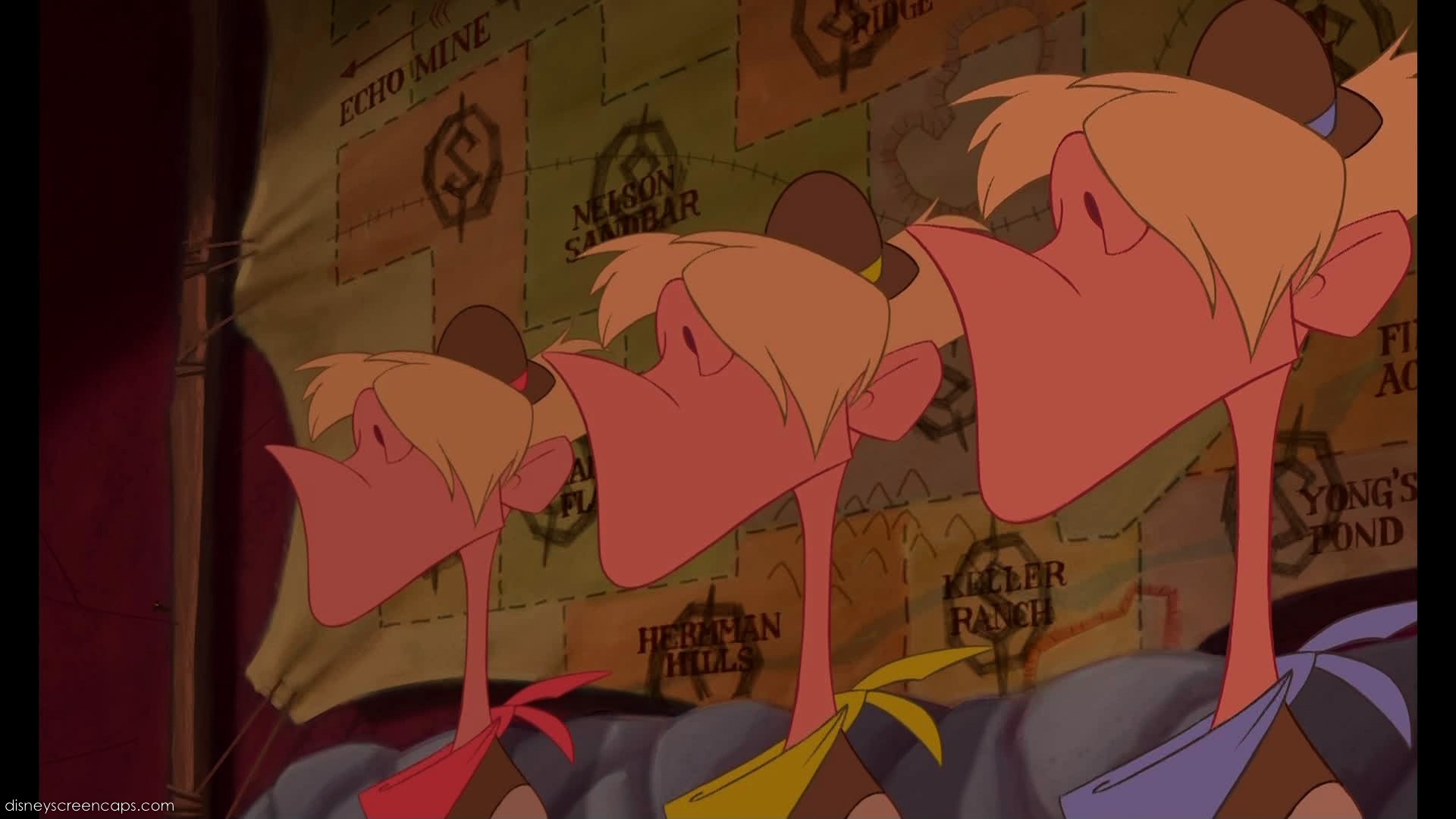

There are some jokes that are funny that come out of nowhere, but most of the film is littered with these lame attempts at being funny alongside Roseanne's stupid one-liners. In many scenes, it feels like there's a funny joke waiting to happen, but it doesn't occur. There's this running gag, for instance, where Slim's nephew henchmen can't tell who he is when he puts on a disguise and they freak out. This could've been hilarious, but the way it's written and the way it's acted is just awkward and smacks of poor timing. The rest of the comedy is pretty much this, and then there's Roseanne's lines. Comedy club reject lines more like. I bet that "Stallion of the Ci-Moron" line was thrown in by executives, because DreamWorks - or more appropriately Jeffrey Katzenberg - wanted to stick it to Disney at the time, and Shrek did have some mean-spirited jabs at them. Having that line in there makes it look like Disney was part of the little mud-slinging match, when they could've been mature and just avoided poking at DreamWorks altogether. The script is just a really bad mix of these jokes.

The animation on the other hand is mostly solid, going for that style that New Groove went for but with a mix of the 1950s Disney style, which can be seen in the art direction of the desert, which is for the most part pretty decent. The color work, at times, is pretty impressive. After all, some of the finest of them all worked on this very film. The problem is, the character animation doesn't do much and a lot of it is rather forced. The character animation is about as interesting as the characters themselves. Everything just looks so flat and uninteresting, and when an animal does something cartoony, it just doesn't elicit any laughs. The movements just don't work. A lot of computer animation is also used. Even mere backgrounds, such as the interior of the farm owner's house during the rainstorm or just trees, rock formations even! It makes the settings look awkward, and many random objects are done in CGI as well, and they stand out a little too much. Conspicuous CGI to a tee.

It would've been nice if the film worked off of its limited budget and went for a minimalist style, which it tries to do, but all of that unnecessary CGI makes it look very cheap. Some shots of the non-CGI parts also look like something out of a Disney Television Animation show from the era. There's penny-pinching everywhere, and it's not pretty. It's just not all that great-looking, and the other big problem is that many of the character designs are way too cute. Yes, Disney has mastered the art of making such cute, appealing characters, but they were never overdone. They didn't look like things you'd see on baby toys or whatever, but in this film, the designs come a little too close to looking like that. It just makes the film look like a preschooler show, though some character designs rise above that a bit: Alameda Slim, Wesley, Rico, Lucky Jack, Jeb and Buck. It's just sad because, again, Disney's animators and artists had to make this. I feel bad that they had to…

At least it doesn't look terrible. Working within a limited budget does restrain in many ways, and like I've said, the look of it does have some positive qualities to it. An all-out minimalist style without much CGI or anything would've been just fine. After all, this is Disney Animation, so if it can't look great, it's at least going to try very hard to look great.

Limited budget you say? Well, the film was reported to have cost $110 million, but that's because the previous incarnations of the film added to the finished film's cost, which must've been somewhere around $60 million… Maybe even less. The Emperor's New Groove began life as Kingdom of the Sun - which was a radically different film from the finished product - in 1997. As it was entering physical production, it was canceled and a good $25 million had already been spent on the picture. The Emperor's New Groove itself cost $75 million, hence the $100 million budget. This is basically the same deal. Tangled, also.
This shot is beautiful...

So… Weak characters, kiddie-flick tone, poor writing, mostly underwhelming visuals… Does anything else work in this film? Well, Alan Menken's songs are actually good. They're not the most memorable, but they aren't cringeworthy either. "Patch of Heaven" is a fun, country-esque ditty, but it doesn't leave you humming. The opening song is pretty good, recalling the Disney films of the 1950s and we do get a fun chase sequence to go along with that. (Also, clever use of the Walt Disney Pictures logo at the beginning!) Alameda Slim's yodel tune tries too hard to emulate the surrealism of "Pink Elephants on Parade" and "Heffalumps and Woozles" in the visual department (it's too simple, colorful cattle really isn't enough), musically it's just okay. "Will The Sun Ever Shine Again?" is a nice, lightly somber number, but since the story gives you little to care about, it almost feels like it's all for naught. A decent soundtrack to say the least…

In fact, the score is pretty decent too, as it feels like it belongs in a big animated Disney movie for the most part. Too bad the visuals and writing don't match it. Poor Alan Menken, all that talent slapped onto this mediocrity.

That's pretty much what Home On The Range is. Mediocrity. Boring, often cringeworthy mediocrity. As a kids-only movie, it's the best it can be. If you're a kid, it's probably for you, though kids should be shown the best Disney films, the ones that don't talk down to them. Home On The Range is essentially the very definition of pandering, and it's so unfortunate because this could've been something really fun. Something bursting with energy and all-out wacky humor, again - a Wild West Emperor's New Groove! It would've been awesome! But it isn't allowed to be, all thanks to clueless executives who knew very little about animation and saw very little in it. The same executives who approved of the Disney direct-to-video sequels that also badly hurt hand-drawn animation, the Disney brand and the original films… All for a quick buck, no less! They didn't "get" animation, nor did they get Disney animation. You might as well assign someone who sees comic books as trivial kids' stuff to write a superhero film. In the process, you get something like Catwoman.

Of course, the biggest stab in the heart is the fact that this is one of the very reasons why American traditional animation was shown the door, in the very country where it blossomed from the very studio who made it blossom the way it did. I really wish that Bob Iger and all the people running Disney right now would get it through their heads that lame movies like this and terrible management were the reasons why hand-drawn films sunk at the box office, not the medium. People avoid lame computer animated films in this day and age, now that the fad has ended a long time ago. (Shark Tale would've tanked hard if released today, ditto Chicken Little.) People avoid lame animated movies, period.

People also avoid animated movies that look lame, movies that look lame as opposed to being lame. Case in point, The Princess and the Frog! Do I have to keep bringing its slipshod marketing campaign up? Do I need to keep reminding Disney of how badly they marketed this film? Do I need to remind them of the dunderheaded title change?

Get… It… Through… Your… Heads… Audiences like traditional animation! Audiences don't like BAD traditional animation!

Audiences liked The Princess and the Frog! It had very, very strong legs at the box office and fought the tidal wave that had Avatar, Sherlock Holmes and the Chipmunks sequel! Making $104 million domestically off of a weak $24 million is nothing to scoff at! It sold very well on home media! Tiana is everywhere on effing merchandise! People like the movie very much! That has nothing to do with it being hand-drawn or computer animated!

People see good movies, people see movies that look good!

Do I need to spell it out in any other way?!

*deep breath, deep breath*

Anyways, Home On The Range got mixed reviews at best, it didn't quite get the critical beating that Brother Bear kind of unfairly got. It opened low, as expected, and crept its way up to a weak $50 million domestic total and made $103 million worldwide. Now, I don't know if Michael Eisner, David Stainton and everyone else engaged in a big conspiracy to kill hand-drawn by making the films poor, marketing them badly and having them fail, but the way Disney Feature Animation was beaten to a pulp during this era makes for a painful part of Disney history. Thank goodness the madness stopped (I think a lot of people take what Lasseter and Catmull have done for the studio for granted), but hand-drawn remains something of a casualty of this era.

I wish the business people realized for one minute that Eisner's mismanagement of the company and the decision to swamp Disney Feature Animation with ignorant executives hurt hand-drawn. I wish they'd realize that poor marketing hurt films like The Princess and the Frog. I really wish they would… John Lasseter, Ed Catmull and everyone at Disney wants to bring hand-drawn back… They really do! It finds its way to theater screens via short films like Paperman and Get A Horse!, Disney's computer animation goes for a painterly style, but that really is not enough… The traditional Disney animation style should never be a thing of the past… Never

Home On The Range was a weak film, un-Disney in many ways. Disney Animation should never pander to toddlers, never. It should never be for toddlers or kids first and foremost. Worse, in addition to the fact that it could've been good, it helped hurt a beautiful art form. A beautiful medium that Walt Disney worked so hard to bolster… The film provides an excellent lesson: Executive meddling should be kept at a minimum in animation, or better yet… It should be banished from feature animation in its entirety. Never let people who don't give a damn about animation be the heads of animation film production. That goes for other studios, too!

A debacle of epic proportions…

"Home On The Range" is in the fifth tier of my ever-changing best-to-worst Disney animated classics list. What are your thoughts on this Disney animated feature? Sound off below!

Saturday, December 7, 2013

A Little Poor… But A Lot of Fun


With the success of The Aristocats behind them, the once-groundbreaking Disney animation studio would continue to thrive. The suits realized that animation wasn't something that had to be sent packing; The Jungle Book was a record-breaking hit and The Aristocats kept the success streak going. However, The Aristocats also showed the suits that you really didn't have to set the bar too high. The Aristocats got mixed reviews upon release, but it still made money and was considered a good diversion for family audiences. The next feature would also resort to that kind of storytelling laziness.

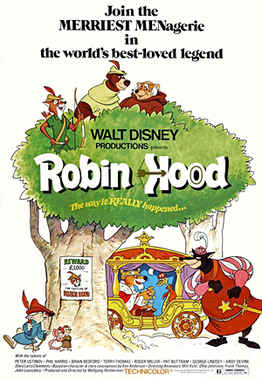
Robin Hood evolved out of many attempts to tell the story of Reynard the Fox, a character who Walt Disney deemed unsuitable for a lead heroic role. After Walt's death in 1966, production on a Robin Hood film began and the studio decided the tell the story with an all-animal cast. This film is actually a classic example of this trope, one that Disney Animation will be revisiting for the upcoming Zootopia, it was also explored by DreamWorks in their Kung Fu Panda franchise. Art director Ken Anderson went all out, coming up with several great character designs, only for them to be watered down into the kind of designs you'd find in a Saturday morning cartoon. He actually cried when he found out that his works were turned into such by-the-books designs! In addition to this, Robin Hood would turn out to be one of the most cost-efficient films in the Disney canon, and not in a good way. The studio really cut the budget this time around, and in turn... It really affects the whole production, making it a very middling effort from the studio - both visually and narratively.


Fortunately, Robin Hood boasts a very appealing cast despite the streamlined character designs. Making Robin Hood a fox was a great idea from the start, and Brian Bedford (Tommy Steele was originally considering to voice the titular character) brings out his sly trickster demeanor. He's smart as a whip and he is good at giving the bad guys a run for their money, but he's also very likable. Little John is fun, but he's really a recolored Baloo - he's also voiced by the same voice actor, Phil Harris! It doesn't help that a lot of animation from The Jungle Book is recycled in this film, it just doesn't really set the character apart from the two-bit bum bear from Walt's swan song.


Also, aside from Phil Harris, Robin Hood's cast is half-American. There's quite a few British actors in the film, but a lot of the characters have Southern accents. So is this Robin Hood: Bayou Edition? Andy Devine voices the portly badger Friar Tuck. Roger Miller and the animators transform minstrel Allan-a-Dale into a country singing-and-whistlin' rooster. Pat Buttram voices the Sheriff of Nottingham, who is portrayed as a pudgy but suitably mean-spirited wolf. (Taking a birthday present farthing from a child? Cruel.) John Fiedler voices the sexton, a borderline tough-guy mouse, probably just to have Piglet's voice in there for the sake of it being there. This side of the cast clashes with the British cast, which is all well-picked.


Peter Ustinov makes Prince John the wimpiest of Disney villains, and one of the funniest. A bratty, whiny adult child who comically sucks his thumb when his mother is mentioned, he's a delight to watch. His banter with Sir Hiss (voiced by Terry-Thomas, and he even has Thomas' teeth gap!) is also hilarious, making up for what doesn't work in the film. These two are pretty much a riot, and it's fun to see a villain who cowers when the hero is swings a sword in his direction, a nice little change of pace. Monica Evans and Carole Shelley, after voicing the two silly geese in The Aristocats, return to voice Maid Marian and Lady Kluck. Maid Marian is pretty much a bland damsel-in-distress in many ways, Lady Kluck is spunky, loud and one tough chicken. She's one of the most enjoyable characters in the film as a result.

In addition to such an American-flavored cast, the film goes a very cartoony route. Robin Hood isn't trying to be a lavish, fairly serious fairy tale like Snow White and the Seven Dwarfs or Sleeping Beauty. Instead, it's trying to be freewheeling comic fun like The Jungle Book and The Aristocats. There's lots of goofy slapstick, no real dramatic tension and lots of anachronisms. During the archery tournament fight scene, Lady Kluck takes down Prince John's rhinoceros guards like she's playing football, complete with the University of Southern California fight anthem! It's a very bizarre moment, but yet it's so strangely amusing because the film doesn't even present itself as nothing more than a giddy full-length cartoon to begin with.

If one takes Robin Hood on those terms, they could enjoy it very much. It's not really a retelling of the classic legend, but just a fun romp based on some of the tale's elements. Like many have pointed out, it's really a good extended Saturday morning cartoon episode more so than a Disney animated feature, one that bests most of the Saturday morning cartoons made in the early 1970s. As a work of cinematic storytelling, it just falls flat because it isn't really trying to be anything more than just a comical cartoon adventure…


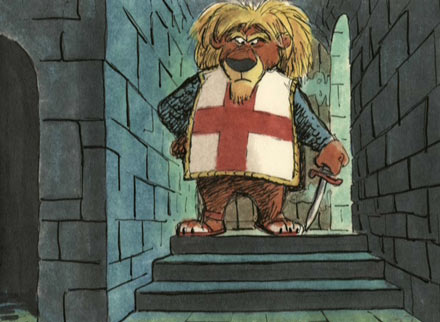
Robin Hood is essentially The Sword in the Stone all over again, oddly enough since both of them are set in the Middle Ages and came out nearly ten years apart. Robin Hood is a compilation of sequences, episodes really. It's all strung together, feeling incomplete and also a bit incoherent. The Sword in the Stone didn't have much a plot with a goal, neither does this. Robin Hood robs from the rich and helps the poor, that's about it, really. Now looking at the different sequences, they are competently-made and well-told sequences. Very entertaining and enthralling at times, too. But where's the center? Where's the heart? It doesn't really resonate.

The first thirty minutes of the film are a complete mess, with two "day in the life" exploits of Robin Hood and Little John supplying the levity and fun. But then we also get an inconsequential sequence where young rabbit Skippy loses his arrow and goes to retrieve it with his friends, thus meeting Maid Marian and Lady Kluck. The picture takes a while to really take off, but it starts coming together thanks to a great archery tournament sequence that comes in during the halfway point. This whole sequence is well-paced, the lack of music makes it exciting and there's some great inventive stuff thrown into the mix: Robin Hood's stork disguise is fun, Sir Hiss puts his head in a balloon and flies around like a helicopter, and Robin's attempt to undo the Sheriff messing up his final shot. All good stuff right there.

Then a really action-packed chase follows when Prince John shows that Robin Hood faked everyone out, making this whole section of the film even more exciting. From here until the climax, Robin Hood begins to start clicking. In fact, it starts to get really intriguing when Robin Hood carries out his most elaborate plot ever: Get all the money back, save Friar Tuck from being hanged and break the poor out of prison. Like the archery tournament sequence, there's very little musical accompaniment and it's actually pretty suspenseful - almost like the mice and key sequence from Cinderella. After all the build-up, we get a lot of fast action and this really great escape sequence that just gets bigger and bigger... Then it's all thrown out the window.

All of it.

After Robin Hood escapes the burning castle, Prince John has his last "mommy" freakout and chases a frightened Sir Hiss. Then the scene ends, and then the next morning comes ... Alan-a-Dale tells us that King Richard returned and "straightened everything out". Originally, there was going to be a sequence where King Richard enters the castle right after Robin escapes, angered at what Prince John had done in his absence. To save money, they cut this nearly-completed sequence at the eleventh hour. This decision only showed how low Disney had sunk at the time, and it was a move that truly hurt this film in many ways. Having that would've been the perfect capper to the climax, and it would've given the film's episodic structure something an ending, and a little bit of a center that it was so lacking. The return of King Richard should've been triumphant, considering the build-up, something that would've ended that climax with a real bang.


Alas, we didn't get that thus we have to be told what happened. Fine for a kids Saturday morning cartoon, but this is a full-length animated Disney production. Might as well not show the dwarfs chase the hag to the cliffside, just have them run after her and fade to black. Saving money by recycling animation from several Disney films for the bulk of the film is one thing, but completely cutting this ending is another. There's also an earlier storyboarded alternate ending where a wounded Robin Hood escapes the castle and Prince John hunts him down, but he is stopped just in time by King Richard. (This can be seen on both the Most Wanted Edition DVD and the recently-released Blu-ray.) Was the studio that low on money that they couldn't make a roughly 2-3 minute conclusion for the film? It takes such great build-up and soils it with an anticlimax... That's not how you resolve something, especially something big!

Had Robin Hood been made at another time in the studio's history, it would've been much better. This film wonderfully captures the situation that Disney was in at the time, and many animation historians have noted the many instances of traced animation in the film. I'm personally not a fan of it, as I feel that it doesn't differentiate these films from one another. Thankfully, this "recycle animation" thing was ditched after the 1980s (save for Beauty and the Beast's inexplicable recycling of the final Sleeping Beauty dance for that film's final seconds). It was something that producer-director Wolfgang Reitherman really latched onto, among other things.

Much has also been written about the quality of Woolie's work after Walt's death and during the Ron Miller era of Disney. He was actually ousted from The Black Cauldron during early pre-production. probably because of his "touches" to these films (Phil Harris, the Southern vibe), and the young animators especially hated the disco musical number that was in his early treatment of The Fox and the Hound. But Woolie really had a love for recycling animation, others however, didn't. Animator Milt Kahl angrily declared that the animators were "garbagemen", and proceeded to say some not-so-polite stuff about what they were doing to Disney animation. Newly-recruited Don Bluth (his second time at the studio) was also not happy with the direction Disney's animation wing was going... Major changes would ensue, of course.

Robin Hood would have to be right down there with Disney's 1960 featurette Goliath II when it comes to recycling animation. So much of the film is cut-and-paste, it even recycles itself! For instance, Prince John's rhino guards marching? You'll be seeing that a ton of times in the film, along with Alan-a-Dale's walking and whistling. The credits, like The Aristocats' credits, is composed entirely of scenes from the film, but without the backgrounds so that they don't spoil anything.

Technical problems aside, Robin Hood is hurt by its lack of a good resolution to such a good climax. It also fails to resonate. Maid Marian is a bland love interest, and she's one of the only Disney heroines that I'd call a shallow damsel-in-distress. To those who complain about how Snow White and Cinderella don't pick up swords like Mulan and fight others, why not get upset over this character instead? She always needs saving, and she's not that interesting to begin with! Robin and her have a brief but pointless "romance stroll" through the woods, accompanied by the film's weakest song and perhaps one of the blandest of Disney songs... Simply titled "Love". It's weird-sounding early 70s AM pop meets strings-heavy syrup, and I never remember much of the lyrics after each viewing.


The other songs, however, are actually pretty good. Where this film lacks in story and visuals, it completely packs a punch with the songs. All fun ditties in their own right, even if the Southern country flavor doesn't particularly fit in with Merry Old England. Roger Miller's "Whistle Stop" is intoxicating, "Not in Nottingham" is fairly dour but it works (it's used where it's needed, of course). "Oo-de-lally"? Fun, hummable. I also really love "The Phony King of England", despite the scene's rampant animation recycling. At least the songs serve a purpose here, and they help bolster the cartoony exuberance of the film.

Other than that, there is not much else to say. It's economic as hell, lacking in a good story and often falls flat with too much cutesy pap (the whole "lost arrow" sequence, I didn't even like that bit as a kid) and schmaltziness. It at least has something of a decent story compared to The Aristocats, and it doesn't plod like that one. It's surprisingly more engaging, but still very weak in structure and its scope is also limited by the low costs. Nottingham Forest looks more like the Hundred-Acre Wood than the forests in The Fox and the Hound. Some of the art direction just looks basic, almost TV animation-level. I understand that they had a budget, but this decidedly more minimalist style leaves one wanting more.

Robin Hood... Is that you?

Robin Hood opened in the fall of 1973 to generally less-than-enthusiastic critical response, but it was the biggest animated film on initial release back then. It only proved to Disney management that you could be ho-hum and still turn out a hit, even in the changing animation landscape. Yellow Submarine, Ralph Bakshi's first two films and Fantastic Planet only made this and the film before it seem dull. The re-releases of Walt's greatest films also made these two films pale in comparison in many ways. Luckily, a certain someone wanted to take action and would come to dominate a good chunk of the next feature... Don Bluth.

Despite its myriad problems, Robin Hood has always had a fanbase. The charm of the characters and humor is irresistible for many, even me. With all the problems I have with it, it's still fun to watch and I do find myself enjoying a lot of it. So... A poor-but-enjoyable movie? I guess so. In 1984, it would be the first of the "moratorium" Disney animated classics to be released on home video, and the release did sell very well (according to Disney). It seems like Robin Hood got a lot of popularity on video over the decades, given that this film does appeal more to children than it does to adults than most Disney animated films. Still, its video sales never got it any Platinum status or anything of the sort. But aside from the young, the film seems to have many older fans, too. There's just something about it that calls you to it... Heck, someone like director Wes Anderson must be a fan because he used "Love" in his brilliant Fantastic Mr. Fox!

Robin Hood in the end may not be a good film, but it isn't without merit. The film doesn't really aim to be a great classic to begin with, you can get that vibe easily from the first half hour or so. The film basically had the intentions - like The Aristocats before it - to give the audience, young and old, a fun time at the cinemas. Nothing more, really. It just wanted families to come in and leave happy. It's like a rather okay local amusement park, you get a kick out of some of the rides and whatnot but let's face it, it's not Disney World or Universal or Six Flags! Does it have to be? No, not really.

Robin Hood works well when taken on terms like that, it's decent, entertaining and memorable family fare. Its problems are quite glaring, but you can still have a good time watching it. Stacking it up next to the other Disney animated classics can be a bit unfair, as it's leagues below many of them. There could've been some good tweaks made in order to make this film much more solid.

"Robin Hood" is in the fourth tier of my ever-evolving best-to-worst Disney animated classics list. What are your thoughts on this Disney animated feature? Sound off below!
Wednesday, November 27, 2013

An Ice Movie and Mickey's Return


Sorry, I could not resist that ice pun.

*Warning: The following review contains spoilers*

Walt Disney Animation Studios' latest is good, and since a certain holiday is around the corner, I can say… I'm thankful for that! I'm thankful for Walt Disney Animation Studios in general because of how good they are now that the shackles have been off since the big change in 2006. Frozen continues to show that animated films are good or great when you let the artists and creatives handle the ship, not suits, not focus groups, not consumer products people…

Frozen is classic Disney fairy tale goodness in pretty much every sense, but it doesn't fully go the Renaissance route. It doesn't reheat elements, there is no major love story where the leads share a ballad together… Oh wait, Anna and suitor Hans fall in love just moments after they have met, but the film is merely riffing on the short-term romances that tended to define some Disney classics (note: Some of the Renaissance ones where they develop a great relationship in a matter of 2-3 days, nothing wrong with those, though). I mean, she declares she wants to marry the man in a single night's worth of hanging out. Elsa writes it off, and by extension, so does the film. Kristoff hammers it in a little more… That was definitely a nice touch!

But at the same time, it does try on some Disney Renaissance-era favorites, mainly… Broadway songs! Penned by Robert and Kristen-Marie Lopez (Avenue Q, The Book of Mormon), the songs are surprisingly kind of a mixed bag. First of all, "First Time in Forever" and "Let It Go" are awesome. Definitely instant Disney classic songs right there, "Frozen Heart" also kicks things off to a nice start, but "Let's Build a Snowman" is simply good, "Love is an Open Door" is also just alright. "In Summer", I honestly did not care for. "Fixer Upper"? The one song that I actually disliked…

"Fixer Upper", to me, recalls those unnecessary goofball songs from the 90s films, mainly "A Guy Like You" and "Trashin' the Camp". The song just butts itself into the story, a scene where Kristoff needs to explain to his weird troll family that Anna is in dire need of help… But no, a silly song! Complete with lyrics about tinkling in the woods! Talk about a tonal imbalance, in fact this film had a quite a few. Something I had a problem with. Luckily, most of that jarring stuff is in the film's middle part. It is at times cringeworthy, but definitely not detrimental to the film as a whole.

Frozen's main strengths lie within the story and the characters, the story is very well-crafted but its our two leads that really make it shine. Anna and Elsa's relationship is very strong, it ends up carrying the film and producing all of the heartfelt moments. Every moment where they are onscreen together is just fantastic, Elsa is a very complex character and someone who is very scared. It's a nice change of pace, as always. I give the current Disney team props for trying new things with each story, Frozen is definitely no Tangled.


The story throws a core romance out the window, just when you think that there is going to be one, with build-up to boot! I was a little let down at one point, when it's implied that Anna's curse that Elsa accidentally gives her can only be cured by a true love's kiss. I thought to myself, "Oh no… That's kind of typical!" But no, she gets back to Arendelle only to find out that Hans is a two-faced jerk who would just let her die and would also kill Elsa so he can rule Arendelle. That's right there on the level of Wreck-It Ralph's great third act reveal. The audience reaction was also very audible. It all makes for an incredibly great third act that makes up for what I did not like in the second act.

The second act isn't bad by any means, it's just that it has a bigger dose of that overly-modern slang dialogue that I'm just not a fan of. I didn't care for it in Tangled, nor did I care for it in the 90s films. Olaf's number, "In Summer", while not terrible, doesn't really add much. There's also too many modern touches and details, this is a fairy tale setting! Also, comedy is inserted where it shouldn't be and thus it does feel cheap at times. The comic relief is handled much better in the first act and the third act. That being said, the second act does give us a few good scenes with Anna and Kristoff, a fun scene in a summer shack shop and best of all… Anna seeing Elsa for the first time since her exit from Arendelle.

Most importantly though, Frozen packs an emotional punch and has a very rock-solid story. I just wish that the screenplay's dialogue was a little better, and that the comedy and drama were balanced a lot better in the second act. When the comedy works, it really works. Most of the songs suit the film, while some are a little disposable and then there's that one I don't care for, but it's mostly a good soundtrack with a good score by Christophe Beck. The piece "Vuelie", which opens the film, immediately plunges you into the setting… They even played it over the Disney and Walt Disney Animation Studios logos instead of the typical soundtracks for those! Please do that with more films, Disney, please?

Do I even need to praise the animation? From the art direction to Elsa's powers to the character animation, it all shines. From snowy mountains to Elsa's elaborate new home to kingdoms with a Norwegian flair, it's all nice to look at, as usual for a Disney animated film. Some shots are just strikingly beautiful. Color is used to the film's advantage as well, with some striking use saved for the more dramatic moments. Also, the film's snowier color palette during the third act kicks all those teal-and-orange "gritty" live action films in their collective faces; that's how you do scenes that are a little bit on the darker side!

It ends well, with an excellent resolution to everything that had gone down in the film. Its heart is right there on the surface, and overall… It's another Disney animated classic. It has some bigger flaws, but as a whole? It's very enjoyable.

The hyperbole surrounding it, however… Well, I can't say I'm happy with that. That's another story for another post for another day, but the time is not right.

Now… To say nothing of Get A Horse!


My oh my… This is how a modern Mickey Mouse cartoon should be done! This is more than a great return for the character - he hadn't graced the silver screen in a roughly 6-minute short since 1995's Runaway Brain - it's just a blast and it does something different for a change. It begins like a Golden Age-era Mickey short, as it was an unearthed scrapped Mickey short from 1929, but then our characters go in and out of the movie theater screen. The film throws one fun inventive thing on top of the other, with the characters turning into computer animated versions of themselves when they come out of the screen!

But the best thing is, it's really funny. This is the real Mickey Mouse, not the politically correct preschool show version that's aggressively shoved down your throat. This is the old Mickey, with the energy and personality that made him so instantly likable. The cartoon was full of raucous slapstick and lots of inventiveness… It's a whole lot of fun and it's definitely worth the price of admission!

Sunday, October 6, 2013

The Lost Re-release


This is an interesting bit of Disney history that seems to be overlooked... One that concerns a re-release of one of their classic animated films...

Theatrical re-releases would prove to be a very smart strategy for Disney over the decades...

The outbreak of World War II in Europe in 1939 had caused many problems for the rising Disney studio. Nearly all of the European market - a vital source of income for the studio - had been cut off. Pinocchio could not recoup its huge budget, and Fantasia didn't do any better on top of not being understood by audiences. Dumbo was profitable thanks to its shoestring budget, but its chances at grossing more revenue than it did were cut off mere weeks after the film's debut - the attack on Pearl Harbor happened.


Bambi was also a box office bomb, and was also greeted with indifference from critics and audiences alike (complaints that it was too realistic to be a "cartoon"), and it drove Disney to produce the omnibus package features for the remainder of the decade since they were cost-efficient and years later, the different segments could be snipped from the films and be re-used in other places: Television, theatrical short subjects, educational films...

A 1944 re-release of Snow White and the Seven Dwarfs did well, and it prompted Disney to simply theatrically re-release their animated classics and not show them on television. Walt Disney saw these films as events, not things you could just show on a small screen or for free (this also explains Walt Disney Home Video's original reluctance to release the animated classics on home video). Re-releases would also save Pinocchio and Bambi by the early 1950s, once the European market began to open back up and domestic revenue would only put the films in the black.


When Disney began releasing their animated classics on home video in the mid-1980s (Dumbo and Alice in Wonderland appeared in the early 1980s, they were both shown on television prior to that), re-releases were still a thing. But after the home video releases... Well...

The first Disney animated film to be theatrically re-released after debuting on home video was Pinocchio. The film was released on video in 1985 and it was withdrawn in early 1987. 1987 was also the year that the expensive, painstakingly, digitally restored Snow White and the Seven Dwarfs was re-released in time for the film's 50th anniversary. That re-release took in a solid $46 million (that translates to $97 million today), so logically, Disney decided to digitally restore Pinocchio next since that was the second animated film.


This restored version of Pinocchio was released on June 26, 1992; it sadly didn't do too well. It grossed a paltry $18 million, but the following video release in March 1993 was a big success. But when Pinocchio was being restored, Disney was also restoring Sleeping Beauty for a re-release to follow Pinocchio...

Beauty and the Beast's videocassette - released on October 30, 1992 - contains a trailer for this very re-release.


Now of course, when I looked up the film's re-release history many years back, I didn't see a North American 1993 date anywhere...

My guess is that after Pinocchio's re-issue lost money, Disney cancelled Sleeping Beauty's re-issue. Snow White's digital restoration cost a whopping $25 million, Pinocchio's must've cost around the same amount, ditto this. This leads me to believe that the Beauty and the Beast videocassette was mastered and edited prior to the opening of the restored Pinocchio in late June. Seems likely, since that was just a few months ahead of Beauty and the Beast's video release. This could also explain why no poster exists for this re-release. It must've been immediately cancelled sometime in the summer of 1992, when Pinocchio's re-release failed to meet expectations at the box office. Beauty and the Beast's tape master - trailers and all - was probably already in the can.

Sleeping Beauty, like Pinocchio, was also already released on home video prior to the 1990s. That film hit stores in the fall of 1986, and it was withdrawn in 1988. That film's video release was record-breaking hit at the time, too! It sold a then-whopping one million units. Put two and two together, and you can see why this re-release didn't come to fruition. They didn't even give the restored version a video release at the time, something you think they would've done since the theatrical re-release fell through.

Disney instead opted to give Snow White and the Seven Dwarfs one last re-release in 1993, since that film wasn't ever released on video at the time. After that re-issue did very well ($41 million), they finally released the film on home video... Something they said they would never do a few years prior to that.

Had Pinocchio never hit home video in 1985, the re-release probably would've grossed somewhere close to $40 million. Sleeping Beauty probably would've done the same had there been no video release of the title in 1986. Disney probably figured that Pinocchio's 1992 re-release did poorly because many Americans owned the videotape or were able to rent it from their local Blockbuster. They knew Sleeping Beauty was also released on video, so they decided to avoid a big loss altogether.

Oddly enough, two years later, the restored Sleeping Beauty got a limited release on September 10, 1995...

Did a video release for the Walt Disney Masterpiece Collection follow in 1996? Nope, 1997 instead! There were two versions of the release, a pan-and-scan version and a widescreen version. This was released alongside fully restored versions of Bambi and The Jungle Book.

An interesting tidbit of Disney history...

Wednesday, October 2, 2013

The Ambitious Rebound


The Hunchback of Notre Dame is definitely one of the most notable and interesting films in the Disney animation canon, for its ambitions and darker content but also for good examples of the problems that Disney was having with their animated films at the time... Did it continue the successful streak that the company was enjoying in the 1990s? Or did it slow things down?

Disney was soaring, critically and commercial, by early 1995. Anticipation for Pocahontas was gearing up, after the last string of films. Audiences flocked to see Beauty and the Beast, made a beeline to the theaters to see Aladdin and The Lion King broke records left and right... Then came Pocahontas, seen as a middling effort from the critics and from the audiences as well, but it was still a hit. But it was a big decline in quality from the last three films, with formulaic annoyances that were used in the last three films not working within the context of the setting. It more than caused controversy over its altering of history, it's decidedly Disneyesque story and its portrayal of the Native Americans. Pocahontas' success is something another studio in 1995 would've given an arm to have, but for Disney - whose Lion King got accolades left and right and grossed a massive $312 million domestically - this was a disappointment.

The disappointment train further continued with the next feature, an adaptation of Victor Hugo's The Hunchback of Notre Dame. The Hunchback of Notre Dame in many ways is very similar to Pocahontas. Both aim to be big, prestigious and serious films, both experiment with adult themes and both have the Disney formula hanging on their back like a weight. The biggest similarity it shares with the 1995 Disney film is that it's based on something that definitely isn't family-friendly, and making a family film based on it would be a very hard task. If anything, the writers were re-imagining the 1939 live action classic based on the novel but differentiated it from that great film in many ways as well. (If you love this film and haven't seen the 1939 film, I recommend that you check it out.)


The first thing that The Hunchback of Notre Dame does right that Pocahontas did wrong was a major feat for post-Walt Disney animation. Like that severely misguided film that came before it, The Hunchback of Notre Dame is Disney's animation department dipping their hands into pretty adult-oriented subject matter, the sort of things you wouldn't normally see in a post-Walt Disney animated film or a family-friendly film, period. Hunchback deals with corruption, genocide, racism and the dark side of religion... Pretty heavy stuff there!

Unlike, Pocahontas, The Hunchback of Notre Dame uses all of this to its advantage and crafts a great outcast story around these themes while doing well with the Disney formula looming in the shadows. The good vs. evil story is handled a hell of a lot better than it is in the previous film, with a villain who is the antithesis of the cardboard, idiotic gold-digger Ratcliffe. Judge Claude Frollo is not only nasty and sometimes genuinely terrifying (he's very rarely ever comical), but he's very complex. He believes he's doing right, and he justifies his cruel actions.


Not only are the writers making this villain more than just your typical diabolical villain, they are also being gutsy and actively tapping hot-button issues. On top of that, this villain finds himself lusting after the very thing he sees as evil... And spirals into a black hole of madness because of it. Did I forget to mention that he manipulates poor Quasimodo, killed his mother (which we see onscreen!), tried to drop infant Quasi down a cold well, and has done a whole slew of other terrible things?

In short, Judge Claude Frollo is one of Disney's best villains. Hands down...

So already, Hunchback kills it in the good vs. evil story department. It may not exactly be like Victor Hugo's novel, but for a family-friendly adaptation, it works so well. It doesn't shy away from darker content and it gives us strong characters... That's right, strong characters! Not like the ones in Pocahontas that just weren't anything special. Quasimodo is a sweet, Dumbo-type whose optimism of the outside world - and later - his heartbreaking realization of how cruel it can be, is handled brilliantly. Esmeralda is quite a defiant one, since her people are persecuted by Frollo. A very solid rebel character for sure. But then there's Phoebus. Not a bad character, in fact he's a rather entertaining one... But he really serves as the catalyst for Quasi not getting the girl due to his appearance... They actually averted the Renaissance love story formula a bit, and Esmeralda and Phoebus don't have a big love ballad or anything. The romance is just there to add an element of heartbreak to Quasi's story. Another plus, there.


Despite following the same template that the last few films followed, Hunchback soars above its formulaic elements because of its mature subject matter and the fact that it's not afraid to inject a little more darkness into the proceedings. Unlike Pocahontas, it handles what it has a lot better. The aforementioned main story works very well, and there's a romance that's only there to improve the main character's story arc. How about the songs? Do they all work?

Yes! They really do... Well, almost all of them...

You get the Broadway showstopper in the form of "Topsy Turvy", but the scene's inventiveness and colorful nature makes it fun, plus it doesn't feel shoehorned in. "Out There" is a great "I Want" song because Quasi truly wants to see what's out there beyond the bell tower, you can feel his yearning early on so it's not annoying. The singing voice only heightens that, as you can feel the unselfish desire to leave. Then there's more fun to be found in "Court of Miracles", where a gleeful Clopin sings about executing Quasimodo and Phoebus, whom he initially thinks are spies for Frollo.


"God Help the Outcasts" is appropriately somber, though it does tend to veer into the Oscar bait territory a bit, but it's still a beautiful piece. Beyond these few pieces, the songs take quite a different route.

"Hellfire" is not your typical villain song, instead it's Frollo's mind going to war represented by terrifying visions - did I forget to mention the subject matter and what the villain wants to do? It's an incredibly intense sequence, and the visions add to that greatly. By contrast, Quasimodo's gentle and optimistic "Heaven's Light" - though short and ruined by a certain something (we'll get to that) - is a light of hope going against Frollo's spiral into madness.


Last but not least, the opening... "The Bells of Notre Dame" is how you open a Disney animated film, especially a musical. It's dark, it's ominous, it's thrilling, it sucks you right into the story while also showing what the film is going to be like right off the bat. Frollo's brutal kick to Quasimodo's mother's head and the statues seemingly glaring at him while the Archdeacon sings about his heinous crime... It tells you right away that this isn't going to be what you expect from a modern Disney film. From eerie opening choir that plays over the title cards to Clopin's high note ending, it's truly incredible.

To say nothing of the animation. Medieval Paris looks a bit desaturated, but it's not without color and life. The "Topsy Turvy" sequence is a needed visual panache of exploding colors, going along with the vibrancy of the whole song. When the film gets darker, the color enhances the mood. Burned-down Paris midway through the film combined with the choir makes the scene look like hell. A scene like "Heaven's Light" makes use of bright blues and other colors, but "Hellfire" goes against this with shadows and a harsh fiery scheme.

So with how good this film is, what holds it back?

The fun couldn't last with this one. This was the mid 1990s after all. You know what that means? The suits had to come in crash the party. And how did they do that?

The gargoyles...


The gargoyles solely exist to lighten the load for the little children in the audience, to go against the heavier aspects and quieter moments of the film. The film can't be a beautiful work of art for too long, there's got to be some gargoyle doing an armpit fart. Executive logic, plus lots of toys can be sold and whatever fast food chain is partnering with Disney can do a promotional tie-in. It's why Flounder exists, it's why Flit and Meeko exist, it's why Terk exists, it's why Mushu exists... You get the idea. The executives had the filmmakers insert them into several scenes, such as the "Heaven's Light" sequence. Quasimodo sings a beautiful song while the three gargoyles draw Esmeralda and crack jokes, and also... What's with Hugo's attraction to Esmeralda's feisty male goat Djali?!

At first, it seems like the gargoyles have a reason to be in the film. They are Quasimodo's only friends, but it's heavily implied throughout the film that these stone statues come to life in his imagination... Now that would've been fine, minus all the stupid jokes, but alas the gargoyles do actually come to life as revealed in the film's uneven climax. They also get a silly, "Under the Sea"-wannabe musical number that barges into the film when things start getting dark, and the song even goes as far as making light of this chapter of the film! ("True, that's because it's on fire.")


But aside from the gargoyles and what they bring to the table, The Hunchback of Notre Dame is definitely the most daring film that Disney Animation released during the 1990s. I consider it the best of the era, not only because of the risks they took but also because of the very strong story work and how it takes the Disney Renaissance formula and actually works real wonders with it. The songs all work minus the Gargoyles' number, comedy and drama is balanced well for the most part, and the animation is a knock-out in several departments. The use of computer animation is even more striking, with full shots of Notre Dame - my favorite being the shot of the stained glass window when Quasimodo carries Esmeralda up the cathedral and shouts "Sanctuary!"

After audiences and critics were let down by Pocahontas, did The Hunchback of Notre Dame pick things up? Sadly, it didn't...

The Hunchback of Notre Dame did get quite a lot of positive reviews, but others sharply criticized the comic relief, feeling that it really hurt the film while also not approving of the liberties taken with the original novel. People who were tired of the Disney formula couldn't see past its shortcomings. Luckily, the reception was better this time around - but it sadly didn't get the prestige and love that Beauty and the Beast, Aladdin and The Lion King received.

Did audiences like it? The Hunchback of Notre Dame grossed $100 million at the domestic box office, over $40 million less than Pocahontas, and it had an opening weekend that was a little smaller than that film. The underperformance could be contributed to a few things. Adults that were growing tired of the same old hat tricks made up their minds upon seeing the trailers featuring the comical gargoyles and just skipped it. It's also possible that family audiences were alienated because the film was too dark and intense for young children. The film also could've underperformed because it didn't appeal as much as the previous films, given the story, content and setting. Maybe it was because it wasn't as fantastical as the last three films, with very little magical elements.


Whatever the reason, it didn't do as well as the previous films though $100 million was still fine for an animated film back in 1996. It just wasn't a blockbuster total, and Disney brass deemed it a disappointment. It especially didn't look good next to Space Jam's $90 million gross. However, it did better overseas, thus the big budget film made it all back with a good-sized $325 million worldwide take. It was still a little less than Pocahontas though. Video sales were good as expected, but like other Disney films that didn't do extremely well at the box office, it was unfairly swept under the rug. Thankfully, it's fanbase is growing despite Disney's reluctance to give the title the love it deserves - along with several other titles.

The film never got a "2-Disc Special Edition" DVD anytime after 2000, while Pocahontas and Mulan got special editions. Since this and Hercules were on the low end of the list, box office-wise, Disney didn't bother giving the films good DVD releases. Hunchback received piss-poor DVD treatment in 2002, a disc that included only a few bonus features, not all of the LaserDisc features were ported over to this release. The Blu-ray is also a letdown, not adding anything new while also... Well, let's not go there. At least the film looks great on the disc.

Little by little, like other unfairly mistreated Disney animated classics, it's getting the popularity it deserves. Its darker elements and storyline are admired, and Frollo is also being recognized as one of the great Disney villains. The rediscovery has been great in the past five years or so, and as it gains new fans, Disney ought to take notice.

The Hunchback of Notre Dame aspires to be something worthy of Walt's best, the Golden Age features that are the bona fide tip-top achievements of both Disney animation and animation in general. It gets very close, though the meddling functions as something an anchor and does hold it back a bit. Where it soars, it really soars. This is probably the darkest and most adult-oriented of Disney's animated features of the last 40 years, even more so than today's very well-made and mostly pretty consistent Disney animated films. Remove the gargoyles (or replace their dialogue with less goofy, childish one-liners) and the unnecessary comic relief, and you'd have one of the greatest Disney animated features. Even with the pandering and problems, it's still a very strong and daring effort.

"The Hunchback of Notre Dame" is in the second tier of my ever-evolving best-to-worst Disney animated classics list. What are your thoughts on this Disney animated feature? Sound off below!

Sunday, September 22, 2013

An Honor To The Canon?


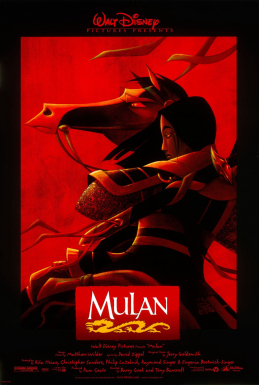
The Disney "Renaissance" continued to chug and chug, despite the fact that it was losing steam by the end of the 1990s... Did Mulan keep it going, or did it further halt the success train?

Mulan was once again another entry in the Disney formula sweepstakes, and by the time it was in the works, audiences were growing tired of the whole schtick. Pocahontas started the box office decline, Hunchback's adult subject matter scared families away while its pandering elements (namely the comic relief gargoyles) scared adults away, Hercules was also met with indifference while also not really catching on. So in comes Mulan, displaying the same strengths and weaknesses of the other "Renaissance" features. Unlike Hunchback, the lower points tend to overshadow the good... And what's good in this film is really good.


The main story is very well-handled, dabbling in some good themes. Mulan's quest to honor her family, and ultimately take on the task that her aging father can't, is told in a fine manner. Mulan's escapades at the military camp get her into trouble, but soon she begins getting on the warriors' good sides, especially that of the man she admires - Shang. Also well done. The film actually averts one of the Renaissance cliches, and that would be the obligatory love story. Mulan and Shang don't fall in love, they don't share a tender love ballad and they don't even get married at the end. Shocker!

The characters all have fine personalities too. I won't praise Mulan herself for being a "strong" female character, because I actually pay attention to Disney films and I know that the past heroines aren't a bunch of "passive" damsels in distresses. (More on this later.) Her struggle with pleasing her family and also being who she wants to be is told right, especially through a rather successful "I Want" reheat in the form of "Reflection". She's not a rebel per se, but she doesn't want to be put in a box nor does she want her father to die. A very good lead, and the supporting cast for the most part strengthens her story while adding the necessary elements. Shang's no bland love interest, and this all due to the fact that the film doesn't go the typical love story route. The various soldiers are all fun and at times funny. It boasts a pretty good cast of characters... For the most part...


With a strong story behind it, the film also boasts a fine minimalist animation style. This was the first Disney animated film that was mostly produced at Walt Disney Feature Animation's Florida unit. It's got a smoother style, with backgrounds that aren't as intricate or complex as the ones you'd see in a bigger production but still beautiful nonetheless. This style really works, bringing a softness to the ancient China setting and the color scheme really works too. It proves that you don't always have to be big budget and elaborate to carry out a good story set in certain period. While some of the art direction could've used a little more kick in certain places, it still looks nice - particularly the snowy mountains, the charred village and the palace. The fireworks show? Great. The battle with the Huns? Heart-thumping excitement, with a massive Lion King stampede scope.

So is this a step in the right direction after the misfire that was Pocahontas and the relative genericness of Hercules? Close, but no cigar...

For all its good intentions, Mulan is held back by a lot of issues.

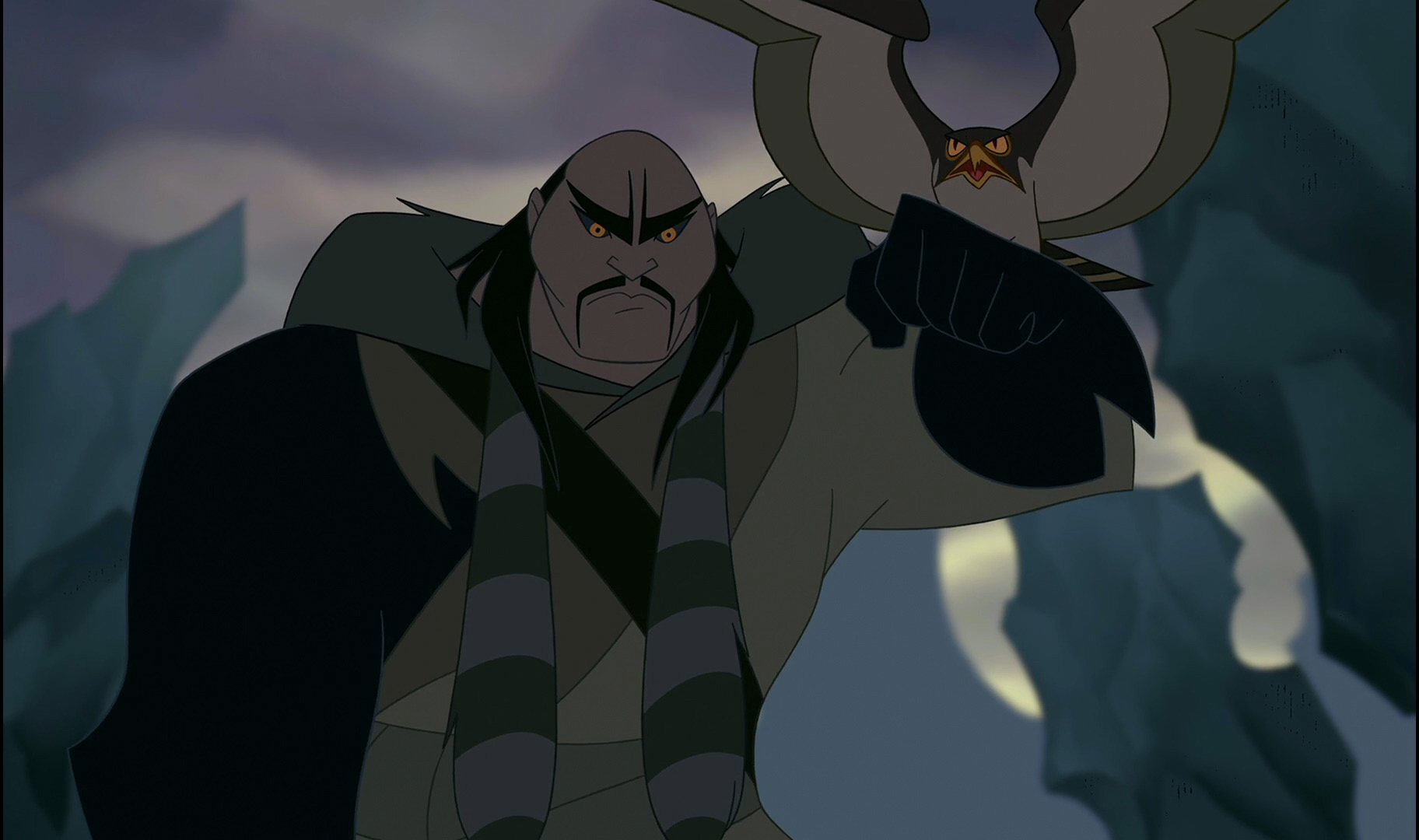
One big problem is the villain. Shan Yu is very bland and has no connections with any of the main characters. He's just a brutal warlord who is hell-bent on invading China with the Huns... And that's it. Who is he really? Nothing more than just a bad guy that's a threat to everyone. He's as dull as you can get as far as Disney villains go. If anything, he just seems like a stock villain because the real struggle that Mulan goes through makes for a far more compelling story. Because of that, his blandness isn't a huge problem, but a little more depth and development would've sufficed. He's got such a great design, Miguel Ferrer provides a good villainous voice and the battle sequence on the mountain is pretty epic - but these things would be even better if this barbarian had something of an interesting personality.


In fact, we don't even get a good idea of how much of a threat he really is. We don't see him hurt anyone (a deleted scene outright shows him impaling someone), and the worst we see of his doings is a destroyed village halfway through the film. No flashes of war violence or anything, probably because the executives were not allowing the artists to be a little more dark with the story - this story called for some war action and whatnot. It's kind of a war film!  There's a big battle sequence on the mountain for Pete's sake, which is still thrilling despite the fact that there's no bloodshed or anything. Again, maybe scenes of him doing something very evil or diabolical. Something! It just would've made this film, and that rousing mountain battle sequence, a hell of a lot more exciting and fresh.

Another major problem with Mulan is the number of tonal imbalances. Once again, our lead is saddled with an obnoxious, jumpy, goofy, hip-talking sidekick. This time around, it's a little dragon voiced by Eddie Murphy named Mushu. Annoying? Yes, very much so. Always there to crack an unnecessary one-liner or joke, always there to lighten the load, always there to take us out of the ancient Chinese atmosphere and setting with his jokes and modern slang. Blech. Another pointless sidekick that only exists to keep bored children interested, because Disney animation is for tots first and foremost, right? Right? The same damn model that Pocahontas and The Hunchback of Notre Dame succumb to, and one that the executives preferred. On top of that, the ancestors... Another result of the film's tone issues.


Here the film has the chance to immerse the audiences in some mystical elements, after all Disney has magical elements in many of their films, right? But all of that is thrown out the window, for the ancestors are just bumbling, zany joke machines that don't really add much to the story. The magical elements of the story begged for more sequences, more depth. Why they shunted this to the side, I don't know. It's like how Pixar's Brave doesn't really sink its claws into the more mystical elements. There's also a lot of slapstick, slapstick that doesn't fit within the context of the story. Again, here we have a war story with implications of brutal violence and some adult drama - yet we have a lot of wacky cartoony slapstick. Other attempts at more cartoon-esque humor just don't work, such as Mushu fooling Chi-Fu with a pieced-together disguise. That's more suited for a comedic film, like Aladdin, not something like this. The other films of the era had this problem, too - even the superlative Hunchback couldn't escape from it.

Even the climax is somewhat wasted on comic relief, such as Mushu flaming Shan Yu's hawk, making him look like a featherless chicken and the warriors cross-dressing in order to get into the seized temple. Also, Shan Yu is killed by a giant firework. That's a little silly if you ask me, but considering how bland this villain was, it's sort of excusable because he wasn't really worthy of an epic death scene. But still, that death is just farfetched - especially since most other Disney villains of the era had pretty grisly ones. All of the comic relief, especially in the climax, just says "Yeah, we're not trying to be serious here" when the animators clearly want to make something more serious. Typical of a 1990s Disney animated film, another suits vs. animators battle that gets captured in the finished film.

Then last but not least... The songs. "Reflection" and "Honor To Us All" are excused, though they aren't spectacular, and despite how lyrically flimsy and corny it is, "I'll Make A Man Out of You" is admittedly an exciting song that gets you pumped for the bigger things to come. "A Girl Worth Fighting For" would have to be one of Disney's worst, with insipid lyrics, a weird structure and an unpleasant melody. It feels like an obligatory song to branch the camp scenes and the "raise the stakes" moment together - namely the soldiers discovering the remains of the village that the Huns burned down. Yes, this silly, goofy song stops dead in its tracks and soon we get a darker tone out of the following scene. What a mood swing!

If anything, this probably would've been better off as a non-musical, but since that template worked for the previous features, it had to be a musical. No two ways about it, ensures a big gross at the box office! Oh, and an Oscar for Best Song and millions and millions of copies of soundtrack CDs sold! Did I forget to mention the 98 Degrees song "True To Your Heart"? The song that blares in the closing seconds of the film before the credits begin rolling? Yes, because Disney needed a song from a contemporary pop band for this story about a warrior in ancient China. Might as well have Pocahontas end with the side characters rocking out to a Backstreet Boys song and then "boom!", the credits.


Despite being an entertaining movie all-in-all, Mulan as a film just falls short. It wears all the negative things people associate with Disney: The silly sidekicks, the out-of-place cartoony comic relief, the meshing of adult themes with kiddie-flick fluff and big songs. Fortunately, Mulan has a strong story at its core that makes up for a good chunk of the film's major shortcomings. What could've been a fine, stylistically-animated war story is turned into another inconsistent mish-mash of drama and silliness, that slightly reeks of the corporate side of Disney. Mushu's presence in the film pretty much conjures up images of McDonald's and merchandise and whatnot... I'd rather be invested in what's going on and feeling the film's atmosphere.

Surprisingly, upon release, Mulan seemed to get a warmer welcome than the previous three films. Was it the more action-packed vibe that the marketing gave off? Or was it the fact that the film was about a princess who went to war? That certainly seemed to be one of the main things about this film that appealed to audiences. Critics even acted as if Mulan herself was the first Disney heroine who was a "strong" female character, as they probably have never even laid eyes on Snow White and the Seven Dwarfs or Cinderella... And if they did, all they saw were pretty colors and cute animals. After all, in the 1990s, all those older Disney films were viewed as unimportant babysitting devices while the current films were seen as films for both adults and children. Screwed up, isn't it?

Mulan isn't the first strong animated Disney heroine, as you'll find that Snow White, Cinderella and several others aren't the damsels in distress that everyone makes them out to be. Again, did they even bother to watch and evaluate those films? This is why Mulan's praise partially annoys me, critics showed how ignorant they were towards older Disney animation and bent over backwards like this. Singing the praise for Mulan whilst not even noticing the merits in the previous Disney heroines, goes to show how Americans view animation in general.


Other than that, critics liked the film, as it got good reception for the most part. The praise went towards the story, the lead character and some of the more dramatic elements - almost as if the critics excused the unnecessary comic relief and formulaic annoyances, because... "It's a Disney film, that's expected". The portrayal of ancient China got some heat, and the changes made to the original story got lots of criticism in China, particularly the Americanization of it. Mulan didn't gross way much more than the last two films, and it didn't outgross Pocahontas. Taking in $120 million domestically and $304 million worldwide, Disney probably viewed it as a disappointment in the long run because competition was making big dough... And some of it was getting better critical reception.

Mulan has kept a steady reputation amongst casual Disney fans and people who saw it when they were young. It's generally regarded as a good flick, and it doesn't seem to be one of those Disney films that has to have a cult following to keep it alive. Disney gave it a nice Special Edition DVD release in 2004, so even they had some sort of respect for it... Something they clearly didn't have for Hunchback (a far superior film) and Hercules. It was more than a modest hit though, as it didn't carry the big budgets that the previous films had - it had a much leaner price tag thanks to being smaller scale in comparison with the then-recent Disney animated films.

Mulan seems to be sort of "there", rather than being one of Disney's most popular animated films or one of their generally forgotten, not-so-popular ones. It deserves to be recognized at least, being a pretty entertaining ride with some surprises thrown in. Of course, I expect better from Disney Animation, the very house who specialized in great film experiences like Snow White, Pinocchio and Bambi. Mulan is a film, like the other Renaissance releases, that wants to be something grand and something for adults. But at the same time, the executives want merchandise to fly off the shelves faster than a dragon and to get the widest audience possible by watering the artists' finer ideas down to make something commercially viable... And that's pretty condescending because it just treats us, the audience, like we can't sit through 80 minutes of animation. Pixar wisely didn't do this, as their A Bug's Life came out the same year and showed that you don't have to pelt the audience - young or old - with wisecracking sidekicks and pointless jokes. It, like Toy Story, took the audience seriously and knew what to do with its content. This does not, and the other Renaissance films commit the same damn sin.

The result is another ambitious mess, but this one comes with a surprisingly strong center and some great characters that winds up being a pretty fun and entertaining watch. Yes, it could've been a whole lot more than that, but it's still an above-average film and one that is a worthy addition to Disney's animated canon.

"Mulan" is in the third tier on my ever-evolving best-to-worst Disney Animated Classics list. What are your thoughts on this Disney animated film? Sound off!