Showing posts with label Winnie the Pooh. Show all posts

Saturday, June 22, 2013

Branching Out on Blu


In a rather strange move, Disney's home entertainment division announced that two titles that are hitting stores on November 5th... But they aren't full-length features!


That's right... A featurette and a cash grab holiday special assembled from a television episode and other footage.

According to DVDizzy, Mickey's Christmas Carol will come with two other cartoons that are currently unspecified. My guess is that The Small One will be one of the two, being a holiday-themed roughly half hour-long short subject. Coincidentally, both films were products from the then-young turks at the Disney studio. Don Bluth worked on The Small One - which was released in 1978 to accompany the holiday re-release of Pinocchio - one of the last projects he completed work on at the Disney studio before leaving in 1979. Mickey's Christmas Carol was another safe project for the animators, as the executives weren't willing to let them tackle the likes of a big budget Snow White-type epic - something like The Black Cauldron - just yet.

Though it may be criticized for being a watered down version of the classic story, I always thought it was a good short. I particularly liked the surprise appearances of characters from some of the classics, including the package features. I'll happily pick it up. If the Blu-ray contains The Small One, what else will it contain? Supposedly the main feature runs 95 minutes, and that's 52 minutes down so... I'm guessing a package of Christmas Mickey short subjects (Cartoon Classics-style) or maybe a special from the 90s or something... Can't really guess at the moment.

A Very Merry Pooh Year was a 2002 special cobbled together from "Winnie the Pooh and Christmas Too" (a special from the New Adventures of Winnie the Pooh television series that ran from 1988 to 1991) and newly-created animation... All I can say is this: Does this really warrant a Blu-ray release? Why can't Disney just do the right thing and release the entire first season of The New Adventures of Winnie the Pooh on Blu-ray... Oh, and while they're at it, seasons for every Disney Afternoon cartoon. Consumers may not demand it, but many other folks do! Plus, if they forget the special and just release seasons of New Adventures, parents will snatch them up for their tykes. Heck, even Pooh's Grand Adventure is more deserving of a Blu-ray release than this!

Anyways, if Disney is willing to release short subjects and specials on Blu-ray as standalone titles, then what could they possibly churn out next year? Cartoon compilations, maybe? More shorts? What do you think?

P.S. - I saw Monsters University yesterday and I thought it was very, very good... Review should be up soon, but I'd prefer if I gave it another watch... Until then, stay tooned!

Monday, May 6, 2013

[UPDATE] Four In August


A few weeks ago, Disney quietly put it out there that Oliver & Company was coming to Blu-ray on August 6th, which was almost in line with some predictions I made a while ago. Since Oliver was one of those Disney animated films released on DVD only between 2009 and 2010, I figured it would get a release sometime this year since Pete's Dragon and The Great Mouse Detective got Blu-ray releases last year that were essentially upgrades of their previous DVD editions with the same cover artwork and edition names to boot. Also, Oliver turns 25.

Oliver & Company, in my eyes, certainly isn't one of Disney's better animated classics though it's an important one. It was a safe way for Disney to regain their audience after the suits had seen how well Don Bluth's An American Tail did at the box office two years earlier. That very film was a record breaker for the animation industry, and it was released at a time when the higher ups didn't see much of a future for Disney's feature animation (imagine that!) despite Roy E. Disney's insistence to keep the studio afloat. It appealed to audiences back in 1988, as it had attitude, 80s pop music-styled songs and a rather grungy animation style. Nowadays it's a fun watch, but definitely not all there in the story department and a lot of it is forgettable aside from the good songs. Its record-breaking success at the domestic box office enabled the studio to keep going.

So with its August 6th release date, I figured that Disney would put two or three more titles out on the same day since they've picked up this new routine where they'll release multiple classics on the same day. This started in August 2012 with The Aristocats, the Rescuers films and Pocahontas alongside other titles. Disney repeated this two months ago with the releases of The Hunchback of Notre Dame, Mulan and Brother Bear. A week earlier, the non-canon Who Framed Roger Rabbit hit Blu-ray.

Now, Disney has announced that The Many Adventures of Winnie the Pooh will be hitting Blu-ray, but not on August 6th... But rather August 27th. I would've assumed that it would hit store the same day as Oliver, but it looks like Disney is willing to release multiple classics the same month but not on the same day. The Digital Bits also report that Robin Hood is being prepared for a Blu-ray release here in the states, since the film is turning 40 this autumn and it's already available in other countries. It's possible that Disney will also release The Sword in the Stone on Blu-ray around this time, since that film is turning 50 this year and it's so similar to Robin Hood in many ways.

That being said, those two, Oliver and Winnie would round off a strong August. Bedknobs and Broomsticks and The Black Cauldron are the last two post-2008 DVD only releases that are due for a Blu-ray release, so we may end up seeing those two in October. It would be perfect for Cauldron too, since Disney seems to like promoting that film as a Halloween film as evidenced by the 2000 and 2010 DVD releases.

Anyways, I'm glad both of these titles are coming and I hope to hear about any other August Blu-ray titles soon. Updates shall come!

Update! Sword and Robin Confirmed For August 6th!

Disney has confirmed that The Sword in the Stone and Robin Hood have been confirmed for an August 6th release!


The cover for The Sword in the Stone is lovely, fresh and once again... It's simple and great. I also like how the "50th" and "40th" Anniversary headers are great because they don't use some generic fountain, instead they're stylized to look like the middle ages... Goes perfectly with the settings of both films. Disney didn't seem to bother creating brand new artwork for Robin Hood, instead modifying the cover used for the 2006 Most Wanted Edition DVD.

Either way, I'm excited to pick up all four of them in a couple of months!

Wednesday, March 20, 2013

Ranking the Oscar Nominated Shorts: 1962-1971

I started this blog shortly after the 80th year of the Best Animated Short category, and I realized that you could split those 80 years down to eight 10-year periods beginning with the second year of a decade and ending with the first year of the next decade. So from then on every time I've finished with one of these ten year periods I've been combining all of the nominated films from that period and ranking them by preference, since it's much easier to justify. We have now gotten to the fifth of these posts. Thanks to the timing of my hiatus it's been five months since I've last written one of these. In comparison, I was able to post three of them in the 5-month period from May to October of last year. Oh well. That's why I didn't want to do the hiatus, but I guess it was for the best.

Let's get this show on the road.

NULL: Hypothese Beta (1967)
NULL: The Shepherd (1970)
Two films whose legacy suffers from the suppressive power of greedy university institutions, (although the fact that they are still only available on the obsolete 16mm film format doesn't help.) I managed to trek all the way to the University of Arizona library in Tucson only to be told that they won't lend it out unless we have a 16mm projector to play it. *sigh* I guess I'm taking a road trip to Miami! Whooo! Then watch them go tell me to GFM because I don't have a 16mm projector. *sigh sigh*

Read more »

Saturday, December 8, 2012

Module 2 - Disney


Welcome to Part 2 of my discussion posts from the History of Animation online course I am taking. This module is about one of the biggest animation titans in history: Walt Disney. Disney's early career from the Laugh-o-gram shorts to Oswald the Lucky Rabbit was covered in Module 1, so this one deals only with his career after starting his own studio. The one that eventually became a massive corporation that now owns Pixar, Marvel, and Lucasfilms. It was interesting to see the ups and downs the company had between the debut of Mickey Mouse in 1927 to Wreck-It Ralph in 2012. Of course we're not going to cover all that. This is just going to be the discussion questions.

Read more »

Wednesday, November 7, 2012

Best Animated Short - 1968


Okay, I'm not even going to wait until the end to announce this. I don't even know why I do that because I post the title screen for the winning film on every single of my reviews, so it's not like I'm spoiling anything. It's even more true for this years because I wrote about this year's Best Animated Short winner four months ago. That's right, we have finally reached the year that Winnie the Pooh and the Blustery Day took home the Best Animated Short Oscar, ending the 13 year drought for Disney and making him one of the select group of people to win a posthumous Oscar. It's hard to believe that it's been four months since I was working on the puzzle based on the film, but I guess time passes when you're busy with clinical rotations, board studying, baseball*, and My Little Pony.

*No idea what to think about the Giants beating the Tigers. I mean, I like both teams. I was born in Michigan and still have aunts that are die-hard fans of the Tigers. And I've kind of gotten board the Giants bandwagon since the entire Randy Johnson's 300th win thing three years ago. I've always liked it when teams that hadn't won for a while wins again, and the Tigers haven't won since 1984, a few months before I was even born. However, I'm also not very pleased with the Tigers' efforts to essentially buy their way to the title with that massive deal for Prince Fielder. On the other hand, the Giants had won two years ago, and they beat the hometown Rangers to do so. So, it really was a lose-lose situation. At least it wasn't the Cardinals that won. 

So in my post back in June I talked quite extensively about Winnie the Pooh and the Blustery Day, but I didn't mention any of the films that it was competing against, so there will still be something to talk about in this post.

Read more »

Wednesday, September 26, 2012

Best Animated Short - 1974


Well, I've had quite an adventure since finishing my last review back on Thursday, August 30. The day after that, I finished my Infectious Disease rotation in Akron, OH and went on a detour to Atlanta, GA to watch a Braves game. You see, I had seen eight games at eight stadiums so far this year, and hadn't even seen a Rangers game yet, even though they are the closest team to me. I figure I'll probably watch a Rangers game by the end of the year. If I can just see another game on my way back from Ohio I'd have seen games at 1/3 of the Major League stadiums, which would be a mini ballpark tour. When I found out I get a Labor Day weekend, I immediately set off to look for home games that wouldn't deviate too much from the 18-hour drive.

In the end I found that the Cubs and Braves had home games on Saturday, September 1, and attending those games only adds 4 hours to my drive. Chicago is six hours away from Akron while Atlanta is 12 hours away. The Cubs game is at 1:05 while the Braves game is at 4:05. In the end I opted to visit Atlanta.

Read more »

Monday, August 20, 2012

Parallels


Disney animation is currently about to enter a new Renaissance, or in many ways, has already entered it. When? Why have they entered a new Renaissance, though? Why isn’t there much hubbub over this?

The last few Disney films, despite any box office performance, are critically successful. In fact, Disney’s slow rebirth is no different from their rise to glory in the late 1980s...

Before The Renaissance


Years before the Disney Renaissance began, Disney’s animated output was problematic to say the least. As I had explained in my three-part series “The Dark Ages?”, it wasn’t necessarily absolutely terrible times for the studio, but tough nonetheless. There was only one flop, The Black Cauldron, which wasn’t as a big as a bomb as Disney and others made it out to be. The Rescuers and The Great Mouse Detective were certainly good, while not great by any means due to other problems. Oliver & Company is dated, relying on what was big in the 80s that made it the box office success it was. The Fox and the Hound has a great central theme, but it’s plagued with sloppy storytelling and a lack of a consistent tone. The Many Adventures of Winnie the Pooh is merely a compilation feature more than anything, though the individual short subjects are great. The only true post-Walt/pre-Renaissance clunkers are The Aristocats and Robin Hood, films with lazy storytelling and equally unimpressive animation, yet those two films were highly successful.


Likewise, before this new era of Disney (the Lasseter era), the Disney output was flawed. After the Renaissance, there were three real gems: Fantasia 2000, The Emperor's New Groove and Lilo & Stitch. The rest of the films were all messy or lacking in something some way or another, and this is all thanks to the executives, who stuck their spoons into the broth and found a way to ruin each big budget project. Treasure Planet was screwed by its attempts to be teen-friendly, despite already having a good heartfelt story and a lot of ambition. Atlantis: The Lost Empire suffers from a story that immediately loses direction after its first act, being more of a visual showcase than a story-driven experience. Brother Bear has excellent animation, but the film is too talky and riddled with 2003 talk and "hip" dialogue. Dinosaur was planned as a silent film, but again, the executives had the characters talk, and in awful modern dialect. Home on the Range was bland and badly written, and on top of that, offered nothing new. Chicken Little? That was a product of Michael Eisner’s rush to compete with DreamWorks’ pop culture joke-laden schlockfests.

Then we look at the few films that came before the Disney Renaissance, namely The Great Mouse Detective, and we see a small path to improvement. Oliver & Company on the other hand was a step backwards in terms of storytelling, but was a big hit nonetheless since it was hip and cool with the 80s audience. It was nothing more than a test, to see if Disney could re-enter the animated feature business and compete with Don Bluth.


However, the two films released between Chicken Little and The Princess and the Frog show a striking amount of improvement. Meet the Robinsons was half late Eisner-era caffeinated flick, half Lasseter Pixar-esque story that was heartwarming and touching. While not a big success, it wasn’t a flop by any means. Critics were generally positive in their reviews as well. At least it didn’t get the mixed to negative reviews that Brother Bear, Home on the Range and Chicken Little received. This was followed by Bolt, which boasted very good storytelling though it was a bit too familiar. Despite some safer elements, it was a deserved critical success and was a slow burner at the box office, but not a big blockbuster.

The New Renaissance

This is where your mileage may vary. When do you think the new Renaissance started? Did it start with Tangled? The Princess and the Frog? Bolt? Or do you think it hasn’t started yet? Be sure to tell me what you think, by voting in the poll.

Remember not to confuse this with a Golden Age, I separate the two. For me, a Golden Age equals the amount of films being produced and the fact that they’re all successful and high quality. Renaissance, to me, means an era films that are advancements of the art form regardless of how they do at the box office. The Little Mermaid and The Rescuers Down Under certainly live up to that title, Beauty and the Beast, Aladdin and The Lion King are good works of storytelling though they have their shortcomings.


Personally, I believe the second Disney Renaissance has already started. It started with a fairy tale adaptation, The Princess and the Frog. There’s a pattern with Disney. Disney’s feature animation legacy started with a fairy tale adaptation. After World War II cut off profits from the following films (with the exception of Dumbo), Walt Disney turned to cheaper endeavors in the package “anthology” features. While they were successful for the most part, what got the Disney studios out of that temporary slump? A fairy tale adaptation. None other than Cinderella. No more cost-cutting anthology films came after that, all original single-story films like Peter Pan and Lady and the Tramp.

Then it gets tricky when you say The Little Mermaid saved Disney from a slump. It didn’t, The Great Mouse Detective and Oliver & Company already did, plus Who Framed Roger Rabbit really did a lot too. But... The Little Mermaid was the first “great” Disney animated film in a long while. The Princess and the Frog is also the first “great” Disney animated film in nearly a decade, and one that arguably gets right what many of the butchered post-Lion King films got wrong.

Why is this? During the start of the Renaissance, Disney was run by Michael Eisner and Jeffrey Katzenberg, plus a barrage of executives who felt that animation was only a way to make more money and create more franchises. The films would be altered, and many times, watered down for the sake of entertaining everyone in the audience. Something Walt Disney would’ve NEVER done...

With that, the Second Golden Age and Renaissance quickly deflated after the runaway success of The Lion King when films like Pocahontas displayed Disney’s biggest weaknesses. The whole idea of when this Renaissance ended can be a bit contradictory. Pocahontas was a bump in the road, but The Hunchback of Notre Dame, Hercules, Mulan and Tarzan were above average. People usually say the Renaissance ended with Tarzan, box office wise. But what about Fantasia 2000? Like The Rescuers Down Under, that was a good, above average film. After Fantasia 2000, we had Dinosaur, Atlantis: The Lost Empire, Brother Bear, Home on the Range and Chicken Little going against The Emperor's New Groove, Lilo & Stitch and Treasure Planet. When did the Renaissance end? That's up in the air, for me, I'd say it fell apart starting with Pocahontas and ended with Fantasia 2000. Disney entered the "inconsistent era", where it wasn't a string of critical successes.

We all know what ended it. Executives had their way with each of the films, even with something very risky like The Hunchback of Notre Dame, with its unneeded comic relief. Audiences got tired of the same old routine too, as every Disney seemed to repeating itself over and over: Big musicals, big bad villains, annoying sidekicks and sassy dialogue. It frustrated audiences, who began turning to alternatives. This is why Pixar took off early on, because their films avoided this. Toy Story, A Bug's Life and Toy Story 2 were all fantastic films that weren’t products of executive meddling. No reliances on what focus groups said, or what marketing research firms showed. Pixar’s crew wisely ignored that and just gave audiences what they needed, not what they exactly “wanted”. Good films...

The Princess and the Frog is free from all that executive meddling and focus group nonsense, and on top of that, it was a great film. It returned to an art form that ignorant executives singlehandedly pushed to the wayside, while also trying new things with the art form. Critics praised it, word of mouth got it ahead of that awful opening weekend performance, and it did very well on home video. Bolt was free of these problems, too, but I felt it was a stepping stone to the Renaissance since it wasn’t a spectacular film by any means. It was more like The Rescuers, a film made between Walt’s death and The Little Mermaid that happened to be significantly better than the rest of the Disney output at the time. Bolt is far superior to several of the post-Renaissance films, but did it kick off the Renaissance? You could say it did, given the quality of the film.

I am also tempted to say it did, but The Princess and the Frog really set things in motion like The Little Mermaid did compared to the last couple of films. I could care less how much money The Princess and the Frog made compared to Tangled (though it would've been great to see it perform like gangbusters), to me, this little film was what kicked off this new Renaissance that we are currently going through. Tangled tried new things with computer animation, as we all know, it attempted to look like a traditionally animated film. Oddly enough, I consider Bolt superior to this film, but I still believe it didn't kick off the Renaissance. Despite the fact that is a very good film that also made use of the new painterly look that Disney is currently experimenting with, I still see it as more of a modest effort. One to bring audiences back to "good Disney" after years of hit-or-miss films, just like The Great Mouse Detective did back in 1986. The Princess and the Frog is much more ambitious, and visually, Tangled is too. It's a bit contradictory from here, I'll admit, but I still see Bolt as a sort of Mouse Detective project while Frog and Tangled are more in line with Mermaid and Beauty and the Beast. Kind of like fuel to the start of the Renaissance, that and Meet the Robinsons.

After Tangled came Winnie the Pooh, which was gap filler, but very good gap filler! Next comes Wreck-It Ralph. I've raved about it many times, but how does this look innovative? Story-wise, it’s unique. It’s no fairy tale or musical, it’s not a talking animals comedy or anything. It’s an action-comedy about video games. Many will complain about this, but Disney NEEDS to leave the comfort zone. They can’t just make fairy tale after fairy tale. Not every movie they make has to be something familiar. If that were the case, then they'd just be on indefinite loop. People complain that Disney repeats themselves, but then they try something new, people still complain.

Walt Disney made all kinds of films: Fairy tales, adventure stories, mystery stories, experimental epics like Fantasia, films that had contemporary settings, dialogue-driven comedies without much action. He never repeated himself, though he would do more than one fairy tale or fantasy story. But he would also do something like Lady and the Tramp or Fantasia. Post-Renaissance Disney did so as well, with films like Atlantis and Treasure Planet, but those two aren’t given enough attention. Lilo & Stitch luckily did well, and remains one of the most unique post-Walt films. Which is why Wreck-It Ralph will continue this Renaissance. It’s not a repeat of something Disney already did many times before, it’s something completely different!

Then there’s Frozen, which is yet again another fairy tale. That said, The Princess and the Frog and Tangled aren’t the same movie. Tangled is not a rehash of what we saw in Frog. Beauty and the Beast, on the other hand, had no trouble taking cues from The Little Mermaid. Aladdin and The Lion King did so too, then it got to the point where it became stale. Frozen will most likely be something different, and not a rehash of Frog, Tangled or any of the other fairy tales. Well at least I hope it won’t be, but knowing Lasseter and the crew, it should not be.

Big Hero 6 is obviously way out of Disney’s “comfort zone”, which makes it all the more exciting. I’m really anticipating this for several reasons, since it will be a stab at the action film genre and get an even wider audience for Disney animation and rival Pixar and DreamWorks.


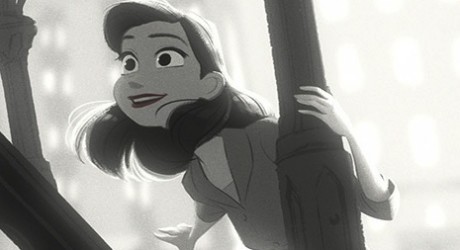
After that, we get the untitled Ron Clements and John Musker project, which is confirmed to be a hand-drawn film that might be done in the same style as John Kahrs' short film, Paperman. I’ve raved about that before, and from the stills we’ve gotten over the months, it’s already the signal to the next frontier in animation. There are also rumors floating around about a third Fantasia film, and there are numerous possibilities there. Tons of scrapped projects are laying around too, from King of the Elves to My Peoples to Fraidy Cat to Don Quixote to Antonius.

All of this happening right now is why I believe we are already going through the next Renaissance. Frog and Tangled already tried new things in some way or another while being good films, Ralph, Frozen, Big Hero 6 and the untitled Ron & John film should do the same... As long as they are very good films. Then you have the short films, which are also quietly fueling the Renaissance. How To Hook Up Your Home Theater was a return to the short film format for Disney, and hand-drawn animation. Safer shorts were training vehicles for younger animators, like the successful Prep & Landing shorts and Tangled Ever After. Two shorts remain out of reach, Glago's Guest and Tick Tock Tale, but at least we are getting Paperman before Wreck-It Ralph this autumn.

After that, one can only imagine what we’re going to get. If Disney’s upcoming slate is already loaded, there are so many possibilities on the horizon. Films that can keep the Renaissance going, longer than the first one and perhaps an extremely long time. Walt Disney Animation Studios is bursting like fireworks now since they are free from the clutches that held them back, with Bolt, The Princess and the Frog and Tangled behind them. Fulfilling Uncle Walt’s dreams? It’s going to happen...

Friday, June 29, 2012

Moving Forward (Part 3)


Here in part 3, I take a look at Tangled, Walt Disney Animation Studios' 50th film (if you happen to go by the canon, that is). This film was notable for being Disney's biggest commercial success since the Renaissance, and one that got outright critical acclaim. But, is it deserving of the status of "Best Disney animated film in years?" Also, I take a look at Winnie the Pooh, the hand-drawn follow up to The Princess and the Frog.

~

Tangled
Directed by Byron Howard and Nathan Greno
Written by Dan Fogelman
Produced by Roy Conli, John Lasseter and Glen Keane
Released on November 24, 2010

Another project that was on and off at Disney for so many years, a serious attempt to actually get started on it occurred sometime towards the end of Michael Eisner’s regime. It was originally thought to be a Shrek-style film called Rapunzel Unbraided, and it was a project that just remained on the back burner until the new regime changed Walt Disney Animation Studios. The writers quickly dropped the original plot, involving two modern day teenagers playing the roles of Rapunzel and her love interest. It would not have worked.

Originally thought to be a revolutionary breakthrough for computer animation, the project would later shift to two directors Nathan Greno and Byron Howard, while original co-director Glen Keane (master Disney animator) was out. He was still involved with the recooked film, which went from Raounzel to Tangled due to Disney’s concerns over The Princess and the Frog’s box office performance.

Tangled comes off as two films much like Meet The Robinsons: 1). An irreverent comedy that sweetly pokes fun at Disney traditions, and not in a cynical and mean-spirited way like DreamWorks’ Shrek films. 2). A heartfelt film in the great tradition of classic Disney films. Meet The Robinsons had a hard time balancing two ideas, this one tries a bit harder and succeeds.

The rather gabby first act really establishes the relationship between Rapunzel (voiced by Mandy Moore) and Mother Gothel (voiced brilliantly by Donna Murphy). In the film’s first few minutes, Mother Gothel steals an infant Rapunzel from the king and queen of an unnamed kingdom and has her locked up in a hidden tower in the forest. Why? She wants Rapunzel’s magical hair to keep her young and beautiful.

Mother Gothel is manipulative of her, no doubt, but at the same time, it’s possible that Gothel actually has some form of affection towards her. Immediately, an emotional side of the story begins to take shape. At the same time, we’re treated to slapstick with Flynn Rider (voiced by Zachary Levy), a bandit who is just after valuables and Maximus, a palace horse. Actually, the two animals in this film don't speak, which makes them even funnier. Aside from Maximus, we also have Pascal, Rapunzel's chameleon. The comic relief all works very well and it adds fun to the story.

We are also introduced to the Stabbington brothers (voiced by Ron Perlman), who Flynn cons during the heist. They seem like minor characters at first, but they do play an important role later in the film along with the tiara that Flynn steals from the kingdom. Character development is more front and center in the film's second act, as we get to know more of Flynn's background. Rapunzel herself is a very well-written character. She isn't rebellious per se, she's curious about the lanterns that always appear on her eighteenth birthday, being sheltered her whole life. She stills worries about what Mother Gothel will say when she leaves the tower for the first time, which says quite a lot about her.

Alan Menken’s musical numbers seem a bit modest at best early on, though “Mother Knows Best” says a lot about Gothel’s character (Judge Claude Frollo in a way, but more flamboyant) despite being a bit silly. Rapunzel’s “When Will My Life Begin” is a great opening that is a bright, cheery number. Menken tries to recreate a showstopper with “I’ve Got a Dream”, a rather nonsensical song that everyone in The Snuggly Duckling (a tavern full of huge, intimidating brutes who are just silly, dreaming men at heart) sings with joy. It’s a little too silly, and it just feels like an attempt to give us another “Gaston”.

Tangled starts firing on all cylinders towards the end of the second act. After an uplifting dance scene in the middle of the kingdom (an actual dance, not one set to some pop song), we see just how saddened the King and Queen are when they plan to launch the lanterns in celebration of Rapunzel’s eighteenth birthday. It’s a silent scene, and for the better, and it wonderfully pulls the heartstrings. This leads to Menken’s “I See The Light”, the film’s best song and one that is a lovely tribute to the big love ballads in the Disney Renaissance films: “Tale as Old as Time”, “A Whole New World”, etc. The color, art direction and lighting on this scene is breathtaking.

When Rapunzel realizes how she’s been lied to all these years, it leads to a surprisingly tense third act that ends with a very sweet conclusion. The color scheme changes during Rapunzel confrontation with Mother Gothel, along with Menken’s score. The writers still attempt to throw humor into the film’s third act, but it’s never distracting. Tangled’s story is very solid, but it’s only held back by a rather inconsistent script. The aforementioned "two movies" problem does affect the film’s first act, and some of Menken’s work is rather flat. At times, the dialogue is all modern and that can get annoying. Eugene’s narration at the film’s beginning and end was rather unnecessary as well, because it treats the film as if it isn't serious. ("But don't worry! This is a fun story!")

Pretty as the animation is, it’s not the revolutionary style we were going to get. Instead, it’s an upgrade of the painterly look used in Bolt. It is a mere stepping stone, but it’s still nice. The character designs are appealing, but not fresh. They basically retain the typical appealing Disney look, but in computer animation. Rapunzel and Flynn's designs are very good, Mother Gothel's tows the fine line between menacing and motherly, with a dash of something over the top. The rest of the humans' designs aren't bland, but they're more on the typical side. Nothing unexpected here. The best designs were saved for Maximus and Pascal, being the film's show-stealers.

Tangled, like most of the recent Disney films, is another project that was saved from development hell. It's one that entertains like no other, and it comes off as a great crowd-pleaser. However, the story and script don’t match the likes of The Princess and the Frog, and even Bolt to some extent. The film somewhat struggles to keep a consistent tone, not knowing if it wants to be a fun comedy or something more in line with a Pixar film. It’s a bit on the safe side, but it has its heart in the right place.
B+


~

Winnie the Pooh
Directed by Stephen J. Anderson and Don Hall
Written by Stephen J. Anderson, Clio Chiang
Don Dougherty Don Hall, Brian Kesinger, Nicole Mitchell
Jeremy Spears and Kendelle Hoyer
Produced by Peter Del Vecho
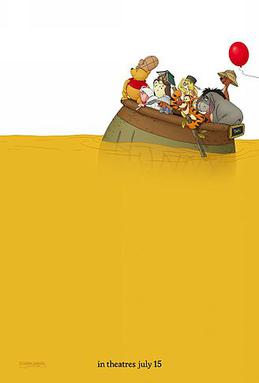
Released on July 15, 2011

Winnie the Pooh was really nothing more than a gap filler for both Walt Disney Animation Studios and for corporate Disney. Disney apparently needed another Winnie the Pooh feature film to keep the franchise alive (why would they though?). Thankfully, John Lasseter took this under his wing and set out to make a film that was faithful to Walt Disney’s take on A.A. Milne’s classic stories.

At a brisk 69 minutes, Winnie the Pooh is well-paced and quick. It only takes two stories and turns them into a non-cinematic storyline, but one that is very charming and immediately likable. The voice cast is mostly different from the folks who voiced the Pooh characters for the last ten years, but they do a fine job nonetheless.

Nods to the original shorts are littered everywhere. Winnie the Pooh can almost be called a tribute film, yet it's one of the few films in this day and age that appeals more to children yet it does not pander to them like most of today's kid-oriented films. Winnie the Pooh is still a family film, as there is enough wit and charm to entertain anyone older than eight. It's very sentimental and nostalgic, tapping the right buttons.

Like the original shorts, it’s also a musical, with charming musical numbers and an affectionate re-imagining of the Winnie the Pooh theme song sung by Zooey Deschanel. The animation is virtually the same as the original shorts, it’s minimal and it resembles illustrations, but it's great to look at. At the same time, the animators throw in some surrealism to spice things up, with the chalk drawing “Backson” song scene and Winnie’s honey hallucination.

In the end, Winnie the Pooh is a pleasant film that’s very well-written. It’s not ambitious, being just a Winnie the Pooh film, but it’s a lot of fun and one that has a lot of passion put into it.
B+

~

A Grand Slam and a Big Bomb


After several years of early development and story changes, a definitive story took shape at Walt Disney Animation Studios. Rapunzel would continue Disney's classic tradition of adapting well-known fairy tales. For many years of course, this was going to be Rapunzel Unbraided, which ultimately would not have worked out. One look at this PreViz from 2005 is a great indicator.


Glen Keane and the crew behind this film would bring forth a revolutionary art style that made the film look like a Rococo painting come to life. Over the years though, the film would only have sheds of that, instead it would just improve upon the unique look used for Bolt. When finished, Disney kept touting that the budget for this film was $260 million, which would make it the most expensive animated film ever produced unadjusted. Disney most likely took the money spent on early development over the years (for example, Disney spent $25 million during development of Kingdom of the Sun, which later was reworked into The Emperor's New Groove, so that was added to the finished film's $75 million production budget) and added that to how much the actual film cost to make, which should've been around $120-140 million.

Before Tangled's first trailer ever appeared, changes happened at Disney. Rich Ross, whose background was in television, mainly the Disney Channel, was made Chairman of the Walt Disney Studios by CEO Robert Iger. He immediately fired everyone in the marketing department and brought in inexperienced young blood. Rapunzel was dropped, as the executives blamed The Princess and the Frog's underperformance on young boys avoiding a film with "princess" in the title. Failing to realize that it was bland marketing that caused it to underperform, they assumed re-titling Rapunzel to Tangled would solve the problem. This change deservedly got criticized, since the film is, at heart, Rapunzel.


Tangled was an awful title, and many folks knew it. Disney veteran Floyd Norman scathed Disney's decisions, and he was right to do so. Tangled's teaser trailer, which debuted in front of Toy Story 3, was an absolute disaster. With its pop music, teenybopper dialogue ("Best day ever!") and frenetic tone, this looked like a debacle in the making. The marketing, however, was aggressive. The film debuted on November 24, 2010, touted as the 50th Disney animated feature film in the canon.

Something happened... It opened with... $48 million at the domestic box office, a record for a Disney animated feature film! Critics loved it, and word of mouth caught on that this was a comeback for Disney, despite how good Bolt and The Princess and the Frog were. With Thanksgiving weekend giving it a boost, Tangled outgrossed all of the post-Lion King Disney animated features unadjusted. It took in $200 million domestically and $590 million worldwide, while also doing very well on home media.

While Tangled's success was great, it's also saddening at the same time. The two films that preceded it definitely could've done as well had they been backed by better marketing, since word of mouth elevated those films beyond their awful opening weekend performances. With that behind them, you'd think there would be some fanfare for the next animated feature, right? Think again...


Enter Winnie the Pooh, which was a fairly modest project that only cost $30 million to make. It would be a cheaper endeavor, one that could keep the Winnie the Pooh franchise going. The problem was, selling a Winnie the Pooh film wasn't easy. Ever since the Winnie the Pooh merchandising explosion of the early 1990s, numerous direct-to-video and theatrical spin-offs, alongside awful preschooler television shows that heavily pandered to the younger set, Winnie the Pooh seemed like a "kids only" thing from Disney despite the brilliance of the original short subjects.

Winnie the Pooh was obviously going to be just like those short subjects, so maybe it would be a slow burner at the box office. It was not likely. Disney's marketing department, for reasons unknown, decided to give it the barebones treatment. It debuted in Europe first in mid-April, and it did terrible business. The domestic release occurred on July 15, 2011, the same day Harry Potter and the Deathly Hollows, Part 2 opened. Now, Winnie the Pooh obviously wasn't going to appeal to the same demographic, but it could've. Here's why...

When an animated film grosses a lot, it shows that more than just families and children made them a success. Adults and teenagers play a big part in the success of the biggest animated films, and Winnie the Pooh could've gotten a decent chunk of that had it been marketed correctly and given a better release date. With that, it only opened with an awful $7 million, but... Word of mouth was good! It climbed to $26 million, but that made it the least-attended Disney animated film in years.


Like I said in the review, Disney could've avoided this and just left 2011 empty. The two stories used to form the film (originally, there was going to be five!) could've been divided into two short subjects. With that, they could've avoided the financial disappointment. Hand-drawn animation wouldn't have taken such a harsh blow, and maybe hand-drawn animation would really make a comeback much earlier. It was another marketing woe from Disney that hurt a very good animated feature...

Meet The Robinsons, Bolt, The Princess and the Frog, Tangled and Winnie the Pooh are the rebirth of Walt Disney Animation Studios, as the first film slowly started the Third Golden Age of Animation alongside Enchanted. These films were met with praise for the most part, and are seen as superior to what Disney was churning out every year. After The Lion King, Disney's animation wing fell victim to the executives who thought their "help" was going to improve the animated features. There were a few risky efforts that worked for the most part, but other films only turned people away from the studio as Pixar, DreamWorks and Blue Sky were offering the goods.

Disney executives, and DreamWorks' executives, were so quick to torpedo hand-drawn animation in 2003. DreamWorks' Sinbad: Legend of the Seven Seas tanked and Disney's Brother Bear underperformed. Finding Nemo, on the other hand, outgrossed the two of them put together by an extremely wide margin. It did so because it was far superior to those films, not because it was a computer animated film. Sure, computer animation was a novelty to audiences back then, but now that it's worn off, now is the time to re-introduce hand-drawn to audiences. Now is the time to remind audiences why Disney is a great animation studio, and shatter the whole "Pixar is great, Disney is bad" mindset.


These five films are already proving this slowly but surely, as Disney seems to be excited about promoting the risky Wreck-It Ralph. With its November release date, an appeal amongst the gamer crowd along with family audiences, and a satisfying trailer, they are looking to recreate Tangled's success. If it does well, then that's good... But that can't be a once in a lifetime hit. Frozen needs to repeat that success when that opens in 2013. The next planned film is Big Hero 6, which will be something along the lines of a blockbuster being based on a Marvel Comics series. That should be another critical and commercial success, if not something that'll be an easy sell to support the studio.

But more importantly, Ron Clements and John Musker's next film, a hand-drawn film that's reportedly going to be done the same style of John Kahr's revolutionary short film Paperman, needs to be even more successful in order to really kick things into high gear.

The future of Disney animation?

Paperman, which is going to debut in front of Wreck-It Ralph, will be no ordinary animated short film. The animation itself is a seamless blending of computer animation and hand-drawn animation, not for a sequence, but for an entire short film. According to various reports, this is how Ron and John's next film is going to look. This is apparently going to be what Disney will be doing for traditional animated features. Not only are they experimenting and trying something different, they are also breaking new ground for the medium. If Ron and John's next film is just like this, then it's not only going to elevate Disney's animated feature studio at the box office, but propel the medium to amazing new heights. You might say the other studios are going to try and emulate that.

It seems as if Walt Disney's dreams of advancing the medium are going to come true. The Disney studios almost got there, had Pinocchio, Fantasia and Bambi never bombed at the box office and shattered Disney's confidence in ambitious works. Over 70 years later, as the studio is no longer controlled by executives or people who weren't creative, they have the opportunity to take daring risks again. With the success of Tangled behind them, now is their chance to really soar.

Can it happen?

~

From Part 4 onwards, I'll take a look at the DreamWorks' films that were released in the last four years starting with Kung Fu Panda. Do you personally believe that Walt Disney Animation Studios is heading towards a new Renaissance? Do you think the Third Golden Age of Animation has been going on since 2007? Or do you think that it has yet to start? Which of these upcoming Disney films are you looking forward to? Which of the five films do you consider the best? Sound off!