Showing posts with label The Little Mermaid. Show all posts

Thursday, September 12, 2013

A Facepalm-Worthy Move


This news has made the rounds lately. Disney is re-releasing The Little Mermaid in select theaters on September 20th, but this re-release is a "Live Second Screen" event...

Second Screen, in case you did not know, is an iPad app that Disney designed for the Blu-rays of their films so you can view behind-the-scenes content while watching one of the films. It's an okay novelty for an at-home bonus feature, though personally, I prefer to have all the bonus materials on the disc. I don't want to have to use my iPad to look at bonuses that should have been on the discs.

Anyhoo, this release is one of the stupidest and most inane decisions that Disney has ever made... You canceled the wide theatrical re-release of this hand-drawn animated classic that everyone wants to see on the big screen again... For this?!

No... Just, no...

The idea is just idiotic. People using their mobile devices in theaters is bad enough, why condone the use of iPads during a film screening? Why would you want to attend a screening of The Little Mermaid to not watch it, but to just play stupid games and look at stuff on your iPad? What... The... Hell? Plus, there's watching. It's talking and playing with your iPad. Sounds like fun, right? Right?!

Here you've got a true Disney classic, it's hand-drawn and we don't see much of that on the big screen anymore, and you're putting this film on the big screen for the first time in over 15 years... And this is what you do?!

Stupid, stupid, stupid!

And don't get me started on theaters wanting to change the moviegoing experience, by having movies be more "interactive". What ever happened to sitting down in a theater and watching a damn film? Disney... Why do you have to give into this growing trend that shouldn't even be a thing? This is going to kill the very essence of cinema, and in the meantime, you are throwing a wonderful animated classic under the bus.

And to think that this film was going to get a proper theatrical re-release this coming Friday...

Saturday, January 26, 2013

More Diamond Confusion


Those who have gotten their hands on the upcoming Diamond Edition of Peter Pan have confirmed that the Spring 2014 Diamond Edition will be The Jungle Book. Oddly enough, the UK and most of Europe are getting both The Jungle Book and The Little Mermaid as Diamond Editions this autumn. Certainly some strange changes have been going on with Disney's home entertainment division, that's for sure.

Last year, we found out that titles such as Pinocchio and One Hundred and One Dalmatians were dropped from the Diamond line in various countries. Whatever the reason, be it sales or Disney's desire to quickly phase the line out, it came as a shock. The Platinum/Diamond collection consist of Disney's best-selling films, so sales might have to do with something. Not much is known, but it is strange nonetheless. Disney fans are certainly trying to make heads or tails of the situation.

So I have a question: What will be the Autumn 2014 Diamond Edition? Aladdin or One Hundred and One Dalmatians?

Disney only has four titles left to issue as Diamond Editions: Pinocchio, Sleeping Beauty, One Hundred and One Dalmatians and AladdinDalmatians and Aladdin have never been released on Blu-ray before. Pinocchio and Sleeping Beauty have, when the line was still the Platinum Edition collection. Both Blu-ray releases were excellent, so will they be re-issued as is but with the Diamond moniker? Maybe. Maybe not.


I have a feeling that Aladdin will be the fall 2014 title. Why? Well, Disney has proudly announced that a Broadway musical adaptation of the 1992 film is coming in spring 2014. With that, I and many others assumed that Aladdin would be released to coincide with the play. Well, now that The Jungle Book is confirmed for Spring 2014, then my best guess is that Aladdin will hit stores in autumn 2014. That would be ten years after its last home media release, the Platinum Edition DVD.

It would also be perfect because it could follow a 3D theatrical re-release.

Now I am well aware that Disney (wrongly) cancelled the 3D theatrical re-release of The Little Mermaid, which would precede its Blu-ray release this autumn. Now it's quietly being suggested that Disney didn't outright scrap the re-release, but instead they are going to release it another time. The Little Mermaid in 3D had some pretty tough 3D competition ahead of it. Family-friendly competition: The 3D re-release of Attack of the Clones and Sony Animation's Cloudy with a Chance of Meatballs 2. Now if Disney were smart, they'd give it an August release, maybe a few weeks after Planes. But there's the other frustrating thing; Disney gave that direct-to-video film a theatrical release. If Planes wasn't on track for an August 2013 release, I think Mermaid would've occupied that slot.

The Little Mermaid 3D, if released, would be very successful. It would possibly rival the gross that The Lion King 3D took in. Why? The Little Mermaid has been in the vault for a while; whereas Beauty and the Beast was readily available on home media when the 3D re-release came out. Finding Nemo and Monsters, Inc. went out of print shortly before the re-releases, so there was probably no rush to see those two films in theaters. Plus, I think people wanted to see the classics on the big screen, not the Pixar films. That's not a jab at Pixar; I loved the 3D in Finding Nemo. But I think audiences wanted to see something like Mermaid or Aladdin or maybe something like Cinderella in theaters.

If anything, Disney should not be so quick to cancel the theatrical re-release. There's still an opportunity for them in an August 2013 release. It may be cut off of by Planes, but it'll have the first weeks of September all to itself. I'd personally prefer if Disney scrapped the theatrical release of Planes, but we know that's not going to happen. So it looks like Mermaid 3D is done for.

Disney could do that with Aladdin in September 2014, but since they scrapped Mermaid 3D, I have a feeling that they have lost faith in 3D rereleases.


So if Aladdin comes in fall 2014, that means we have to wait to spring 2015 for One Hundred and One Dalmatians. Or vice versa. The film is available in Europe on Blu-ray, and has been since this past autumn. It's no longer a Diamond title there, so it was given a release already, ditto Peter Pan. That's the only thing... I don't want to have to wait until 2015 for Dalmatians.

Disney probably wouldn't release two Diamonds at the same time here in the states, though they are apparently content with doing so in Europe. Again, The Jungle Book and The Little Mermaid debut on the format over there in the fall. After that, there are no more titles. Aladdin might not be in the Diamond line in Europe anymore. Australia, France, Germany and the United Arab Emirates get it in the spring as a stand-alone release. The UK must be getting it soon, too, I assume. They appear to have no spring 2013 Diamond Edition, but there's no signs showing that Aladdin is a Diamond over there.

Here's another theory: What if Disney all of a sudden just drops Aladdin from the Diamond collection here and releases it on Blu-ray this year? The demand is pretty damn high, and the film remains popular. It's always on ABC Family a lot for some reason, too. Also, if they give it a release sometime this year, it'll be a great way to promote the upcoming Broadway musical. That could really pay off. Just remove that damn Diamond label, keep the boatloads of bonus features, make a prestigious release and release it as a "Special Edition" of sorts. That way, Disney can plug the play while also satisfying those who really want the film on Blu-ray.

If they don't, we'll have to wait till 2015 for the last Diamond (that's not on Blu) to show up. If one title was dropped, Disney could finish the line ahead of schedule. Heck, they could even drop Dalmatians and give that a prestigious release while ending the line with The Jungle Book. Quicker too, because, will Blu-ray still be a choice format in 2015?

Monday, January 14, 2013

Disney Updates Their Schedule


Walt Disney Pictures announced some new additions to their upcoming schedules and also moved a few releases.

For starters, the fifth installment in the Pirates of the Caribbean series will open on July 10, 2015. This is a return to the series' usual spot, only At World's End and On Stranger Tides were late May releases. As for the film itself, I can take it or leave it. I felt that On Stranger Tides was less convoluted than At World's End, but I thought it was just bland and lacked any punch. If the fifth installment restores some of the franchise's lost luster, I'll check it out.

Maleficent also moved. It was originally scheduled for release on March 14, 2014. It now opens on July 2nd. This way, it won't go head to head with DreamWorks' Me and My Shadow.

Brad Bird's cryptic upcoming project, 1952, is now penciled in for December 19, 2014. It will also be the director's first 3D film, but will they film it in 3D? Or will it be another post-conversion job? Speaking of 3D, the two Marvel Cinematic Universe films opening in 2014 will also be in the format: Captain America: The Winter Soldier (opens April 4th) and Guardians of the Galaxy (opens August 1). I assume both will be post-conversion 3D like the other MCU films.

The Muppets II was initially announced for a December 20, 2013 release; the same day as Saving Mr. Banks. Thankfully Disney moved the sequel to March 21, 2014. This way, it can probably outgross its predecessor and be a big hit. Why the first one didn't do so well is beyond me.

We got no word on other 2014/2015 releases. There's still no date for the Phineas and Ferb film adaptation; I just hope it isn't in limbo at this point. The untitled Walt Disney Animation Studios film (to be released on November 7, 2014) remains, well... Untitled. Star Wars Episode VII has no date either, but this is understandable. The usually May spot will dominated by The Avengers 2 among other releases. Hopefully we'll find out what's coming in 2016 in the coming months be it one of the new projects Disney green lit or the third Tron film.

Most of this is all good news, but part of it isn't. In fact, the last change is pretty bad news. The planned 3D re-release of The Little Mermaid is no longer a reality. I was hoping to see the 1989 classic on the big screen, but it seems as if Disney has lost faith in the 3D re-release routine. I believe they went about it the wrong way; releasing films that weren't out of reach to theaters and hoping they would replicate the success of The Lion King 3D.

I've been saying it for a while: The 3D re-releases of Beauty and the Beast, Finding Nemo and Monsters, Inc. didn't make big bucks because they weren't out of reach. The Lion King was vaulted in January 2005, so the re-release came at the right time. Beauty and the Beast and Monsters, Inc. were available when the 3D re-releases hit theaters. Finding Nemo was vaulted in January 2010, but literally everyone and their brother has a copy of Finding Nemo. Of course those re-releases wouldn't match The Lion King 3D's $93 million domestic total.

All I can say is: Disney, you are making a mistake. Big time.

Update: Brad Bird confirmed on Twitter that 1952 being in 3D is a rumor.

Sunday, October 21, 2012

Bringing The Magic Home


Walt Disney Home Video certainly got off to a rather slow start, but in the mid-1980s, the launching of the Classics line would start a new, successful era for the company and for their animation studio...

The Disney executives saw how successful an animated feature could be on home video, as opposed to a theatrical re-release. However, Pinocchio ultimately grossed $13 million on home video, less than what the latest re-release took in ($21 million), but Disney was satisfied nonetheless. It was withdrawn and put on moratorium in February 1986, a month after a certain promotion ended. One that would help the video sell.

The $29.95 price drop for Pinocchio would apply to 20 other titles, which would all be part of a special holiday promotion Disney launched called “Making Your Dreams Come True”. The other titles consisted of re-issues of live-action titles that were currently available, but in a new packaging scheme. The Walt Disney Home Video logo and Mickey Mouse artwork would be significantly smaller compared to the earlier releases, and the artwork would take up more of the cover.

Other titles were special-made collector’s videos that featured sequences of Disney films, both animated and live-action. One of these releases is the rather odd The Walt Disney Comedy and Magic Revue, which feels like a cheesy variety program showcasing clips from classic Disney films. It’s as if Walt Disney Home Video was flat out saying, “Yeah some of these aren’t yet, but here’s some footage!” See for yourself.

The most notable title in this promotion was the repackaged release of Dumbo, which was now a Classics edition with deluxe treatment artwork and the diamond all over the packaging.

I felt I'd show my Betamax copy,
my VHS copy has faded artwork.

However, I always felt that this was turned into a Classics release at last minute: The tape itself opens with the Walt Disney Home Video logo, as opposed to the Classics logo. Perhaps it was nothing more than an editing mistake, but it could’ve been scheduled for a non-Classics releases. Needless to say, this is the first release of “that older pink cover”. Perhaps at such a lower price (it retailed for $84.95 up until then), it was easier for consumers to add to their collection alongside the seemingly out-of-reach Robin Hood and Pinocchio.


So what would come next? Sleeping Beauty was considered, since the theatrical re-release was coming up for March 1986. In the meantime, they released what was planned to be the second Classics release: The Sword in the Stone. The packaging was a bit different this time around. The clamshell wasn’t padded, and the diamond logo was not embossed inside. However, the logo is still all over the packaging. It was quietly released on March 25, 1986 for the typical price, $79.95.


Two months later, Disney launched the “Wonderland Sale” promotion, and the centerpiece was the fifth Classics release: Alice in Wonderland. This was the first time it hit home video after dropping out of print three years earlier. For the first time, it was in a cardboard slipcover case. The other titles in the sale (live-action titles and cartoon compilations) would also be packaged this way.


Disney was in need of another hit to replicate Pinocchio’s success, something that would be a hot seller. Sleeping Beauty took in $15 million, which wasn’t anything to write home about. Re-releases had been garnering less and less over the last couple of years, and Pinocchio did take in a good amount. The next big release in the Classics line would be none other than Sleeping Beauty, but unlike Pinocchio, it’s release would be closer to the holidays. Disney literally took full advantage of this.

In "Hi-Fi Stereo"!

They went all out with a $6 million marketing campaign for the release and all the other titles around it: “Bring Disney Home For Good!”


The promotion kicked off on October 14, 1986 when Sleeping Beauty hit stores. Disney adapted a new packaging scheme: White clamshell cases with removable artwork.


And the spine artwork was slightly changed for the Classics editions...


This would the norm for all future clamshell releases. The previous Classics editions were also re-issued, some of which had been in the vault such as Pinocchio and Robin Hood. All of them were priced at $29.95, like Sleeping Beauty. Disney also released all six of them in a collector’s box set, one that’s not too easy to find these days. It cost a whopping $179.70 back then, and this artwork was never again released.


The artwork itself on the box is a bit questionable, almost like watered down versions of the character models from the cover artwork. The images feel a bit cluttered too, but the best thing about this box is the top.


The Classics logo looks nice and eye-catching, though the font for Classics does look a bit like the Coca-Cola font. Ironically, Disney would do promotional tie-ins with them, which included a Classics box set in 1988. Other titles surrounded the Classics title premiere, such as the first volume in the highly successful Disney Sing Along Songs line (what 90s kid didn’t own at least one?) and more obligatory cartoon compilations alongside live action classics.

Sleeping Beauty completed trumped Pinocchio in sales. Over one million units were sold, becoming one of the best-selling home video titles of all time. The other titles in the promotion added to that, making it the biggest and most successful home video campaign in history. The Disney executives saw that the industry had changed. Consumers were willing to buy these films, especially families, on home video. The overall gross of the Sleeping Beauty video doubled what it made in its last theatrical re-issue, unlike Pinocchio.

With a lower price and lots of marketing, a Disney animated classic would sell extremely well and even possibly break few records and compete with the current blockbuster hits on home video. From there, the mindset changed. The next Classics releases would be backed by massive marketing campaigns, and as such, they would do exceptional business.

Next in line was Lady and the Tramp, which did take in $31 million in its 1986 theatrical re-release, more than what most of the Disney classics were making at the time. It was the logical choice for the fall 1987 title. What happened? It broke records for pre-orders (over one million) and ultimately became the best-selling home video title at the time with over three million units sold.


The video sales of the Classics were certainly a big help to the animation industry, and Disney’s quest to get their critical and box office power back. They were especially enthusiastic after Don Bluth’s An American Tail not only became the highest grossing animated film on initial release, but also sold over one million units on home video months later, rivaling Sleeping Beauty. Disney executives should’ve listened to Roy E. Disney, he knew it was wise to keep the animation studio alive.

Lady and the Tramp’s sales certainly showed that there was a large audience for animation, one that Disney didn’t get with The Black Cauldron or most of the re-issues of their classics. With that, and An American Tail beating them at the box office, the company had to strike back with an all-new animated film. That particular film would be Oliver & Company, which debuted in November 1988, months after the runaway success of Who Framed Roger Rabbit.


Meanwhile, Cinderella was released on home video on October 4, 1988, following its successful 1987 theatrical re-release.


It topped Lady and the Tramp, over seven million units were sold. Like the last two titles, it was backed by a huge campaign that would be a collaboration with Coca-Cola. Disney had their guns loaded, big time. Tons of cassettes were sold, and they even had a nice limited edition box set like the ones they released in 1986 and 1987 respectively. This box set, however, also contained some non-Classics titles.

The packaging scheme changed for Cinderella. The headings would no longer say “Walt Disney’s” (Robin Hood was the exception with “Walt Disney Productions’” and The Sword in the Stone with just “Disney’s”, later issues had the “Walt Disney’s” heading), they would say “Walt Disney’s Classic”. For post-Walt films, it would say “A Walt Disney Classic”. The big Classics diamond logo wouldn’t be on the back cover. The videos also sported a lovely new introduction, with its opening animation taken from their then-new Walt Disney Home Video logo.


This is actually an early version of the logo that was only used for this one release, though it did randomly show up on titles released years later. Perhaps Disney didn’t care for the color scheme, that’s why the next Classics release would contain a slightly altered one.

More importantly, the videocassette featured a trailer for Oliver & Company. The Classics release of Pinocchio contained a trailer for The Black Cauldron, but Sleeping Beauty didn’t contain any trailers because: a) Most Disney videocassettes didn’t have previews at the beginning, and b) Disney didn’t have anything new for the holiday 1986 season, animation-wise. With Cinderella, it was perfect timing.

Oliver & Company would prove to be a box office smash, beating out Don Bluth’s An American Tail and his latest film, The Land Before Time at the domestic box office with an enormous amount for its time. So with the runaway success of that, would Disney release it on home video? They didn’t...

Seems strange, doesn’t it? Universal didn’t hesitate to release An American Tail on home video right after its theatrical release, and it was a huge success for them. Again, the tape rivaled Sleeping Beauty’s record-breaking home video gross. Disney still had felt like the newer films had to be more exclusive events. It’s no surprise that the most recent Disney animated film available on home video happened to be a film that was over a decade old.

The Fox and the Hound wasn’t released on video because Disney didn’t release the animated films on video in the early 1980s and they were just getting into the market, and The Black Cauldron wasn’t released on home video for obvious reasons. The Great Mouse Detective? Also kept from video. Disney wouldn’t release a recent animated film on home video, they wanted to focus on the older films. They felt that re-releasing the recent films would benefit them, despite being released in the era of home video. Many 80s kids have mentioned this before, remembering the days when they wondered “Where’s Oliver & Company? How come it’s not on video?” in 1988 and 1989. This is why you 80s kids had to wait another eight years for the film to come out on home video.

You’d think with the success of An American Tail on home video, Disney would do the same for their current animated blockbuster. Oliver & Company wouldn’t appear again until a theatrical re-release in 1996, which wasn’t much of a success. When it came to home video months later, it didn’t do particularly. Disney learned a lesson, they should’ve released it as a Classics edition sometime in 1989 while the film was still a hot property. By 1996, the film was seriously dated. If they released it on home video in 1989, they could’ve sold millions of units and built up buzz for the next film.


For fall 1989, Disney released Bambi, since it did well in its recent theatrical re-release (1988). It streeted on September 28th, and once again it was backed by a huge marketing campaign. Over ten million units were moved, making it one of the top-selling home video titles of all time. The top spot happened to be held by Steven Spielberg’s E.T. the Extra-Terrestrial. Bambi would also be the first title to have promotional tie-ins: A rebate was offered if a consumer were to send in two proofs of purchase of Crest toothpaste. Who would’ve thought it?


Gotta love the pandering, but hey... Prototype artwork at the end!

The Bambi videocassette also contained a trailer for The Little Mermaid, much like the Cinderella video. The trailer has what sounds like a rough mix of “Under the Sea” and an early logo for the film that was originally used in a demo reel in 1988. This can be seen on the film’s 2006 Platinum Edition DVD.

Then in the holidays of 1989, we all know what happened...


The Little Mermaid became the highest grossing animated film on initial release, got two Oscars and got rave critical reception. Disney did some research at various movie theaters, finding out that consumers were willing to buy on home video whenever, holidays or not. Disney missed that with Oliver & Company, so for the spring of 1990, they would release The Little Mermaid as the next Classics title.


The Little Mermaid hit home video on May 18, 1990. The release was highly successful, a whopping ten million units were sold. And before you make a joke about the cover artwork, no this release was not banned. There was a small controversy surrounding the artwork because a single person wanted it banned from her local supermarket. Now let’s put that to rest and stop claiming that the release was banned. It wasn’t. Also, unlike Bambi, there were no promotional tie-ins, oddly enough.

This would also be the first time since 1986 where there would be more than one new Classics release. On September 21st, Walt Disney Home Video released Peter Pan, fresh off of its successful 1989 theatrical re-release. There was a promotional tie-in with Nabisco, which Disney would later use for future home video releases.


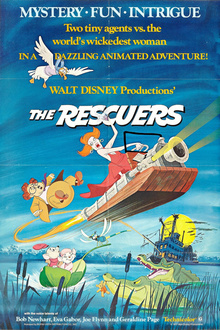
Now Disney released this as the fall 1990 title for obvious reasons, but in all honesty, they should’ve released The Rescuers instead. That’s right, The Rescuers, the little 1977 film from Disney that people seem to forget. That was theatrically re-released in 1989 as well, probably to get audiences geared up for The Rescuers Down Under. Had they released this in fall 1990, it could’ve helped The Rescuers Down Under score a bigger opening weekend than it did.

Of course, The Rescuers Down Under would be an underperformer at the box office. Jeffrey Katzenberg saw the disappointing opening weekend take, and he had all the marketing for the film pulled. It could’ve garnered word of mouth and made a good amount, but he had no faith in it. Competition was heavy on top of it. It was a premature decision, and one that held a very ambitious film back from being the success it should’ve been. This is why The Rescuers oddly appeared on home video after its sequel. In Europe, it was the other way around.

Peter Pan was also a massive success, selling seven million units. Both The Little Mermaid and Peter Pan went into moratorium in April 1991. This strategy would prove to be highly successful.


This was the birth of the vault. Like the theatrical re-releases, putting them out for a limited time paved the way for successful sales. Titles like Dumbo, Alice in Wonderland and The Sword in the Stone weren’t put on moratorium. They were constantly re-issued with slightly changed packaging schemes, and were given brand new artwork (sans Alice) in 1989. Initially hesitant with the home video market, it proved to be a great success for the company and played a great role in shaping the Second Golden Age of Animation which of course lead to... The Disney Renaissance.

Monday, September 24, 2012

Two Diamonds?

This should be the cover
artwork for the Blu-ray release.

Last month, I discussed the future of Disney's home media output, and how they have dropped two titles (Pinocchio and One Hundred and One Dalmatians) from the Platinum/Diamond line. Not too long ago, Blu-ray.com and an insert that's probably going to be with the Cinderella Blu-ray confirms that Peter Pan will be the next Diamond Edition. It'll be released on February 5, 2013, just in time for the film's 60th anniversary, which the insert oddly doesn't even mention.

Now, what about Aladdin? That was originally scheduled for a February/March 2013 release. Perhaps Disney will release both Diamond Editions the same day. It makes sense, since Disney is phasing out the Diamond line. Perhaps they will release two titles the same day in order to get them out quicker? Many people complain about the vault and having to wait, but perhaps Disney releasing two in one day will somewhat make up for this.

Maybe not, apparently there's no insert mentioning Aladdin. Aladdin wasn't on the original press release announcing the Diamond line, but it was announced as the early 2013 Diamond title on the Lady and the Tramp Diamond Edition Blu-ray. What is going on, Disney?

If Disney ends up releasing Peter Pan and Aladdin at the same time (that is, if Aladdin remains a Diamond title), then what will accompany the October 2013 Blu-ray release of The Little Mermaid? The Jungle Book, since that's still a Diamond Edition. Sleeping Beauty and Pinocchio are already on Blu-ray, so no fuss there.

With Dalmatians out in Europe, it'll hit Blu-ray stateside sooner, most likely sometime next spring or summer. The Peter Pan Blu-ray is coming out in Europe in November. (For example, the UK gets it on November 5th) This is probably why we are getting it, but the announcement seems rather abrupt. Disney certainly is making some different decisions here, but with the advent of their All Access plans (didn't they change the name of that?), the vault strategy may be revised or left unchanged.

What do you think they'll end up doing with the Diamond line?

Friday, September 21, 2012

Disney and Don Bluth: An Alternate History


Don Bluth’s departure from Disney in September of 1979 was certainly a devastating blow to the troubled animation studio. Upon arrival, he was instrumental in shaping The Rescuers, which went from potential disaster to Disney’s biggest hit and the highest grossing animated film on initial release at the time. Don Bluth wanted to bring back the classic storytelling to Disney animation, something that was not on display in The Aristocats and Robin Hood, which were cheap, often lazy films that kept the animation studio alive.

Bluth stormed out of the studio during production of The Fox and the Hound, which wouldn’t garner the praise that The Rescuers got but was a box office success. More animators were brought on board after Bluth left with fourteen other animators, and they were put to work on safer projects such as Mickey's Christmas Carol before moving onto the ambitious debacle that would be The Black Cauldron.

Now what if Don Bluth never left? What if he was able to fight the management and bring Disney animation back to the glory days? Perhaps the Second Golden Age would’ve started with The Rescuers and flourished from there...

~


The autumn of 1977...

The Rescuers was a massive hit at the box office over the summer and got the best reviews for a Disney animated film since One Hundred and One Dalmatians. It is a triumphant success, one that even outgrosses Star Wars in some European markets. It has a better storyline, better writing, and better animation that what was seen in the previous two films. (Not counting The Many Adventures of Winnie the Pooh, released earlier that year.)

The conservative management at Disney sees the potential the new animators can bring to the table, as production wraps on more training vehicles like Pete's Dragon and The Small One. Production on The Fox and the Hound, an adaptation of a novel by Daniel P. Mannix, begins immediately. Next in line is an adaptation of Lloyd Alexander’s The Chronicles of Prydain series, which Disney had the rights to since 1971. Other projects such as an adaptation of Robert O’Brien’s Mrs. Frisby and the Rats of NIMH are also considered, along with an adaptation of Chanticleer, which was canned by Disney back in 1960.

Wolfgang Reitherman prepares treatment for The Fox and the Hound and presents it to the story crew and animators in early 1978. While it does have some good ideas, it is overall reminiscent of Robin Hood, with goofy Southern characters, cutesy moments and a corny disco number to be sung by Phil Harris and Charo. All of the animators, and even the management object to this. Wolfgang Reitherman retires shortly after, Don Bluth reshapes the story and keeps a few elements from Woolie’s treatment.

Coverage surrounds the production of the film, unheard of in the animation world. $12 million goes into the production, making it the highest for an animated feature film. Meanwhile, Disney searches for other talent for their live-action output. Don Bluth changes the Robin Hood-esque story into one that’s more in line with Snow White and the Seven Dwarfs, with occasionally dark and frightening moments for the younger set. It also has a strong message about prejudice, made more front-and-center than it was in Woolie’s version. Oddly enough, it’s no happily ever after ending, as it has a more bittersweet ending while it’s nowhere as harsh as it was in the book.

The Fox and the Hound is completed in time for its planned holiday 1980 release. The marketing plays up the darker angle of the story. Disney had ventured into the PG territory for their live action fare, though The Fox and the Hound would still get a G rating. The child-friendly marketing focused on the scenes with young Tod and Copper, while the general marketing played down the cutesy elements.

Reaching a Bigger Audience

The Fox and the Hound opens on December 12, 1980 to critical praise all across the board. It’s called “Bambi for the current generation”. Critics praise the dark and often moody story, while also admiring the animation. It also isn’t a musical, though there are some songs sung off-screen that get some acclaim. With that, Roy Disney comes to the studio and makes sure the management can hold everything together. The Fox and the Hound takes in $91 million and dents the Top 5.

Production begins on The Black Cauldron, the planned adaptation of The Chronicles of Prydain. Don Bluth, along with the new team of animators, work two books into one story while also ironing out the bugs and glitches. The film is scheduled for release in 1983. What better way to do an epic fantasy but through the power of Disney animation? The team are determined to really live up to the ambitions of Walt Disney with this film, and rival the likes of Snow White and the Seven Dwarfs, Pinocchio and Fantasia. A budget of $25 million is secured, trumping The Fox and the Hound.

Other animation studios resort to producing cheap toy commercials, though some artistic films caught on such as Twice Upon a Time and The Plague Dogs. While The Black Cauldron is well into production, Tron is released. An advancement for computer generated imagery, the animators use these new tricks for The Black Cauldron, as Don Bluth favors effects. A young John Lasseter is also highly interested, doing a test scene with Glen Keane for the potential next film at Disney: Where the Wild Things Are. With these kinds of effects, The Black Cauldron could compete with the big budget heavies for the year, mainly Return of the Jedi. The film is also done in APT, which replaces the scratchy look of Xerography, and makes for a much cleaner-looking picture with better clean-up animation work. It's a step up from The Rescuers and The Fox and the Hound, which use a softened version of Xerography that uses colored lines.

The Black Cauldron opens on July 22, 1983. It is the first Disney animated film to receive a PG rating from the MPAA for scary imagery, dark moments, some brief language and some unexpected bloody violence. This was the new Disney, more adult-oriented while still suitable enough for family audiences. The marketing is aggressive, selling it as a big fantasy epic and one to really take off at the box office, and it did. On top of unanimous praise, the film grossed $145 million domestically and over $300 million worldwide. It was the second biggest film of the year behind Return of the Jedi and the highest grossing animated film on initial release. Its final total even surpasses Snow White’s unadjusted totals plus all of its re-releases. Disney animation was heading into a new frontier, a Renaissance...

The next release is extremely successful: The Secret of NIMH opens in 1986 to great reviews and grosses over $100 million stateside and $250 million worldwide. Like The Black Cauldron, it’s a dark, effects-heavy and compelling fantasy film. It is clear by this point that Disney animation has entered a Renaissance, while other studios see that animation is a hot property. Warner Bros., Fox, MGM and Paramount all take notice. The Secret of NIMH also uses a prototype version of CAPS (Computer Animation Production System), which allows the artists to digitally ink and paint their drawings. It singlehandedly replaces APT, and now the Disney animated features can look as polished as the Golden Age features. This makes big news in the film world.

Ambition

Plans for a Black Cauldron sequel are also a go, since there are a few books left to adapt. Howard Ashman and Alan Menken, fresh off of Little Shop of Horrors, are called in to help do a musical adaptation of Hans Christian Andersen’s The Little Mermaid, a return to the fairy tale genre and a project Walt Disney once looked into. Ron Clements and John Musker are named directors of the project. Other animators and writers are given shots to direct a feature film. CAPS makes it easier for the experienced animators to get an animated film out every 1-2 years.

It goes the way Walt Disney had always intended, before World War II put a stop to his plans. The idea of doing one animated feature a year was his dream before the financial failures of Pinocchio, Fantasia and Bambi. Since the Disney studios are alive through the live-action fare, the theme parks and the revenue of the re-releases, they are able to go through with this plan.

After The Secret of NIMH hits theaters, the animators begin full production on an original story by Don Bluth, The Land Before Time. He envisions the story as a silent, Fantasia-esque tale about prehistoric life. A year earlier, Disney joins forces with animator Richard Williams, director Robert Zemeckis and producer Steven Spielberg to bring forth Who Framed Roger Rabbit, which is to be shot in live action while the Toon Town characters are done in animation. A $50 million budget is secured and production  begins, as it is scheduled for release in 1988. The Land Before Time is also scheduled for release that year.

In early 1987, Disney releases The Secret of NIMH on home video, the first contemporary film to be released on the format as Disney had been slowly rolling out the classics: Pinocchio, Dumbo, Alice in Wonderland, Sleeping BeautyThe Sword in the Stone and Robin Hood, from 1984 to 1986. While those titles sold very well, NIMH sells an unprecedented 5 million copies on VHS, Betamax and LaserDisc. From there, Disney decides to release them on home video after the theatrical release, rather than wait and re-release it in theaters. The home video is a new world by this point.

Who Framed Roger Rabbit opens on June 24, 1988 to widespread critical acclaim. The film is even more adult-oriented than Disney's recent fare, as it really catches on with the teenage audience. It grosses $296 million stateside and $604 million worldwide. It is a watershed moment for American feature animation. In return, Robert Zemeckis and Steven Spielberg agree to help Richard Williams finish his long-in-production animated feature, The Thief and the Cobbler. Full production begins in late 1988 for a projected 1990/1991 release, for Warner Bros. first new animated feature release. The studio also acquires a pet project by comedian Rodney Dangerfield, an R-rated animated comedy titled Rover Dangerfield.

The Land Before Time opens months later on November 18th, to yet again critical acclaim and grosses $178 million stateside and $356 million worldwide. It is also a groundbreaker, being the first animated feature done in CAPS, which Disney tested for NIMH. It gets a few Academy Award nominations here and there, drawing enthusiasm for the next batch of animated films. The home video release comes in May 1989, 8 million units are sold.

The upcoming schedule is ramped up yet again. Following the release of The Little Mermaid in fall 1989 will be The Rescuers Down Under in fall 1990, followed by Beauty and the Beast for 1991, Aladdin for 1992 and a project tentatively titled King of the Jungle for release in 1993. Other ideas are currently kicked around: A Black Cauldron sequel, ThumbelinaThe Hunchback of Notre Dame, a new Fantasia and a slew of smaller-budget films based on their current animated television shows such as DuckTales and Chip 'n' Dale Rescue Rangers.

Topping The Charts

Ron Clements and John Musker work with a strong story for The Little Mermaid, which is backed by Broadway-style songs by Howard Ashman and Alan Menken. A surefire cast and the current techniques also sharpen The Little Mermaid's story, though the writers did change the original fairy tale's downer ending. The Little Mermaid opens on November 17, 1989. It is surrounded with widespread critical acclaim, and it even gets nominated for Best Picture at the Academy Awards. The film makes a grand total of $270 million domestically and $535 million worldwide. It is the next big step for Disney's feature animation division, which announces its new name, Walt Disney Animation Studios. The Little Mermaid hits home video in May 1990, 10 million units are sold, making it the second best-selling home video release of all time behind Steven Spielberg's E.T. the Extra-Terrestrial.

John Lasseter sets up a computer animation division with Ed Catmull, Steve Jobs and alumni from CalArts, after experimenting with it for independent short films like Luxo Jr. and Tin Toy, and calls it Pixar. It's set up to deliver computer animated releases alongside Disney's traditional animation films. Production begins on a Tin Toy Christmas special, which is later blown up into a feature-length film.

Prior to the release of The Rescuers Down Under, which has consultants from Pixar on board, Disney theatrically re-released The Rescuers in theaters in the spring of 1988. On this re-release, it took in $40 million while also including a trailer that had early test footage of the sequel. The Rescuers is then released on home video in June 1989, and sells a whopping 7 million units. Anticipation fires up for the sequel, as the video release reminds audiences how good the film was.

The Rescuers Down Under didn't exactly repeat the success of The Little Mermaid when released on November 16, 1990, but it took in $133 million stateside and $267 million worldwide. Reviews were also good, while some critics had problems with the more action-oriented approach to the story rather than the slow, heartfelt one taken with the first film. The use of computer generated imagery and effects told the story the way the animators had seen it, and it was a blast to experience. It is also the first Disney animated feature to be exhibited in IMAX theaters.

Warner Bros. becomes to the first big competitor to the reborn Disney, just as they were the big competition to Disney during the Golden Age, with the release of Richard Williams' The Thief and the Cobbler, featuring dazzling animation all painstakingly done by hand. Critics gush over the visuals, but also criticize the often stuffed story and lack of heart. Regardless, it is a milestone for feature animation. It opens the same day as The Rescuers Down Under and puts up a good fight, grossing $102 million domestically and $244 million worldwide. Disney takes note of this and retools Aladdin to be more of an irreverent comedy. It was the first head-to-head match in the world of animation, and it receives widespread coverage all across the board.

The New Golden Age Continues...

Disney continues to deliver box office smash after box office smash. Beauty and the Beast, Aladdin and The Lion King are all massive hits and are nominated for Best Picture each time out. Warner Bros. successfully competes with Disney. Paramount invests in an animation studio called DreamWorks, spearheaded by an enthusiastic Paramount executive Jeffrey Katzenberg alongside Steven Spielberg. Michael Eisner is also involved, also from Paramount. Other studios like Fox get off to a rough start, with films that are either rushed in response to Disney's or are too kid-friendly to appeal to the mass market. The animation world continues to change and change by the mid-1990s... For the better...

~

If Don Bluth were to stay with Disney during the late 1970s and early 1980s and help usher a new Golden Age, how would you think it would happen? Would your portrait of Disney with Bluth on board be optimistic? Or would it lead to more troubles with the executives. My take on this is unabashedly positive, as I do believe Bluth along with the enthusiastic young animators at Disney, were going to be able to get Disney animation back on the map and start the Renaissance long before the late 1980s.

What would your alternate history be like?

Saturday, August 4, 2012

A Disney VHS Collection Update

Here's a new Disney VHS collection update for you...


When I got my current YouTube channel back in February of 2010, I immediately filmed myself demonstrating the collection all over again like I did on my old account. Then I filmed a much more in-depth series in December, but during that time, I didn't really get any new VHS tapes or Beta tapes for the collection. I only got the super rare 1986 Walt Disney Classics box set and two more other Classics editions after that. I did an update for the box set, of course, but for the other two VHS tapes, they just appeared in a video where I showed the entire collection...

So this is my first real Disney VHS update that's done like a Blu-ray or DVD update would be done. Suffice to say, I'm glad I went to that yard sale. I also scooped up a non-Disney animated classic too, so enjoy. More updates should come later on this month if I find anything.

A little more about the tapes themselves:

Snow White and the Seven Dwarfs 1994 VHS - For many years, Disney refused to release this film on home video since it was one of their highest grossing titles of all time (adjusted, it's the highest grossing animated film of all time) and it continued to do extremely well when theatrically re-released. They had the same attitude towards Fantasia as well, but they finally released that film on video in 1991 and it became the best-selling home video of all time until One Hundred and One Dalmatians hit home video months later. So with that, Disney re-released theatrically one last time and had this begin the Walt Disney Masterpiece Collection, replacing The Classics.
- Originally released on October 25, 1994

Fantasia 1991 VHS - One of the only Disney films actually packed in the black clamshell case (not counting the first four releases in the Classics line, and the Limited Gold Editions). The version of the film on this video release was the 1990 50th Anniversary print which added end credits to the film. The cut itself is the same as the 1946 "general release" version, running 120 minutes. This would also be the first release of Disney animated classic that came as a part of a deluxe box set.
- Originally released on November 1, 1991

Old Yeller 2002 VHS - Made a big mistake in the video, accidentally saying it came out in 2004. Not much to say about this one, considering that Old Yeller was one of those titles that didn't go back in the Vault.
- Originally released on May 7, 2002

The Rescuers 1999 VHS - Of course, we all know the controversy surrounding this video release. Oddly enough, the VHS uses the 1989 theatrical re-release version of the film on here. It doesn't open with the Buena Vista logo, but instead the 1985 Walt Disney Pictures logo. The Buena Vista logo appears at the end, much like it did for the 1991 theatrical re-release of One Hundred and One Dalmatians and very early printings of the 1992 VHS (without the previews that follow).
- Originally released on January 5, 1999, clean version released March 23rd

The Little Mermaid 1998 VHS - The version of the film used on this video release is that of the 1997 theatrical re-release, with some minor alterations to the end credits plus the priest's knee altered since that also caused a lot of controversy.
- Originally released on March 31, 1998

The Secret of NIMH 1994 VHS - Not much to comment on here, as the film had been released on home video twice before this was released. In fact, there were plans to theatrically re-release it sometime in the late 1980s. If that happened, maybe the film would've gotten more popularity.