Showing posts with label All Animation. Show all posts

Monday, March 11, 2013

The Secret Project


Remember that shareholder meeting that happened a few days ago? Remember how Disney CEO Bob Iger said that no hand-drawn animated features were in development at Walt Disney Animation Studios? Well, it was obvious that he was wrong. Either he has no idea what's going on at the Burbank building, or he made an assumption given the company's recent films being computer animated. Or he wanted to make us think that none were coming, and then... Surprise!

Well, Indie Wire reported that Ron Clements and John Musker's formerly super-secret project is a fresh new take on the Rumplestiltskin story titled The Name Game. Disney had been planning a Rumplestiltskin adaptation for a while, so it makes a lot of sense that this is going to be the dream team's next big film. Last summer, Ron and John's project was announced by Disney's Animation Research Library (the link is now defunct) and it was stated that it would be a hand-drawn feature. We then heard some things about a research trip to the South Pacific and how the film will possibly be done the same way Paperman was.

Rumor has it that Ron and John's new take on Rumplestiltskin takes place in the South Pacific and the legendary fairy tale character is a tiki carver. This definitely is an interesting and neat new spin on the classic, since the duo did the same for The Princess and the Frog. It's nice to see Disney going about fairy tale adaptations in a different way, as seen in that sterling film and the impressive Tangled. This year's Frozen is looking to be that way as well. That way, they can keep doing fairy tales adaptations but they're at least trying something new with each project.

I'll be a bit disappointed if it turns that this film won't be a hand-drawn or a hybrid, because Paperman is essentially the starting ground for the future of Disney animation: Keeping the tradition alive while looking forward... Just like Walt would've done. It would be nice to see an all hand-drawn film, but I'll be very happy if The Name Game is Paperman in feature-length form. The story? I have no doubt that it'll be good. After all, everything from Meet The Robinsons up until now boasted strong storytelling.

What will the release date be? Probably 2015, since it was announced for a 2014/15 release and the fact that Big Hero 6 is now Disney Animation's 2014 release. Also, I think it has a better chance at bringing back hand-drawn than The Princess and the Frog because it doesn't seem as risky, plus Disney probably won't have it open against a massive four-quadrant film while backing it with lackluster marketing... Well, they better not...

Time to bring back traditional animation to Disney feature animation... For good...

Wednesday, August 1, 2012

The Dark Age? (Part 3)


Part 1
Part 2

With Disney losing Don Bluth and several young animators during production of The Fox and the Hound in 1979, the studio was beginning to undergo some revisions. The live action output significantly changed. While Disney had delivered great live action films over the years like Treasure Island, 20,000 Leagues Under the Sea, Pollyanna and several others, there were also a lot of goofball comedies that were polluting the 1970s: The Boatniks, The Million Dollar Duck, No Deposit, No Return, Gus, The Cat from Outer Space, Love Bug sequels and a whole lot more.

Fun, slapstick-riddled comedies weren’t a bad thing. They pleased family audiences, and that was it. Disney was beginning to become labeled as “kids only” fluff by teenagers and young adults. After years of harmless G-rated live action fare, Disney began venturing in to the PG territory (this was before PG-13 existed, so PG was the equivalent to what that rating is today). First they bought the rights to a small film called Take Down, which they distributed in early 1979 without the Disney name on it, but it came and went. Later that year, they released the science fiction film, The Black Hole. Since the release of that film, more and more PG-rated Disney films began appearing: Midnight Madness, The Watcher in the Woods, The Devil and Max Devlin, Condorman and Night Crossing. So what impact did a couple film that got a certain rating have on the animation studio? Well, the next animated feature, which would be The Black Cauldron, would be the first Disney animated feature to garner a PG rating. Disney owned the rights to Lloyd Alexander’s The Chronicles of Prydain as far back as 1971, as development on a feature film based on the five-book series began shortly afterwards. Over the course of the mid 1970s, it didn’t take off. It just sat around the studio, while the then-new animators worked on The Rescuers, and the less risky projects like Pete's Dragon and The Small One. With the animators now gone, and Disney’s slow transition to win the teenager and adult audience in the late 1970s and early 1980s, it was time to get started on the project.

While this was going on, Don Bluth was ready to make a splash in the world of feature animation. The late 1970s and early 1980s brought more PG-rated animated endeavors, some of which actually did well at the box office such as Martin Rosen’s Watership Down, Ralph Bakshi’s Wizards and The Lord of the Rings and the Bakshi-esque Heavy Metal. Other films were still unique and game-changing none-the-less: Sanrio’s Metamorphoses, Martin Rosen’s The Plague Dogs, the cut-out animated Twice Upon a Time, and Bruno Bozzetto’s Allegro non Troppo. Other studios played it safe, Hanna Barbera continued to trip up with films like Heidi's Song. Warner Bros. cheated audiences with Looney Tunes “compilation” features like The Bugs Bunny/Road Runner Movie and A Looney Looney Looney Bugs Bunny Movie.

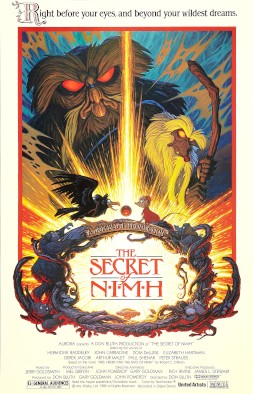
Don Bluth first entered the ring when he and his crew finally completed Banjo the Woodpile Cat in 1979, which would get good reception. A two-minute sequence was also created for the 1980 musical Xanadu, being one of the better things about that film. With that behind them, they were ready to tackle a full-length feature film. Bluth joined forces with Aurora Productions to bring forth an animated adaptation of Robert O’Brien’s Mrs. Frisby and the Rats of NIMH. Bluth’s plan was to make a film that was worthy of the Golden Age Disney animated classics, mainly Snow White and the Seven Dwarfs and Pinocchio.

The Secret of NIMH was a breath of fresh air for its time, much superior to the highly flawed The Fox and the Hound, which Disney released the year before, along with a good number of the other animated films that were out at the time. The Secret of NIMH displays Bluth’s greatest strengths, but also some of his weaknesses that would come to plague his later films. It seems like most of the enthusiasm and ambition went into the visuals, more so than the writing. The film has beautiful art direction, and a lot of vibrant colors. Special effects are everywhere, with lots of flashes and shines, but it’s to the point where it feels gimmicky. Did Nicodemus’ eyes really have to be so shiny and laser-like? The rose bush scene is loaded with tons of sparkles and flashes. Rotoscoping is used for other special effects, which sometimes don’t look good. The work done on the tractor and plow makes what should be an intense scene less exciting. The character animation is great, very reminiscent of the older Disney animated films.

Its story, however, isn’t all that strong. It presents us with a believable conflict, and the first act is undeniably great, but it begins to plod and plod as it progresses. The story takes a backseat to the visuals, and the third act has the character Jenner revealed to be conspiring against the NIMH rats, despite the fact that we don’t really get to know him that well. Mrs. Brisby receives a magical amulet from Nicodemus that only serves as a cheap deus ex machina during the climax. Jeremy is turned into a clumsy crow who has too many pointless “comic relief” scenes centered around him and Mrs. Brisby’s children. Mrs. Brisby is a likable protagonist, as she is a brave and determined mouse who goes to great lengths to solve her dilemma.

The Secret of NIMH was still a good film, but it wasn’t the masterpiece the critics made it out to be. Most critics gushed over the film, as it did out-Disney many of Disney’s then-recent efforts, and was more like the Golden Age classics rather than something like Robin Hood. Some elements are right up there with classic Disney moments, particularly the sequence where Mrs. Brisby meets the Great Owl. The combination of dark imagery, eerie sound editing and an overall gloomy atmosphere make it a winner. The voice cast certainly does a fine job too, Elizabeth Hartman gives Mrs. Brisby her brave and dedicated qualities while also balancing that out with her innocent and motherly side. Dom DeLuise gives a rightfully obnoxious performance as an obnoxious character. John Carradine steals the show as the Great Owl, with an ominous and booming voice.

Released in the summer of 1982, NIMH’s unanimous critical reception didn’t translate to box office success. Spearheaded by low-key marketing by United Artists and caught in a sea storm with E.T. the Extra-Terrestrial along with other big blockbuster films, NIMH could only cough up not even half of what Disney’s last few animated films took in at the domestic box office. When released on home video in 1983, it began to get the audience it deserved and lived on as an animated classic.

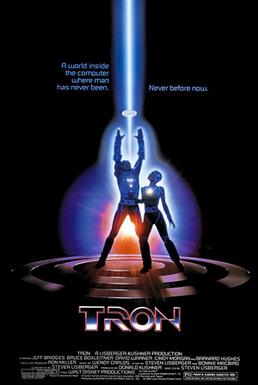
The Secret of NIMH certainly had an impact on the animation industry and the critics, and it would be a signal to the directionless Disney studios. That same summer, Disney released Steven Lisberger’s science fiction adventure Tron. Like the previous PG-rated Disney output, this film was another attempt to reach out the teenage movie-goers. Tron contained groundbreaking use of computer generated imagery to depict the dark and strange world inside the computer. Wendy Carlos’ ominous score certainly fit the setting very well, almost playing out like a gloomy Atari 2600 game. The plot was good, and the action scenes were standout moments. Critics panned the often corny screenplay, and audiences most likely didn’t understand the computer jargon and the film’s themes. Tron wasn’t an outright flop, just a financial disappointment in the eyes of the Disney executives. Nevertheless, it was proof that Disney was willing to step up their game, even if they were going about it the wrong way. Tron certainly would've fared better years later, and the fact that it did so well on home video, spawned successful video games (a first for a Disney film) and even got a sequel many years later (and a subsequent franchise!) goes to show that Tron was ahead of its time.

In 1983, animator Glen Keane and then-newcomer John Lasseter worked on test footage for a planned adaptation of Maurice Sendak’s Where The Wild Things Are, one that seamlessly combined computer generated imagery and hand-drawn animation. It was a glimpse into what the future of the medium could be, and ultimately would be...


While this was going on, The Black Cauldron was just getting out of dormancy despite being green lit in 1980. After Tron’s release, production finally moved forward. The suits were hoping for an effects-laden spectacle that could possibly get Disney back on the map and actually compete with the likes of the fantasy films of the era. What they ignored was the story, which would turn out to be a real mess.


The Black Cauldron’s main protagonist, Taran, is a rather bland character that’s almost like the story crew’s attempt at giving audiences a Luke Skywalker-esque lead except he's not as interesting. Taran basically wants to be seen as a hero, being a rather bored young man who doesn’t want to spend his life taking care of the magical pig, Hen Wen. It’s hard to root for him because there’s not much to him to begin with. The Horned King is after the Black Cauldron, a deadly weapon that can resurrect the dead. He wants to turn the dead into an army, the Cauldron-Born, and rule all of Prydain. That’s about it, though. All he wants to do is rule the world, and nothing more. Despite how frightening he looks and sounds (John Hurt provides a great raspy, shadowy voice), he’s cardboard as far as villains go with not much motivation. He learns that the pig knows where the cauldron is, so the enchanter Dallben tells Taran to take Hen Wen to a cottage in the forest. Taran daydreams, and the pig runs off, getting swept away by the Horned King’s gwythaints. The story collapses in the second act when Taran is imprisoned. Taran meets a stolen princess named Eilonwy and a captured bard named Fflewdurr Flem. A cutesy sidekick who shows up early on returns, a dog-like monster named Gurgi, who is doesn’t add much to the story. Most of the film is marred by mediocre dialogue, and it can be a chore to sit through. Our leads aren't very interesting, and the things they encounter only make the story plod until its climax fires up.

Had The Black Cauldron not been in development hell for so long, the film could’ve had a much better story. Too many writers worked on it, trying to make a film based on the first two books, thus creating a convoluted near-catastrophe. Early concept art suggests that The Black Cauldron could’ve been a very engaging epic. It does try some new things. For starters, there are no musical numbers or songs. Lots of creepy visuals and material that could be too frightening for children defined the tone of the film, along with some violence. Elmer Bernstein provides an eerie, spectacular score. But The Black Cauldron wasn’t a dark film, but rather a film that “looked” dark. There was no genuine horror like there was in the Golden Age Disney films, and visuals alone can't generate great creepy moments.

Some sequences are knock-outs, such as the Horned King’s introduction and the chase where the gwythaints capture Hen Wen. Taran fighting his way out of the castle with the magic sword makes for a pretty solid action sequence. Most of the film’s first act is very well handled too, moving at a considerable pace. The use of special effects pays off here and there, but still, with better writing, the film as a whole would’ve been a real thrill. This was also the first Disney animated film to make use of computer generated imagery, for small things from time to time like the boat the trio use to escape the crumbling castle. The animation itself is somewhat bland, feeling as if the artists tried to replicate the look of the previous Disney animated films, but the dark fantasy film look is welcomed. Some character designs are solid, such as Gurgi, Hen Wen, the Horned King and Creeper. Others are just expected and quite frankly, uninteresting, almost coming off like "Disney stock" characters.


The Black Cauldron’s road to release was quite bumpy, as Disney was having several issues. The company was fighting off any possible takeovers while also facing hard times financially. Roy E. Disney ultimately put a stop to this, and a new regime took over after Ron Miller’s resignation in 1984. Coming from Paramount, Michael Eisner became the CEO of the company and Jeffrey Katzenberg became the Chairman of the studio. Roy took a look at The Black Cauldron, which was on its way to completion. He didn’t like what he saw, a cluster of story problems and ill-defined characters.

When Jeffrey Katzenberg saw it, he wanted it to be edited for time constraints. Originally thought to be a roughly 90-minute film (Disney’s longest since Fantasia), Katzenberg wanted ten minutes cut and gave producer Joe Hale hell if ten minutes weren’t cut (“Is that ten minutes?”). The film was delayed from its planned Christmas 1984 release to the summer of 1985. A musical number with the Fair Folk thankfully got the ax, and Taran’s trip through the woods after he loses Hen Wen was significantly shortened. You can see that the animators simply recycled the scene from Winnie the Pooh and Tigger Too where Rabbit is lost in the woods, for when Taran searches for the oracular pig. With all of that gone, The Black Cauldron was almost ready. Elmer Bernstein’s score had been completed, and the animation was completed by early 1985.

A screening was held in the studio shortly afterwards with disastrous results, angry parents objected to the film’s third act, where the Horned King uses the cauldron to resurrect the dead soldiers. Scenes where the skeletons slaughter some of the Horned King’s goons caught the attention of Katzenberg, who demanded the fully animated scenes be cut and even asked for “outtakes” to use in their place. Katzenberg didn’t realize at the time that no coverage was done in animation like it was in live action. He took the finished film into an editing room, and cut out two minutes of graphic violence that could’ve gotten the film a PG-13 or R rating. With these scenes missing, Elmer Bernstein’s score skips, and it’s very noticeable.


Jeffrey Katzenberg believed that Disney animation was for young children first and foremost, and this was the first of many atrocities he and Michael Eisner did to Disney animation that would lead to the animation studio’s misfortunes following the Renaissance. The film was finally released to theaters in July of 1985 with barely any marketing behind it. The film garnered mixed reviews and disappeared quickly. The film was a box office dud, being labelled as a massive flop. For years, Disney acted as if the film didn’t exist. It was even recut to be more kid-friendly. This version was released internationally as Taran and the Magic Cauldron in the early 1990s, but Disney finally released the original film on home video years later.


Perhaps the early to mid 1980s could be called the “Dark Age” of Disney, but to call it that is somewhat unfair. It only lasted for a brief period of time, and films like Tron have gone on to become very successful years later. The Black Cauldron sold incredibly well when released on home video stateside in 1998, and let’s not forget that Disney successfully launched The Disney Channel during this “Dark Age” while also releasing their films, little by little, on home video formats. Animation itself on the other hand had its troubles. The early 1980s wasn’t a good time to release a full-length animated feature given how toxic the medium’s reputation was. More and more Saturday morning cartoons dominated the airwaves, most of which being extremely successful toy commercials, only convincing audiences and executives that animation was only for children. Consider this, The Care Bears Movie outgrossed The Black Cauldron and every other animated film released from 1982 to 1985. No new animated film was even released theatrically in the United States in 1984!

The next Disney animated feature would be completed quickly with a much smaller budget, The Great Mouse Detective. Based on Eve Titus’ Basil of Baker Street books, a young mouse named Olivia is alone after her father, a toymaker, is kidnapped. Her and the kind-hearted Dr. David Q. Dawson go to find Basil of Baker Street, a Sherlock Holmes-esque detective. The crafty sleuth finds out that Olivia’s father’s kidnapper is a wily bat named Fidget, who is the lackey of the nefarious Professor Ratigan. Ratigan plans on using Olivia’s father to build a robotic version of Queen Mousetoria and take over England. It’s a simple and coherent plot that is packed with enough sparkle to delight the young and old. It doesn’t aim for the heights that the last three films aimed for, but it knows that.

All told briskly in just 74 minutes, The Great Mouse Detective has the good humor that defined a lot of the earlier Disney films, but at the same time, it never goes beyond what it is. It stays within the confines of a simple narrative, so trying to stack it up next to the Golden Age films or even something like The Rescuers would only make it seem inferior by comparison. As a delightful romp, it succeeds. The characters are likable, and the animators seemed to have a field day with some. Ratigan steals the show, a comic menace voiced by a gleefully evil Vincent Price. The rat may seem sophisticated, but he’s really trying to keep his animal in check much like Shere Khan.

Fun action scenes are sprinkled with good humor and slapstick that works, given the cartoon-like nature of the story. Its animation is a mixed bag, with some neat backgrounds that evoke a foggy, dark atmosphere with nods to Sherlock Holmes films. Most of the film, however, looks more in line with a Saturday morning cartoon. This isn’t the animators’ fault, since they had to work with a smaller budget and meet a deadline, they try to make the most of it. The character animation is loose and impressive, unlike the frustrated and often rote work seen in The Fox and the Hound and The Black Cauldron.

The film’s climax takes place inside of Big Ben, an elaborate chase scene where computer generated imagery was used to create all the gears and mechanisms. The scene is so beautiful and detailed, it clashes with the rest of the visual style of the whole picture. The camera swoops through gears as Ratigan gives chase to Basil, showcasing how the use of computer generated imagery could take the medium to new heights, much like the Wild Things test scene. Basil and Ratigan fight on the clock hands, showcasing some powerful animation that’s nothing short of thrilling.

While not an ambitious film that would be worthy of Disney’s best, The Great Mouse Detective is a satisfying endeavor on its own. Its a lighthearted treat that was a breather from the last two films, films that could’ve been great but spoiled by bad blunders. This certainly paid off, as The Great Mouse Detective hit theaters in the summer of 1986, getting good reviews and making a tidy profit for Disney. This gave the animation world some hope, as it had outgrossed The Black Cauldron by a considerable amount.

Then... In November... The light came at the end of the tunnel...


The record-breaking success of Don Bluth’s An American Tail, produced by Steven Spielberg, was an unexpected smash for the medium. The film might not have gotten great reviews, but its success was what convinced Disney executives that animation wasn’t dead and could in fact be extremely profitable. Eisner and Katzenberg were close to phasing out the feature animation studio, favoring future endeavors like Touchstone Pictures, a brand name for Disney to release adult-oriented films without scaring teenagers and adults away. An American Tail’s success and the record-breaking home video sales of the Disney animated classics were what got Disney to go back to animated films and immediately usher the Second Golden Age of Animation...

The rest, they say, is history...

~

So were the 1970s and 1980s the "Dark Age" of Disney animation? No.

Sure, it wasn't a Renaissance, but Disney had a lot of financially successful films released at the time. Films like The Rescuers showed that Disney was indeed aiming high at times, and not everything released was truly abysmal. The Aristocats and Robin Hood have their faults, but they are by no means terrible. Tron and a few other live-action films demonstrated the changes Disney was willing to go through in an attempt to catch up with audiences. It was more like a transitional time. Without Walt Disney, the company had to move on but yet they were close to just plugging along...

The changes that took place at Disney and in the world of feature animation shaped the medium. The rise of adults-only animation from filmmakers like Ralph Bakshi were certainly groundbreaking, and stateside releases of foreign animated films certainly grew during this time. Young artists showed that animation was still alive, and these very artists would help take animation to successful heights in the late 1980s and early 1990s. From the Second Golden Age onwards, the idea of the animated feature film has never gone away, and you can say it all started with the talent Disney hired in the 1970s and 1980s...

A "Dark Age"? No. Were there tough times? Certainly. There were tough times during the Renaissance and even the First Golden Age. Instead, the 1970s and 1980s was a phase where animation had to stand on its own despite what was working against it, and it certainly did...

Sunday, July 29, 2012

The Dark Age? (Part 2)


In part one of "The Dark Age?", I took a look at the two films that Disney’s feature animation wing produced following the death of Walt Disney: The Aristocats (1970) and Robin Hood (1973). Both films showed just how misguided the studio was after Uncle Walt’s passing. Executives wanted to play it safe, and the animators didn’t seem to have much freedom, sticking to a formula that was only successful in The Jungle Book. Meanwhile, several animated films from other studios tried new things: George Dunning’s Yellow Submarine, Ralph Bakshi’s Fritz the Cat and Heavy Traffic, and several foreign animated films.

One man was certainly not happy with the situation, it was none other than Don Bluth, who felt that Robin Hood had none of the charm that distinguished Walt Disney’s greatest films, mainly the first five Golden Age gems: Snow White and the Seven Dwarfs, Pinocchio, Fantasia, Dumbo and Bambi. Bluth balked at the messy storytelling and penny pinching that plagued Robin Hood, and the newly-recruited young animators most likely objected to these problems as well. They were hoping to tackle a project of Snow White’s caliber, not something safe, formulaic and dated. With the next film in production, these animators were ready. In fact, early on, they worked with Don Bluth in his garage on side project called Banjo the Woodpile Cat. This short would be closer to the classic Disney style than what was put out at the time. It was a project that executive Ron Miller, future President of Walt Disney Productions, rejected. A film based on Margery Sharp’s The Rescuers books was a go in the mid-1970s, and it’s one that Don Bluth would be heavily involved it, moving up to the Directing Animator position.

As Disney was working on The Rescuers, more experimental and decidedly adult-oriented animated films came and went. Limited releases of foreign films like Rene Laloux’s Fantastic Planet and several Japanese animated films were common, as they were in the 1960s. Risky endeavors like Richard Williams’ lavish Raggedy Ann and Andy: A Musical Adventure didn’t make a mark at the box office. Television animation studios like Filmation and Hanna Barbera entered the ring with passable efforts like Journey Back to Oz and Charlotte's Web, respectively. The “adult-oriented” animation boom continued as Ralph Bakshi made more films, like the very controversial Coonskin. Other studios tried to ride the wave, with efforts like Once Upon a Girl and Down and Dirty Duck. After Coonskin, Bakshi took a trip into the fantasy genre for his future animated films and dropped the gritty, personal stories. This all began with 1977’s Wizards, which was a rotoscoped film that still got good reviews and did well at the box office as it was certainly more accessible.

The animation scene hadn’t changed much since The Aristocats had come out, Disney’s output was going up against all these kinds of films. In order to really compete, even though Disney’s films won at the box office each time out, they needed to make a film that was worthy of what Walt produced. The Rescuers was most likely conceived as another Jungle Book/Aristocats/Robin Hood-style comedy with the same old routine. Early drafts even had Cruella de Vil as the villain! Don Bluth and the animators wanted something better. The improved Xerography process removed the rough look of the earlier films. Immensely disdainful of the look that Xerography had delivered in One Hundred and One Dalmatians, Walt would’ve been pleased with this since the animators were able to go back to the classic designs while the studio could still cut costs. Colored outlines could now be utilized, making things look noticeably softer than what was seen in everything from Dalmatians to Winnie the Pooh and Tigger Too! (1974).

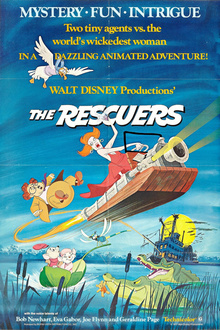
The Rescuers’ story involved a young orphan girl named Penny (voiced by Michelle Stacy), who is held captive on a riverboat in the Southern bayous by an unscrupulous woman named Madam Medusa (voiced by Geraldine Page) and her bumbling, inept partner, Mr. Snoops (voiced by Joe Flynn). They use the poor girl to search a pirate’s cave for an elusive diamond called the Devil’s Eye. The Rescue Aid Society, a brigade of noble mice from all around the world get her message in a bottle and send the timid janitor Bernard (voiced by Bob Newhart) and the adventurous Miss Bianca (voiced by Eva Gabor) on a mission to save her and bring her back to Morningside Orphanage in New York. Without anyone like Don Bluth around, this could’ve easily been another unmitigated disaster on the order of Robin Hood. Bluth made sure that the story would be told the way Walt would’ve told it, with drama, depth and darkness while also having enough comic relief to take the edge off when appropriate. The Devil’s Bayou, the swamp where most of the film takes place, is very gloomy and dark. The scene where Penny, with the help of Bernard and Bianca, tries to get the diamond out of a skull inside the pirate’s cave before it floods is wonderfully tense. Madam Medusa is also one of Disney’s most unfairly overlooked villains, a mean-spirited character who actually goes out of her way to really hurt Penny’s feelings (“What makes you think anyone would want a homely little girl like you?” she says to her after Penny tells her why she wants to go back to the orphanage after she finds the diamond). Animated with such flamboyance by Milt Kahl, she is actually a much better antagonist than a good number of Disney’s most well-known and loved villains. She manipulates the girl while treating her terribly, all to get ahead and get something she wants. This is a much better conflict than what we saw in the previous couple of films, as we really root for Penny’s escape and for the two mice to succeed in their mission.


Going against the darkness and the unusually strong conflict is yet again more silliness in the form of a gang of swamp critters who are of help to the two mice. They have a point in the story, but their antics mimic the comedy we saw in Robin Hood (not to mention some of the cast is straight out of that film). This isn’t a bad thing, but at times it tends to clash with the overall mood of the narrative. Slapstick is there, too, sometimes going against the dark tone of the story, such as Medusa’s gun being clogged with a stick of dynamite that backs up like it was its own character. In a more successful slapstick moment, a scene where Bernard and Bianca try to get away from Brutus and Nero (Medusa’s alligators) in a pipe organ is absolutely hilarious. Orville, the albatross who flies Bernard and Bianca from New York to down South, is a hoot. Voiced by Fibber McGee himself, Jim Jordan, the funniest bits are the scenes where he avoids Medusa’s fireworks on the way to the bayou.

The only other problems with The Rescuers are in the animation itself. While the character animation is fantastic, the film still has a lot of roughness. Animation from past films is recycled once again, especially on an important sequence like “Someone’s Waiting for You”. Rotoscoping is also used, from special effects (which are either subtle or jarring) to human characters we only see for mere seconds. Some backgrounds are also borrowed, such as a shot of the Devil’s Bayou which takes the same set of trees from The Jungle Book. That is actually followed by a scene where Penny runs away, it’s the same animation of Mowgli running away from Baloo when he tells the boy that he has to go back to the man village. Again, laziness. The entire opening credits is told through paintings by Mel Shaw, which are beautiful, and make up for the opening credits of The Aristocats and Robin Hood, which basically recycled scenes from the film itself.


The songs are good for the most part. All but one of them are sung offscreen, much like Dumbo and Bambi, and written by Carol Connors, Sammy Fain (who wrote songs for Alice in Wonderland and Peter Pan) and Ayn Robbins. “Someone’s Waiting for You” is a tearjerker, but it is only undermined by the use of recycled animation (Bambi’s mother, for instance), but that wouldn’t be much of a nuisance to a non-animation fan. “Tomorrow is Another Day” is pretty, but it has a dated 1970s pop twang to it. “The Journey” is absolutely beautiful, and the artwork its set to makes it all the more better. The only song that I could do without is “Rescue Aid Society”, a silly, forgettable tune that’s the only number that the characters sing.

The Rescuers, despite some setbacks, was a return to form. Gone was the slapdash storytelling seen in The Aristocats and Robin Hood. The film did its best to cater to adults and everyone else, rather than the younger set, much like the classics did. Its mix of action, inspired art direction, very good writing and a strong story made for an entertaining event that no one should’ve missed. This film would solidify why Disney animated films were worth seeing on the big screen, and with the quality of the story behind it, it could compete with the heavies at the box office.

The Rescuers opened in the summer of 1977 to rave reviews all across the board, with many critics praising it as a sort of “second coming”. This is all thanks to the ambitions of Don Bluth and the enthusiastic young crew working on the film, as many animators such as Milt Kahl made this film their swan song. The Rescuers was also a huge hit at the box office, becoming the highest grossing animated on initial release. The record wouldn’t broken for another nine years. All seemed well in the world of animation, Disney had finally gotten back to their roots and soared critically and commercially at the same time. Disney immediately fired up production on the next film, The Fox and the Hound and also sought to jumpstart a film based on Lloyd Alexander’s The Chronicles of Prydain, as the project based on the five-book series had been in pre-production earlier that decade. Meanwhile, Don Bluth and the animators were finishing up on Pete's Dragon and working on a short subject called The Small One. Another upcoming project was Mickey's Christmas Carol, based on Charles Dickens’ classic featuring Scrooge McDuck as Ebenezer Scrooge.

Problems began to rise during production of The Fox and the Hound. Bluth and several of the other animators objected to Disney’s cost-cutting methods and their adherence to a formula. Story changes were made that compromised this adaptation of Daniel P. Mannix’s downer novel, which was being tooled into a story that was about prejudice. That was one of many problems that ultimately lead to Don Bluth resigning on September 14, 1979 with fourteen of the young animators. This was a harsh blow to Disney, and it even made the news, which was rare in the world of animation at the time. With that, Disney immediately delayed the release of the film from a Christmas 1980 date to the summer of 1981. The company did what they could to blacklist Bluth and the former animators, who had completed Banjo the Woodpile Cat and were joining forces with Aurora Productions (formed by former Disney executives) to produce a full-length feature film to compete with Disney’s films.

With the rest of the veteran animators retiring, Disney started recruiting more animators and improved the training program. Production moved forward once again, but the story had already been compromised from the get-go. Due to these problems, The Fox and the Hound was a step backwards from The Rescuers. The story centered around a fox kit named Tod (young Tod is voiced by Keith Coogan, and adult Tod is voiced by Mickey Rooney) and a hound puppy named Copper (Corey Feldman provides the voice of young Copper, while Kurt Russell provides his adult voice), who become inseparable friends. Unfortunately, Copper is supposed to grow up to become a hunting dog and Tod’s adoptive owner, Widow Tweed (voiced by Jeanette Nolan), will have to release him in the wild one day. Copper’s trigger-happy owner, Amos Slade (voiced by Jack Albertson), already doesn’t take a liking to the mischievous fox cub. Meanwhile, an owl named Big Mama (voiced by Pearl Bailey) attempts to help Tod understand that Copper may have to hunt him down one day.

Fortunately, the story isn’t episodic like Robin Hood’s lazy excuse for a narrative and the writing for the most part is passable. The characters are appealing, and there’s an unusually melancholic tone that permeates the entire film. Punches are pulled, hurting the story in many ways. When director Art Stevens demanded that Chief should’ve survived after getting hit by the train, he not only watered down the story but he also went against logic. Chief not dying after that accident was terribly unrealistic, and Copper’s revenge is pointless now that Chief just wobbles around with a broken leg. Despite the holes, the film’s second half is surprisingly intense compared to the rather innocent first act.

Another problem is the excessive cutesiness in the first act, which is blown over the top thanks to the inclusion of two comic relief birds that add nothing to the story. They only exist to provide laughs for the children, once again reminding one of the goofiness of The Aristocats and Robin Hood. Like Robin Hood and The Rescuers, Disney was also perfectly content with casting celebrities who were known for their comedy TV shows. The cast certainly gives it their all, especially Pearl Bailey, who provides the voice of Big Mama, an owl who helps Todd understand things. This sort of thing had become by the early 1980s, however.


The Fox and the Hound's central theme is one of its greatest strengths, as the story of Tod and Copper’s friendship was meant to mirror the lives of children who are raised with racial prejudice in the 1970s. This theme was so prominent that it actually caught the attention of the public upon release. Politics in a Disney film? There were other deep themes in the Disney films of the past, but The Fox and the Hound’s message caught on in the media, and a few critics praised that element of the story. Combine that with its somber mood (a byproduct of Don Bluth’s career at the studio) and some incredible animation, The Fox and the Hound isn’t an outright failure. It’s a film that wants to be right in line with The Rescuers, but it’s held back by executives and misguided minds trying to play it safe. What made The Rescuers work was that it didn’t play it safe, it tried to be like a Walt film with its moody visuals, great heart and solid story. With everything that works against this film, you can see why Don Bluth and the animators left during production. Take this story for example: Wolfgang Reitherman, who already liked the idea of recycling animation from past Disney films, wanted a sequence where Tod and Vixey (voiced by Sandy Duncan) meet two cranes voiced by Phil Harris and Charo. The two were to provide a disco number. Everyone hated the idea, and rightfully so. It would’ve been a painfully pathetic way to make the film relevant, but also, disco wasn’t topping the charts by 1981. As if Art Stevens’ forcing the story team to scrap Chief’s death wasn’t enough... The Fox and the Hound’s second act is riddled with the contrived revenge (again, due to Chief’s death being nixed), a love story that seems like an eleventh hour inclusion and scenes where Tod meets various critters in the forest such as a grumpy old Badger (voiced by John McIntire) and a kindly porcupine (voiced by John Fiedler). The story ultimately plods until its intense third act climax, where Tod and Copper fight to the death. The fight leads up to an encounter with a massive grizzly bear. Glen Keane turned this sequence into a powerhouse of vicious, wild animation and jaw-dropping staging.


Originally, he had planned to animate it in charcoal, but it would prove to be too costly. At the time, this was the most expensive animated film ever made with a budget of $12 million. Yet it doesn’t suggest the quality. While most of the character animation soars, the art direction feels like a milder version of what we saw in older Disney films set in beautiful forests. It’s still nice to look at, but nothing special. It’s got a very soft look that’s closer to the 1950s Disney films than anything, but nothing elaborate or even innovative. The music is forgettable, with awkward songs like “Lack of Education”, where Big Mama and the two comic relief birds attempt to tell Tod about what might happen to him. “Goodbye May Seem Forever” almost reaches tearjerker level, but it’s minimal and ultimately without much of an effect since it goes by too quickly with a weird arrangement and half-baked harmonies. “A Huntin’ Man” only lasts mere seconds. “Best of Friends” is passable at best, if not for Pearl Bailey’s vocals. “Appreciate the Lady”, also sung by Bailey, is also awkward and too short to be a suitable love song. The score’s odd mix of a cheesy 1980s tone and the overuse of the wailing country harmonica is a bit droning, and it affects a lot of these songs.

The Fox and the Hound should not have had musical numbers, because for the first time, it feels as if the crew added songs for the sake of having them in the film. The story didn’t need to be a musical, instead they could’ve opted for just a few songs that were sung offscreen much like the ones in Dumbo, Bambi and The Rescuers. Given the tone of the original novel, this probably wasn’t a suitable story to tackle at Disney at the time. Walt certainly wouldn’t approach the story this way, he would’ve done it in a similar manner to Bambi with less comic relief, enough innocence so it wouldn’t be cloying, and more drama. The film’s climactic bear fight scene is excellent, and it makes the rest of the film seem so pedestrian in comparison. Had the rest of the film been more like that, and no silly humor, contrived songs or annoying comic relief characters, The Fox and the Hound would essentially be the continuation of the ambition seen in The Rescuers.


For the most part, it has great intentions. If not for the misguided nature of the studio at the time, and if not for Don Bluth’s departure, it could’ve been a great and profound film that would get the widespread critical acclaim its predecessor got and perhaps convinced audiences that animation was an art form for adults. It would be Bambi, but for the 1980s. Sadly, it wasn’t meant to be, though a good chunk of the brilliance is kept. This makes The Fox and the Hound an average effort at best, one that’s severely held back from being something truly special. When released in the summer of 1981, it received mixed reviews. Some critics praised the prejudice themes, the animation and a few other things. Others found fault with the cutesiness and how watered down it was. Nevertheless, it was very successful at the box office, outgrossing The Rescuers. With that, Disney fired up production on The Black Cauldron, the long in development project based on the Lloyd Alexander novels. Meanwhile, Don Bluth Productions was hard at work on an ambitious, dazzling animated feature: The Secret of NIMH...

The Rescuers, like the success of Yellow Submarine and Fantasia in the late 1960s, was almost the start of a new renaissance for the art form. Again, it did not happen. Disney went backwards, as competitors continued to move forward. The late 1970s was also a time when Disney started making very interesting creative decisions, but, we’ll save that part three...

Saturday, July 28, 2012

The Dark Age? (Part 1)


The 1970s and 1980s are often regarded as the Disney “Dark Age” and a tough time for animated films in general, but were they really?

Both decades brought ups and downs for the medium, but people tend to focus on the negative aspects more than anything. Some of Disney's weaker films happened to be made during these times, but this isn't exclusive to the 1970s or the 1980s. Disney had their ups and downs during the much-heralded Renaissance, and had several hard times after that faithful period. I want to focus on a particular period, starting after the release of Walt Disney's posthumous The Jungle Book in 1967 and ending in 1986 with the release of Don Bluth's blockbuster animated smash, An American Tail.

While Disney was plugging along, other studios decided to take advantage of the medium like Walt himself did. Animated films were on the brink of losing the adult and teenage audience, and only had to rely on the family audiences to stay alive. While Walt made family films, he never made "children's films". His films appealed to adults as much as children, which is why they were so successful and still are to this day. With Saturday morning cartoons polluting the world of animation, more and more people turned their back on the art form and assumed that it was for children only. The films the studio released contrasted heavily with Disney's output at the time, which was shockingly bland and rote. Let's take a look into what the Mouse House was up to during the late 1960s and early 1970s, what else was around during that time...

~

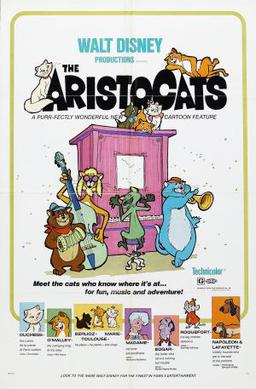
Disney proved that they were without a clear direction after the death of Walt Disney in 1966 with their next feature. The runaway critical and commercial success of The Jungle Book convinced the studio that animated films could still be profitable and popular in an era of cheap child-oriented Saturday morning cartoons, so the crew began work on a film Walt gave the go-head to, The Aristocats. When the film was released in 1970, it underwhelmed the critics while family audiences flocked to see it. It was another financial success for Disney, and that’s what the suits wanted. The Aristocats essentially takes after The Sword in the Stone and The Jungle Book. It’s a carefree comedy with fun songs, silly situations and wacky characters. The Jungle Book used this tone to its advantage, and the result was an enjoyable film that was full of character. It had no problem in taking liberties with Rudyard Kipling’s books, but it was never tasteless or condescending towards the audience. The Sword in the Stone failed to make this style work, and instead fell flat on its face with an episodic story that had barely any structure, no real conflict or any form of strong drama. It was enough to get Walt to be more involved with The Jungle Book and more critical of story man Bill Peet, who ended up leaving during pre-production of that film.

The Aristocats is an awkward, uneven mix of both films. The conflict is there, but the idea of Madame Adelaide having her cats inherit her fortunes after she passes away is contrived and quite frankly, idiotic. The antagonist, Adelaide's sly butler Edgar, is not much to write home about. After all, it would be silly to not inherit anything while a bunch of cats will, and most likely outlive you. The love story feels like a reheated version of Lady and the Tramp, as the relationship lacks any real chemistry. Duchess (voiced by Eva Gabor) and Thomas O'Malley (voiced by Phil Harris) aren't as appealing as they should be, seeming like stock characters more than anything. The idea of the cats having to get home rings too similar to One Hundred and One Dalmatians. The Aristocats feels like it's on autopilot, trying to use what made those past films work, plus excessive cutesy cliches, and hoping they make for an acceptable diversion. It’s definitely more kid-friendly than what Disney had put out before. It was always one of my favorites growing up, and to this day, I have a sentimental affection for it.

One of the more successful things in The Aristocats are the songs, particularly the big number “Ev’rybody Wants to Be a Cat”, written by Floyd Huddleston and Al Rinkler. This sequence is a real treat, done with such verve, giving the often dull-looking film a splash of much-needed energy. The Aristocats’ visuals leave a lot to be desired, with such a mundane palette and a style that seems to be a regurgitated One Hundred and One Dalmatians, but without the edge or flair that distinguished that film from the other Disney classics. Everything about the visuals are by-the-numbers, passable but nothing spectacular. The Sherman brothers contribute three songs, the opening credits number sung by Maurice Chevalier, the childish and unnecessary "Scales and Arpeggios" and an unused song, "She Never Felt Alone". Why they cut it, I don't know... In the film, it would've worked and established how the cats meant the world to the lonely old widow. Terry Gilkyson's "Thomas O'Malley" is nice and upbeat, and it fits the character as much as "The Bare Necessities" fit Baloo.

Everything else crumbles: The non-existent story, the romance between Duchess and Thomas O’Malley, and the conflict. Even more shocking are its glaring inconsistencies and anachronisms. First of all, Scat Cat’s gang. The film takes place in Paris in 1910, yet one of his friends is a hippie cat with beads and glasses. From there, you can simply tell that the film is not trying to take itself seriously at all. Another friend of his is a Siamese cat, and one that’s a rather unflattering stereotype (“Fortune cookie always wrong!”). A Russian cat and an Italian cat make up the rest of the gang, and they all have great personalities, more so than Duchess and everyone else. Their scene is a highlight, but it’s possibly the only great scene that can be salvaged from the mess. Also, how do they know what jazz is? Jazz wasn't around in France in 1910, instead starting up in New Orleans (unless Scat Cat happened to be in New Orleans first and then somehow got to Paris). It just feels like a cheap excuse to have jazz music in the film, because swing music worked so well in The Jungle Book and certainly payed off. The rest of the narrative is padded out with comic relief and slapstick. Scenes with two geese and their drunken uncle have no point, only taking the cats back to Paris while trying to provide the laughs. When Edgar attempts to dump the cats off in the countryside, he is pursued by two goofy dogs with Southern accents. He loses his hat and umbrella to them, thus we get a lengthy scene where he goes back to their farm and gets back his belongings. These scenes are funny and well-timed, but amidst the sloppy narrative, they are inconsequential.


The Aristocats is ultimately too self-conscious, making for a romp that essentially plunders the last few Disney films in an attempt to lure in the family audiences, and it worked. The Aristocats would not be approved by Walt Disney himself, considering how he felt about The Sword in the Stone. Nonetheless, it was a big success that taught Disney one thing: "Keep making more films, but keep the budget low and don't try anything crazy. Audiences will love it just the same."

When The Aristocats was in production, two animated features made for a potential renaissance. George Dunning’s Yellow Submarine and a re-release of Walt Disney’s Fantasia...


Yellow Submarine, in addition to having a Beatles soundtrack, was a wildly experimental endeavor that mixed different forms of animation to elevate a surrealistic dream-like story where The Beatles travel to the magical land of Pepperland to outwit the music and peace-hating Blue Meanies. The plot was more than just a linking device for the numerous sequences set to the Beatles’ songs. Unlike The Aristocats and Robin Hood, Yellow Submarine’s narrative never felt half-hearted. It’s a tad episodic, but never aimless. At 90 minutes, it was certainly a bit longer than most of the Disney animated films given the song sequences, over fifteen Beatles recordings made the cut and some of them tend to divert from the story itself. Directed and animated with panache and creativity, they combine unpredictable psychedelic flair with an ethereal aura.

“Eleanor Rigby” serves as a tour of a dreary Liverpool full of rotoscoped humans and black-and-white photography that look sorrow and lifeless. George Harrison’s introduction combines filtered live-action footage and several colors while “Love You To”’s prominent sitar captures an Indian background, as Harrison was diving into the world of raga music during production. “Lucy in the Sky with Diamonds” is a purely wild psychedelic dance, while “Only a Northern Song” blends the pop art of Peter Max in a sea of confusion. Other sequences such as “All You Need is Love” advance the plot more so, as John Lennon sings it to the Dreadful Flying Glove and defeats it. Others, such as the wickedly wacky and madcap “Hey Bulldog” sequence tend to meander, but the film doesn't need to reach its climax in such a hurry.

Yellow Submarine is not thinking of plot. Delightful characters, abstract art, sharp satire and music are the name of the game. Yellow Submarine feels more in line with one of the Golden Age films, particularly Fantasia. The use of music and artwork to tell a story might not have been new in 1968, but Yellow Submarine reintroduced this concept to general audiences.


The success of the film carried over onto the 1969 re-release of Fantasia, where it was accepted as an art film. Disney marketed it as a head trip film for its 1969 re-release, knowing that it was surefire way to appeal to contemporary audiences. With that, the film finally turned a profit, something Walt unfortunately did not live to see. The success of Yellow Submarine and the re-release of Fantasia kicked off a new era for animation, as the 1970s were dominated with equally interesting and surreal efforts: Bruno Bozzetto’s Allegro non Troppo, Richard Williams’ Raggedy Ann and Andy: A Musical Adventure, Sanrio’s Metamorphoses and several others.

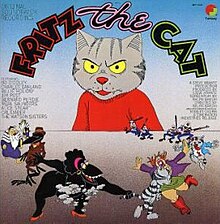
Yellow Submarine showed what heights animation could go to on a visual level, but two films showed what kind of content an animated film could try on: Ralph Bakshi's first two films, Fritz the Cat and Heavy Traffic. Both films used an animation style that was decidedly ugly and gritty, with dashes of unrestrained surrealism. Instead of telling universal stories fit for general audiences, they opted for more modern stories that reflected society. With its gore, sexual content and language, Fritz the Cat became the first animated film to garner an X rating from the MPAA. Its shock value imagery got people talking, but Fritz the Cat was praised for its social commentary and ambitions. Fitting in with the auteur movement of the 1970s, Bakshi's film was a very personal story in a modern setting. It was far removed from the fairy tales and classic stories that dominated the medium for the last few decades. Fritz the Cat wasn't the first "adult-oriented" animated film, but it was unlike anything audiences had ever seen before. In turn, it was an unexpected smash hit, especially for an independent release. His following film, Heavy Traffic, released in 1973, was another critical and commercial success. Both films would start a boom of sorts, of animation with shock value and content only suitable for mature audiences: Down and Dirty Duck, Heavy Metal, King Dick, Rock & Rule in addition to Bakshi's next few films. However, some of these films failed since they only relied on content rather than the story or the brains that made Fritz the Cat and Heavy Traffic successful.

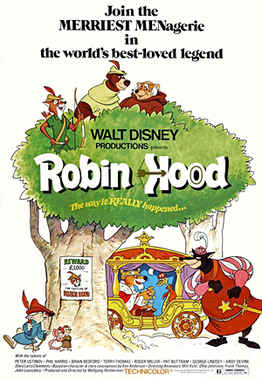
Meanwhile, Disney was content with staying within the boundaries with their next feature, Robin Hood. Going a rather unoriginal route, the entire story was retold with animal characters. Like The Jungle Book, the characters would be heavily modeled after the celebrities who provided the voices, and the film had a rather eclectic cast for a story set in Merry Old England. A good portion of it is American, particularly of the country variety: Roger Miller, Pat Buttram, Andy Devine... Phil Harris portrays Little John, who is a dead ringer for Baloo, the corner-cutting only gets worse from there. The Disney studios were apparently so low on money, that Robin Hood was literally made on a shoestring budget of $1 million. Several scenes recycle animation from previous Disney features and short subjects, I even noticed this when I was young. Disney had been doing this for quite some time before Robin Hood, but the laziness is so rampant here that animator Milt Kahl called the animators “garbagemen”. A scene where King Richard returns to the kingdom was almost finished, but cut at last minute, leaving a huge void in the film’s final act. Sherwood Forest echoes the look of the Hundred Acre Wood more than anything, making for a rather bland-looking presentation of what should be a beautiful, dazzling forest. It’s devoid of any visual pizzazz or sparkle.

Instead of telling the story of Robin Hood in an epic manner, the film instead decides to yet again give us another Jungle Book-style comedy romp. Like The Aristocats, it’s definitely a winner with younger audiences, with its Saturday morning cartoon conventions. At times, it’s very witty and even entertaining as all hell. Like The Sword in the Stone, it’s just a bunch of episodes strung together by a non-existent story that goes nowhere. Then out of the blue, things start to get interesting. There’s an incredible amount of build-up during the film’s third act, as Robin Hood comes up with a clever way to steal all of the gold from Prince John’s bedroom without waking him while Little John frees the imprisoned citizens of Nottingham and saves Friar Truck from being hung. It gets very good, then a big chase occurs, things get exciting. All of it culminates with Robin Hood jumping off the castle and into the moat, surviving some arrows and then Prince John flipping out on his snake assistant, Sir Hiss. What happens next? Surely Prince John, Sir Hiss and the Sheriff all get what’s coming to them, right? No. Instead, Allan-a-Dale, the film’s narrator, tells us that King Richard returned and “straightened everything out”. This conclusion is a gigantic middle finger to the audience, and one can only imagine how it would’ve been had the animators actually completed the sequence where King Richard shows up right after the final battle.


Robin Hood contained the weakest story in a Disney animated film, one that had no direction and had an unsuitable finale. The conflict between Robin Hood and the authorities seemed to be muted in favor of pointless scenes, including those of a young bunny named Skippy and his friends. The archery tournament sequence is a highlight, but again, it feels like a mere episode. The banter between Prince John and Sir Hiss is quite hilarious, as Peter Ustinov turns the tyrant into an absolutely hilarious coward that would make Captain Hook blush. Sir Hiss, voiced by Terry-Thomas, only adds to the fun. The musical numbers are quite catchy, provided by Roger Miller, George Bruns, Floyd Huddleston and Johnny Mercer. The choice of artists certainly was more modern than any other Disney film, obviously to help the film appeal to contemporary family audiences instead of opting for something timeless. Their songs are certainly good, but most of them feel dated. Roger Miller’s “Whistle Stop” is all whistling like the title implies, and his sorrow “Not in Nottingham” feels like a 1960s country song. “The Phony King of England” resembles the bouncy zest and carefree flow of “I Wan’na Be Like You” and “Ev’rybody Wants to Be a Cat”, while also blatantly stealing animation from both scenes. “Love” has no punch, however, with its simple title and generic early 1970s MOR sound. When you think of Disney films, you may think of legendary love ballads like “Bella Note”, “Tale as Old as Time”, “A Whole New World”... “Love” is not one of those.

Don Bluth
New animators were brought into the studio during production of the film, enthusiastic young individuals who would become the next generation of classic Disney animators. One of them, however, wasn’t one of the young animators: Don Bluth. He had worked at Disney during the late 1950s and mid 1960s, only to return in 1971. Excited to be working alongside the Nine Old Men, the giants, Bluth was not impressed with what he was seeing in Robin Hood. He felt that the Disney animated features no longer had any of the charm that defined the classics. Despite what critics, animators or anyone at Disney thought of it, Robin Hood broke records once again and became the highest grossing animated film on initial release and one of Disney’s biggest hits at the time. This proved to Don Bluth that Disney no longer cared about what Walt would’ve wanted, it was all about profits. Plain and simple, Disney had went from the tree of fine family entertainment to an assembly line, just getting by.

Something had to be done at this point...

Part 2...

Sunday, July 15, 2012

2012 Animation Report Card: First Half


With Blue Sky's Ice Age: Continental Drift kicking off the second half of the year (grossing an estimated $46 million on its opening weekend), now is the time to grade what we got in the first half. We only got four animated features of course (not counting The Secret World of Arrietty, being a 2010 film), while the second half will give us six.

These are just short reviews, as you can read the individual quickie reviews I did when I saw these films. The only one I did not do a quickie review for was Madagascar 3: Europe's Most Wanted, which I just saw. The full review of that film will be saved for Part 8 of "Moving Forward". Some of the grades may also be different from the original Quick Flick Reviews.

Dr. Seuss' The Lorax
Directed by Chris Renaud and Kyle Balda
Written by Ken Daurio and Cinco Paul
Produced by Chris Meledandri and Janet Healey
Distributor: Universal Pictures
Studio: Illumination Entertainment

Dr. Seuss’ classic has been updated into something that panders more to children than anything. The Lorax boasts some great colorful visuals and cute designs that are true to Dr. Seuss’ original illustrations, but the film is cut from the same cloth as Illumination’s debut feature, Despicable Me. It’s a sweet, saccharine romp with a message that’s not too heavy, it’s just rote and ironically almost out of place. It also has musical numbers which feel forced, and humor that is hit-or-miss. The Lorax himself and the Once-ler make the film worth it, while everyone else is just there to pad out the story and provide comic relief. For a film about the dangers of corporate greed and artificial things, it kind of felt artificial.
C-

Original review

The Pirates! Band of Misfits
Directed by Peter Lord and Jeff Newitt
Written by Gideon Defoe
Produced by Julie Lockhart, Peter Lord and David Sproxton
Distributor: Columbia Pictures
Studio: Aardman Animations / Sony Pictures Animation

The Pirates! Band of Misfits is a clever, sometimes wacky ride with a lot of work and effort put into it. Sometimes the blending of computer animation and stop-motion didn’t work, but overall, it’s loaded with eye candy and even some traditional animation for the great map montage scenes. The characters are fun, although they aren’t as memorable as the characters from the past Aardman films, but there’s enough charm to elevate it. The American version of this film tones down some of the more adult-oriented humor in the British original (The Pirates! In an Adventure with Scientists!) and re-dubs a few voices for some characters, but that’s never too distracting. Minimal the plot may be, it’s really just a base for the crazy antics that follow when the pirate characters get entangled with Charles Darwin in London. Mayhem and wit ensues, making for an unexpected and fast-paced romp.
B+

Original review

Madagascar 3: Europe's Most Wanted
Directed by Eric Darnell and Tom McGrath
Written by Eric Darnell and Noah Baumbach
Produced by Mireille Soria
Distributor: Paramount Pictures
Studio: DreamWorks Animation SKG / Pacific Data Images

Coming off of two entertaining but otherwise problematic films, Madagascar 3: Europe’s Most Wanted actually ends the trilogy (well I sure hope it’s the end) on a high note. While the first two films had a hard time figuring out what they wanted to be, Madagascar 3 knows exactly what it wants to be: An over-the-top cartoon that’s loaded with ridiculous action, slapstick and zany characters. While some pop culture jokes and the use of pop songs from the past and present rear their ugly head a few times, most of the comedy is hilarious. The new characters are great, and the zoo gang is actually a much more interesting band of characters than they were in the first two films. Noah Baumbach spices up what could’ve been a by-the-numbers screenplay with a lot of wit, clever writing and even some heart. The animation is exciting, colorful and eye-popping, with a great circus finale that’s like a psychedelic explosion. It’s pure fun at its best.
B

Brave
Directed by Mark Andrews, Brenda Chapman and Steve Purcell
Written by Mark Andrews, Brenda Chapman, Irene Mecchi and Steve Purcell
Produced by Katherine Sarafian
Distributor: Walt Disney Pictures
Studio: Pixar Animation Studios

Pixar goes for a more traditional route with Brave, a fairy tale-like story rooted in Grimm Brothers traditions while also drawing from the classic Disney book and putting some new spins on them. Like Pixar’s other films, it has a story that resonates with a beautifully written mother-daughter relationship that echoes the great father-son relationship in Finding Nemo. Also, the animation, character designs, art direction and lighting are peerless, as per usual with Pixar. The Scottish highlands look beautiful and epic. Patrick Doyle’s score is breathtaking and captivating, and the cast gives it their all. The film does have some issues, such as the pacing (it could’ve been longer) and a strange imbalance, where the comic relief sometimes overshadows the more serious side of the narrative. Fortunately, it never pulls punches and again, it plays to adults like every other Pixar film. It’s beautiful, moving and engaging.
A

Original review

~

There you have it. How would you grade these four animated features? Would you say 2012 is a great year for animation so far?

Monday, July 9, 2012

The Second Half of 2012: A Closer Look


Halfway through the year, we have gotten four animated films: Dr. Seuss' The Lorax, The Pirates! Band of Misfits, Madagascar 3: Europe's Most Wanted and Brave. Brave was pure Pixar brilliance once again with fantastic visuals and a heartfelt emotional core, whereas Dr. Seuss' The Lorax was more of a kid-pleasing romp (albeit with some funny bits and colorful animation) with a rote environmental message. Madagascar 3, which I have yet to see believe it or not, was called the best in the series and another good film in DreamWorks' recent line-up. The Pirates! was more inventive quirkiness from Aardman.

So, what's next?

Here we are, halfway through this year. We have less features than last year, which is for the better, and not too many low quality films spamming up the market. The second half of the year, however, brings six more animated features. Based on the trailers, promos and stills that we've gotten over the months, I'm going to analyze what we are getting this year which might be another strong year for the medium.

Ice Age: Continental Drift opens four days from now. From what I’ve gathered, this film looks like it isn’t ashamed of being of a cash grab. While it does aim to look like a fun entertaining romp for the family (I didn’t mind the most recent trailer), it’s just that the adventures of these prehistoric characters aren’t cutting it anymore. I got a Pirates of the Caribbean vibe from some of the scenes, since those films explode overseas. Combine Ice Age, which is already huge around the world with Pirates, and you get this. Blue Sky will probably take home more than a one billion dollars, but it’s so obvious that this was cobbled together to give foreign audiences what they want. Pirates and Ice Age, sounds like a marketing pitch.

However, the point of this series now is just an easy way for Blue Sky to get the dough to make films like Epic, which comes out next spring, which looks like a much more ambitious film than anything they've made. That said, will they make another Ice Age? Who knows...

This year, we are also getting a trio of Halloween-themed films. The first of which is Laika’s ParaNorman. Laika entered the animation scene with Henry Selick’s fantastic Coraline. It was a beautiful film that of course drew inspiration from the Nightmare Before Christmas book while also being a colorful, surreal endeavor on its own. Its use of 3D was quite something for its time (imagine that, 3D being good, before the onslaught of terrible post-conversion films) and the story was very strong.


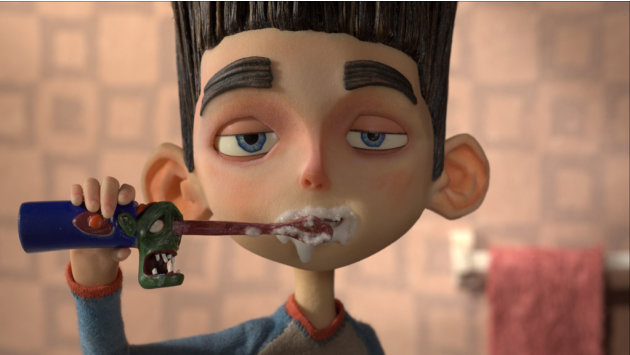
ParaNorman looks a bit similar, as the plot involves zombies and ghouls. While I am certainly looking forward to this film, I do think that some of these studios tend to go for the Halloween theme a little too often. Tim Burton knocked it out of the park early on with The Nightmare Before Christmas and other works like Vincent. I don’t want to compare these films to Burton’s masterpiece, because it’s unfair. I just can’t help but notice that the Halloween theme is often used for animated feature films.


ParaNorman, however, looks pretty imaginative. The trailers apparently don’t give us a good idea of what this film is like, instead opting for constant jokes and editing that makes your head spin. I love the designs of the characters and sets, they are very jagged and unique. Everything is delightfully asymmetrical. The movements are very smooth too. Most of the humor surrounding the creatures is good, everything else? Not so much. I couldn’t help but also think that Norman’s everyday life seemed a bit cliche, with the dialogue and how the bullies treat him and such. I'm also not too sure what I think of the film having the adults being fools, since that's another trope that tends to get tiresome as we've seen it before in television cartoons many times. Hopefully I’ll be proven wrong.


Sony Pictures Animation will serve up Hotel Transylvania after that, which was directed by Genndy Tartakovsky. The recent trailer pretty much tells us that this will be a fun treat. The humor isn’t as hit-and-miss as one might think, as I myself found myself cracking up during the trailer. Dracula (voiced by Adam Sandler) is going to be a hoot. Early on, when I saw that this would have a star-studded cast, I wasn’t enthusiastic. The first trailer appeared, I was disappointed, but not surprised at the same time. With this trailer, I’m more interested. Adam Sandler basically parodies the “I vant to suck your blood” voice, but it’s hilarious when you actually hear it.

Dracula builds Hotel Transylvania to keep his daughter Mavis (voiced by Selena Gomez) and other monsters safe from humans. The monsters fear humans (which reminds me of Monsters, Inc.), but it’s all played for laughs. All goes wrong when a human finds the hotel and falls in love with Mavis. That said human, named ---- (voiced by Andy Samberg), seems rather obnoxious. He has a laid-back “hey man” attitude, but he seems all too talkative for my tastes.

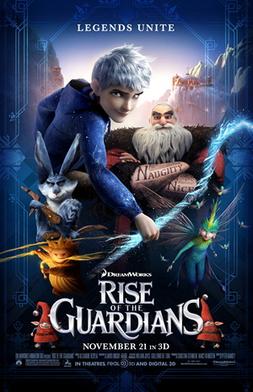
What shines is the animation. It’s got a fun, somewhat colorful look that affectionately pokes fun at the Halloween monsters we all know (DreamWorks’ Rise of the Guardians could be interpreted as the anti-thesis of this film). Other than that, the film looks like fun.

The last of the Halloween-themed films is from Tim Burton himself, Frankenweenie, a re-imagining of his 1984 short film of the same name. From the trailers, it’s clear that he definitely expanded the story (we see a dinosaur in the final seconds). Visually, it’s pretty much him doing another Nightmare-style film. At the same time, however, I think more of Vincent, his brilliant 1982 short film.


The decision to shoot it in black and white certainly adds to it, reminding me of the 1930s monster classics. What really makes it for me, though, is the emotional content. When we see the scenes of the deceased Sparky and Victor trying to revive him, they draw an emotional response. They’re quiet and effective, so I can imagine them being tearjerkers in the finished film. However, things seem a bit giddy after said dog is resurrected.

Of course, knowing Disney’s marketing, the story won’t be as chaotic as the trailers make them out to be, but you never know. Frankenweenie looks like a good ride at the theaters. Out of the three Halloween-themed films, it doesn’t interest me as much as ParaNorman, but the writing is less gabby than Hotel Transylvania’s.

This trio of treats are still on my “most anticipated” list. From what’s been revealed, they look like they have strengths and weaknesses. ParaNorman has the best style, but the writing isn’t catching my interest despite some very imaginative visuals. Frankenweenie looks like typical Tim Burton, but the writing is a bit stronger. Hotel Transylvania looks like fun, nothing more. That said, I’m looking forward to all of them.

In November, we'll be getting two films from Walt Disney Animation Studios and DreamWorks Animation. Both of which excite me the most: Wreck-It Ralph and Rise of the Guardians.


Disney’s Wreck-It Ralph comes on like Despicable Me and Megamind in a video game setting. At first, it may seem like Disney is trying to use the same magic trick. Not likely. Something about it already seems unique on the surface, not because it’s a Walt Disney Animation Studios film, but rather an experience that you’ll remember for years. Despicable Me, by all accounts, is a very fun film. I personally love it, but it’s really nothing more than a fun crowd pleaser.

It’s got some heart, yes. The characters are very likable, yes. That’s about it, though. It’s like a live action comedy film, it’s really funny and enjoyable to watch, but that’s about it. It has some cartoony antics that couldn’t be done in live action, as it adds to the goofiness of the whole film. Nothing wrong with that, but Wreck-It Ralph looks like something a bit beyond that. The idea has been in the works for a while, but I have no clue when the writers ever decided to make the story about a bad guy trying to be a good guy. Even if they did after seeing Despicable Me, it shouldn’t matter, as long it’s pulled off right.

As for Megamind comparisons, Megamind was already compared to Despicable Me before it hit theaters since Megamind himself tries to be the hero for a change. It’s executed differently, but Megamind also lacked a punch. There wasn’t much heart or appeal, it just felt like a mindless comedy that didn’t know whether it wanted to be an all-out spoof of the superhero genre or an intriguing story about a bored supervillain with an identity crisis.


Ralph’s (who is voiced by John C. Reilly) quest to become a hero will probably be born out of a desire he’s had his whole life, being assigned to be the bad guy. In the trailer, it is implied that he is aware of people not liking him for his job. “It sure must feel great to be the good guy...” he quietly says at the “Bad-Anon” meeting. There’s already more emotion there than what I saw in the other two films. Knowing the Disney tradition of adding heart to a story, even a non-serious one (think The Emperor's New Groove), it’s possible that there will be more meat to this entire story than in those two similar films.

So what’s the best thing he could do? Go to another video game and be the hero for once, but what he does ultimately causes disaster for the entire arcade (a family fun center called “Litwak’s”). The trailer doesn’t show us what he could’ve possibly unleashed, though it could be the “Cy-bugs”, the robotic bug-like enemies he encounters in the game Hero's Duty. Since Wreck-It Ralph is a story that involves multiple video game worlds (Ralph’s own game Fix-It Felix, Jr., Hero's Duty and Sugar Rush), I was wondering how Disney would pull that off. The recent Disney animated features have scenes where the animation and art are a radical departure from the look of the rest of the films. In The Princess and the Frog, it was for the magnificent “Almost There” scene, where Tiana sings about her dreams of owning a restaurant. It’s all told through an Art Deco style that is very reminiscent of the Harlem Renaissance artwork. That’s just one of many great examples.


From the trailer, it looks like all the worlds will be done in computer animation. However, from a color and lighting standpoint, they are all unique. Fix-It Felix, Jr. is minimal in its design, with people who look like Little People-esque toys. Since it’s from the early 1980s, it would look like that. Hero's Duty on the other hand is more akin to Halo, Gears of War and most of today’s video games. It’s very realistic with lots of details. The lead character from that world, the no-nonsense Sergeant Calhoun (voiced by Jane Lynch) doesn’t look like a character you’d see in a Disney or Pixar film. She’s not overtly caricatured or anything, she looks like something you’d see in today’s games.

Sugar Rush on the other hand is more like a Nintendo game. It’s detailed much like Hero's Duty but it’s very colorful, bright and fun to look at. It’s basically Candy Land meets Mario Kart. It’s certainly creative, as the set designers had a field day designing forests and mountains out of candies while still trying to make it look fresh and original. The character designs here are less lifelike than the ones seen in Hero's Duty. Weird shapes and cute designs, all based off of sweets. Aside from Candy Land, the setting also reminds me of a Sega Dreamcast game called Pen Pen TriIcelon, a quirky kid-oriented game which had a level made of candies and sweets. Some may remember that title, some may not.

As for the arcade itself, everything is connected through Game Central Station, which is located inside the arcade’s power strip. I went over the details there before, like how the portals to others games are the insides of the electrical sockets (look closely and it says “Moore USA”, a reference to director Rich Moore). We’ve seen a good deal of that, but this brings up an interesting question: What about other arcades? What about other Fix-It Felix, Jr. machines across the world? Imagine a joke in the film where Ralph actually meets another Ralph. That could be the source for a ton of good jokes, since this is supposed to be a comedy adventure.

What about Fix-It Felix himself? The trailers show that he does care about Ralph, but we don’t see much of him. We don’t even see the game itself, just what it looks like to the player in the arcade (The details on the game cabinet are spot-on). We get brief glimpses of the interior of the arcade (look for a Pac-Man machine, to the left of Fix-It Felix, Jr.), which looks like your typical amusement center.


As for music, who knows what kind of score this will have. Henry Pryce Jackman is composing it, but what intrigues me about him is that he actually worked with Mike Oldfield, the man behind the legendary Tubular Bells album. Not to say I'm thinking this film will have a soundtrack like that, but I am hoping for one that weaves 8-bit sound effects into the typical lush Disney-esque score. Perhaps the score will change radically to suit the different video game environments, such as Hero's Duty having a more epic, perhaps electronic action film tone (a la Tron: Legacy) while Sugar Rush can be a bit on the whimsical side. The trailer gives us no hint of what this film will sound like, since it prefers to assault our ears with Flo-Rida.

So from an adventure comedy that’s a love letter to fans of classic video games (like myself), what can we expect from the dialogue? Luckily none of it is cringeworthy. First off, the cameos. This is the most talked about part of the trailer, and it seems as if this trailer has been getting very good reception. This bodes very well for Disney, who spent several years struggling to interest audiences due to several setbacks. Potential critical and commercial performance aside, Wreck-It Ralph seems like its jokes are not going to misfire. Those who have seen the film (which is of course a work-in-progress version), such as the minds behind the brilliant animation podcast The Rotoscopers, have confirmed that the humor does indeed work. Rich Moore, having directed several episodes of The Simpsons and Futurama (which coincidentally had a “what-if” episode where life was like a video game), probably littered the film with clever jokes, along with scribes Jennifer Lee and Phil Johnston.

Will all that said, Wreck-It Ralph looks like a game changer (no pun intended) for Walt Disney Animation Studios, as I’ve said many times before. I was always looking forward to this one, and the trailer only made me more excited.

An equally interesting and colorful film, Rise of the Guardians, looks like it'll be a new kind of film for DreamWorks. When DreamWorks announced that they were going to tackle William Joyce’s The Guardians of Childhood for an animated feature, I didn’t know what to think. Having been skeptical of DreamWorks’ output up until I saw How To Train Your Dragon for the first time on Blu-ray in October 2010 (which motivated me to check out their recent crop), I was expecting it to be another one I’d reject.

Having seen How to Train Your Dragon and not everything else around it at the time of the first trailer’s premiere earlier this year, I was surprised. For the first time, it was a trailer for a DreamWorks film that actually impressed me. The mood was great, it was all about the lovely visuals, the characters and surprisingly, no annoying jokes. I knew that DreamWorks was now serious about stepping up their game, the likes of Kung Fu Panda and How to Train Your Dragon were only the beginning.

Rise of the Guardians (which is not a good title, The Guardians of Childhood is much more interesting and intriguing) is about the fictional heroes of childhood that we looked up to once in our lives: Santa Claus, the Sandman, the Easter Bunny and Jack Frost. Now when I read this synopsis for the first time, I was only imagining how these characters would look. Being based on William Joyce characters, their designs could not be predicted. At least they weren’t going to look like their other characters.

... And they didn’t! Santa Claus is redesigned to look more like a tough guy but with a warm heart. Alec Baldwin gives him a pseudo-Russian accent that’s a little bit too hard to get behind, though it shouldn’t be much of an issue. They’re trying to keep him as far away from a jolly man going “Ho ho ho!” as possible. His workshop isn’t your typical Santa’s workshop, but then again, Aardman’s Arthur Christmas presented an interesting take on Santa’s workshop, though the character designs were much more traditional. In addition to being with a band of elves, he also has these strange fuzzy bipedal creatures. His workshop is high up on an icy mountain, but there’s a lot of imagination put into the building’s exterior. His sled? Not so conventional either.

The other childhood heroes come off as characters you’d see in an epic fantasy saga, and their designs are all very creative. The Sandman comes off as silly-looking gnome-like man. His trails of sand are like pixie dust. The world he comes from looks like a magical version of the Sahara. He will be a mute character who can apparently create things out of sand, such as a toy-like biplane that he uses to fly around. E. Aster Bunnymund, the Easter Bunny (voiced by Hugh Jackman), has the most interesting design. Jack Frost even mistakes him for a kangaroo in the latest trailer. He isn’t presented as a friendly-looking bunny, cutesy or anything of the sort. In fact, he looks like he means business. I like it! His world is a bright, colorful forest with Easter eggs that can walk. Last but not least is Tooth, the Tooth Fairy (voiced by Isla Fisher), whose design is very colorful and coated in feathers. Her world is full of hummingbird-like creatures, but the rest of it isn’t clear. It looks like an enchanted forest from her character poster and some shots in the trailers, but we see an opulent castle in the new trailer, so that could be a part of her world.


The main protagonist of the film is Jack Frost (voiced by Chris Pine), who is from our world of course. He’s a mischievous teenaged boy who causes trouble with a magical scepter that freezes things. How he got it? Who knows. With that, he is chosen to team up with the guardians, as established in the latest trailer. Not much to say about him or his design. It’s fine, but he isn’t necessarily interesting. Perhaps over the course of the film, he’ll mature.

The worlds of the guardians are stunning, some of the finest you’ll see in a computer animated film today. DreamWorks’ animators knew that presenting these worlds would require a load of imagination, especially since countless other interpretations are rather basic and lack the magic seen in this film. Our childhood heroes go from what we know to something truly imaginative and breathtaking. It shows what you can do with this kind of story in the animation medium.

For many years, DreamWorks’ animation quality was always compared negatively to that of Pixar’s. Earlier, their style was simply competent. The crew weren’t aiming for visual thrills in fare like Shark Tale, Madagascar and Bee Movie. Shrek had some imagination, while its first two sequels were truly lacking in that area. Rise of the Guardians is DreamWorks unleashing all of that potential they had in the last six years. Comparing Pixar and DreamWorks negatively was never a good thing, but with this film’s look, it should rightfully be positively compared to the visually dazzling works of Pixar’s.


At the same time, Rise of the Guardians’ story seems to be right in line with a Pixar film. There’s characters you already like, an interesting execution of the good vs. evil story, and heart. The story is to involve a young girl who ceases to believe in the guardians, so it’s possible that the story will be very heartfelt. I definitely got this vibe from both trailers, but both trailers actually seem more fantasy adventure-oriented than anything. Comedy is (rightfully) downplayed in both, but heart is too. I’m not saying it won’t be heartfelt, it probably will be. Most trailers for Pixar’s films hide the heartfelt side of the story and go for haywire editing and pacing (with some exceptions of course, mainly BRAVE’s wonderful “Family Legends” trailer). Again, the film might possibly be a tearjerker since How to Train Your Dragon attempted to be one.

Aside from comedy and heart, this looks like DreamWorks’ darkest film to date. I never thought I’d put the two in the same sentence, given the unabashed comic nature of their older films. Kung Fu Panda had sheds of this, and so did How to Train Your Dragon. Kung Fu Panda 2 had some wonderfully dramatic scenes that were fairly dark. Rise of the Guardians goes all out due to its villain Pitch (Jude Law), the Bogeyman. I initially didn’t like the design as seen on his character poster, but in the trailers? Never mind...

Depicted as a tall, thin, dark and revolting figure, his world looks like a total nightmare. It’s a bleak and creepy medieval-like world, with empty cages everywhere. (For who?) He wants to bring total darkness to the world and ruin the dreams of children forever. Wow... DreamWorks had a convincing villain with Lord Shen in Kung Fu Panda 2, but he ultimately fell victim to some villain cliches. Pitch doesn’t seem to. He’ll be one that’ll probably scare young children. Pixar and Disney were never afraid of this, as Disney villains have always frightened the younger set. Pitch looks like he can match up to those villains, as he doesn’t come off as the typical baddie: Hammy, over-the-top and comedic. In the trailers, we see him travel by the means of dark, shadowy horses. His voice is also very creepy and menacing. I think we have a great villain with this one.
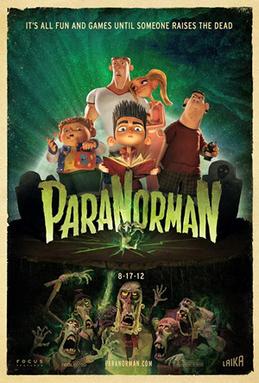
Rise of the Guardians will kick off a new chapter for DreamWorks Animation, it'll show that the studio has more to it than silly comedies with childish humor. In the same month, Disney will widen their scope with their action-oriented Wreck-It Ralph while also preparing for an oncoming new Renaissance. Both of these November releases are my top picks for the year, now that Brave has come out. To see these two other studios trying to expand the medium in the world of computer animation (I didn’t call them the “Big Three” for nothing) is quite thrilling. The Third Golden Age has only gotten more exciting.