Sunday, July 22, 2012

Max Fleischer's Superman in HD.


Great news for all fans of classic animation! On October 9th, Vivendi is bringing out a the collection of Max Fleischer's classic Superman cartoons on Blu-ray. It'll be the first time these cartoons are presented at the highest quality possible in HD, after all shorts had already received a beautiful digital restoration, made available by Warner (who owns the original movie prints) in 2009 on their 2-disc 'Max Fleischer's Superman' DVD set.

The 17 Superman theatrical cartoons, created by the Fleischer studio were originally released between September 26, 1941 and July 30, 1943. Founded by the brothers Max and Dave Fleischer, their studio was famous for the animated 'Betty Boop' and 'Popeye' cartoons. At the time they started producing the Superman shorts, they had just released their first full length, full-color animated feature, the classic 'Gulliver's Travels'.


Above: the Fleischer studio in 1929 in New York, before the move to their new studio in Miami, that would eventually lead them into financial troubles. Max Fleischer (wearing glasses, hands in his pockets) is standing prominently in the front row. To his right (our left) is his son-in-law and animator Seymour Kneitel, who worked as a storyman on the series and also directed one episode ('Japoteurs'). For more on his life and work check out his daughter's blog.

The first short, titled 'The Mad Scientist' was nominated for an Academy Award in the category 'Best animated short film', along with 'The Night Before Christmas', and 'The Rookie Bear' from MGM, 'Hiawatha's Rabbit Run', and 'Rhapsody in Rivets' (two Merrie Melodies cartoons produced by Leon Schlesinger) and two Disney shorts, 'Truant Officer Donald' and the Pluto cartoon 'Lend a Paw', which won the award. During production of the series,the animated shorts turned Superman into a flying superhero, where he would merely jump from one building to the next in the first episodes and in the orginal comic books, created by Jerry Siegel and Joe Shuster for National Allied Publications (now DC Comics).

After producing nine shorts, while working on their second feature film 'Mr. Bug goes to town' (also known as 'Hoppity goes to town'), the studio got into financial trouble and depended on loans from their distributor Paramount. The unsuccesful release of 'Mr. Bug' on December 9, 1941, (two days before the attack on Pearl Harbor), gave Paramount the opportunity to acquire full ownership of  the Fleischer studio and reorganized it into the 'Famous Studios'.  Max and Dave, who were constantly fighting at that time, were both fired. The last eight Superman shorts were therefore produced under a new lable.

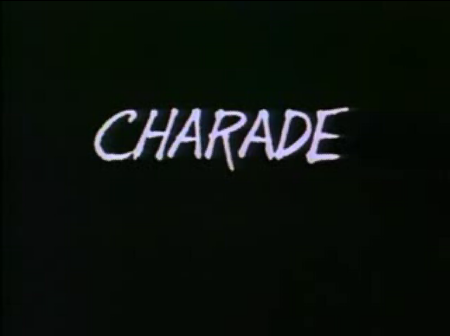
Check out the difference. The first titlecard is from 'The mad scientist', the first Superman short created, the second is from 'Japoteurs' the tenth short from September 16, 1942, created after Paramount had taken control and reorganized the studio under a new name, run by Seymour Kneitel, Izzy Sparber and Sam Buchwald.


Below: last year, Koch entertainment released a fully restored 'Gulliver's travels' in High definition  on Blu-ray (restoration done by Cartoon Crazys), while Disney and Studio Ghibli released 'Mr. Bug Goes to town' on DVD in Japan in 2010, check here for the official site.


The artists working on the Superman series were among the best of the golden age of animation. The team included: Steve Mufatti, Frank Endres, George Germanetti, Myron Waldman, Willard Bowsky, Reuben Grossman, Orestes Calpini, Graham Place, Tom Moore, Arnold Gillespie, Jim Davis, Nicholas Tafuri, William Henning, H.C. Elliston and of course Dave Tendlar and Otto Feuer.

The stories were written Seymour Kneitel and Izzy Sparber, Bill Turner and Ted Pierce, Carl Meyer and Dan Gordon, Jay Morton and Robert Little.

Below (click to enlage): Model sheets from January 1941 from the Fleisher studios. To create realistic body movements and keep all figures anatomically correct, the animators used rotoscoping, a process were live actors would be filmed, and their movements traced afterwards onto paper.


Below is some of the amazing artwork for different titlecards from the various episodes (taken from the restored edition DVD release from 2009, I'll update this asap when I've received the Blu-ray).


Wednesday, July 18, 2012

Buried Treasures


After the end of the Disney Renaissance, the then-troubled animation studio released two animated features that are similar in many ways: Atlantis: The Lost Empire and Treasure Planet...

Both films were a break away from the Disney formula that had dominated the films the studio released in the 1990s during the much-heralded "Renaissance". However, both of them didn't turn out to be as successful as the studio had hoped. Audiences were tired of the formula, yet one would think these kinds of films would introduce audiences to a different side of Disney, a different direction. The perception is that both of these films bombed at the box office. Critical reception on the other hand was different. Atlantis: The Lost Empire received mixed reviews, whereas Treasure Planet got more positive reception while still not getting unanimous praise. Ask your friends if they have seen them, chances are they’ll just say no or... They’ve never heard of them or don't remember...

There are plenty of Disney animated films that you could call overlooked or underrated. Some say the films released in the 1970s and early 1980s need more attention. Others point to post-Lion King films like The Hunchback of Notre Dame, given hogwash generalizations like "Disney hasn't made a great film since The Lion King..." Atlantis and Treasure Planet, however, are two films that show us the ambitious core of Disney, the story team and animators who wanted to make something that only the animation medium could do...

~


Atlantis: The Lost Empire is a film that’s riddled with story problems and it ultimately shows that the executives had their way with this, as they had had their way with the animated films prior to this. An excellent cast of characters keeps everything afloat, despite the muddled story. The lead is instantly likable, the passionate Milo J. Thatch, who is voiced perfectly by an exuberant Michael J. Fox. A worker in the Smithsonian’s boiler room, he dreams of finding the lost civilization of Atlantis, but everyone he knows writes it off as a myth. His boss, Fenton Q. Harcourt, tries to convince him not to throw away his job chasing silly dreams.

All of a sudden, he’s whisked into a team of explorers from around the world thanks to the eccentric millionaire, Preston B. Whitmore. Whitmore was close friends with Milo’s father Thaddeus, who was also searching for Atlantis. Whitmore gives Thatch the Shepherd’s Journal, the book which could help him. He gets to meet the explorers on the voyage to Atlantis, all of which is told very briskly without ever plodding. It gets off to an incredibly quick start, even the animation and the editing more than show that.

The different explorers accompanying Milo on the journey are all very unique and most of them are hilarious, such as the fast-talking Dr. Joshua Sweet and the absent-minded former wagon train chef, Jebidiah A. Farnsworth, whose nicknamed “Cookie”. There’s also the feisty Puerto Rican mechanic, Audrey Ramirez, who is one of the few that vocally doesn’t take a liking to Milo at first. One of the funniest characters in the group is explosives the Italian expert Vincenzo “Vinny” Santorini, but then there’s the French geologist, Gaeten “Mole” Moliere. He comes off as this very weird character who is obsessed with dirt and fears being clean. However, the writers restrict the character to toilet jokes and they don’t do much with him, thus he pops in and out like an annoying comic relief character. Commander Lyle T. Rourke leads the expedition alongside his second-in-command Helga Sinclair, who is the first of the crew which Milo meets early on in the film.


Their journey to find Atlantis pits them against several perils, the first of which is an encounter with a seemingly mechanic lobster-like monster called the Leviathan. Atlantis: The Lost Empire immediately begins to take off after we are quickly introduced to the characters, as the film doesn’t want to make audiences wait. Well-edited, exciting as all hell and loud, it’s proof that Disney animation can definitely pull off explosive spectacle and rival action-packed summer blockbusters. That’s the only big action set-piece we get until the film’s climactic battle, and once the team gets to the city, the story begins to fall apart.

With these great characters and a strong first act, you’d think the story would only get better. Once they get to Atlantis, we are introduced to the Atlanteans and Princess Kida. Unfortunately, the Atlanteans aren’t very interesting characters and there isn’t much chemistry between Milo and Kida, though the writers try with their might since this film isn’t attempting to be a love story. Then why have a relationship like this in the first place? All it does is waste time, and it never pays off at the end. In fact, the film doesn’t really tells us enough about the Atlantean’s culture and why their misuse of technology sealed their fate, only the first two minutes imply this. Also, why do the Atlanteans not know how to use the power crystals? They’ve been there for how long, and yet someone from above figures it out for all of them?

Some of the writing is very contrived in the second act of the film, which ultimately feels like a setup for the second and final action set-piece, the film’s climactic aerial battle inside a volcano. Rourke and Helga turn out to be mercenaries who are just after riches, and sadly enough, Rourke is not a very convincing antagonist. James Garner’s voice work is excellent, but the character is your typical greedy head honcho who is going for the gold no matter what. It was already unsuccessfully done in Pocahontas, so here it doesn’t work. The villain has undefined motivations, he’s just a greedy man. That’s all.

Give most of the flamboyant and rather generic villains from the 1990s films credit, they at least had some form of motivation. Rourke on the other hand, not so much. He’s a stock antagonist, just looking for riches. The final battle is certainly exciting and intense, but with all of the meatless bones of the second act that came before it, the action scene is ultimately half-hearted. We root for the crew, but the Atlanteans, they just seem like extra help but without any defined personalities. Fortunately, the action scene doesn’t pull any punches. The body count is high, there’s explosions everywhere and Rourke dies a pretty painful death, though we don't see what happens to Helga, we are only told that. Nice move, Disney. They're okay with clearly showing a crystallized man getting chopped up, but they can't show debris falling on someone? Come on...

Atlantis: The Lost Empire really can’t find a direction to go. Early on, its a character-driven film with an action-packed plot. Later on, it’s all about a culture that we don’t really get to know much of, along with a forced romance story. The third act is just pulse-pounding action and a conclusion that feels like an afterthought. The screenplay on the other hand is a bit better, holding everything together like glue as much as it can given the great characters. Early on in production, the film was going to be different. While the writers didn't have a third act before this story was retooled, executives balked at the lengthy project. The second act was loaded with monster battles, but the entire trip to Atlantis is condensed to a few montage scenes of the convoy and the campfire scene. Perhaps if the crew had more time to solve the problems, Atlantis could've had a much stronger story. Disney films had to be completed by a specific release date. If you missed that date, you were in trouble. (See Kingdom of the Sun)

What makes Atlantis: The Lost Empire stick out from most of the Disney films is not that it is an action film as opposed to being a fairy tale or love story, but it also looks much different. The animators and artists were heavily influenced by the artwork of Mike Mignola, and thus the film has a very comic book-like look to with its heavily stylized explosions, art direction and character designs. It certainly didn’t look like a Disney animated film at the time. At the same time, it doesn’t feel like a Disney, not because of the look or the feel. It’s because the film truly lacks heart, or some form of pull. There is some to be found in the film’s first act, particularly with Milo hoping to fulfill his dream. It’s all overshadowed by the second and third acts. When a film can’t decide on what it’s going to be, then you have a big problem.

That said, Atlantis: The Lost Empire is not a big mishap. To its credit, it is very risky. It is a lot more violent than most Disney animated films (it earned a PG), there’s some edgy humor in it that works for the most part, and the film does boast some pretty epic visuals. The characters are wonderful for the most part, but the very flimsy story takes everything into a nose-dive.


Ron Clements and John Musker's Treasure Planet, much like Altantis, is Disney attempting to do something more action-oriented. It has a sci-fi flavored story, lots of action, it aims for the PG rating and it has some incredible visuals. By contrast, it has a much more consistent and defined story, and a believable emotional core. Young Jim Hawkins, despite being a mopey delinquent, is a rather torn character who has daddy issues. Jim Hawkins bonds with John Silver, the rather sketchy cook of the ship that is going to find the much sought-after planet, the RLS Legacy (named after the author of Treasure Island, Robert Louis Stevenson).

At the same time, John Silver is built up as the film’s antagonist, but he has his own battle as he really takes a liking to Jim. Jim is interested in getting to Treasure Planet because he ultimately wants to help his mother, finally trying to make things right by actually putting his life at risk. Joining him is Dr. Delbert Doppler, one of the film’s best characters and one that carefully weaves comic relief into the action epic with fun one liners. Captain Amelia serves as the sly, in control commander of the ship but she’s a rather distant character.

The rest of the cast just isn’t all that much to write home about. Some of John Silver’s baddies (with the exception of the creepy and menacing Scroop) are visually interesting, but there’s not much else to them. B.E.N. is introduced in the later half of the film, a rather loopy robot who is missing his memory piece. This sounds like a potentially interesting character, but everything’s wasted on forced comic relief, as if Doppler wasn’t enough to provide some. Again, the executives are making sure the film panders to children. Another comic relief character, the gelatinous Morph, is also shoe-horned into the story though his playfully mischievous personality does make for some interesting mix ups halfway through the film. Everyone else is just decoration, it’s really the two leads that shine here.

Treasure Planet’s dialogue is either well-written or annoying, with a lot of comic relief that backfires. Most of the time it's just downright awkward. Some of the more “adult” jokes are particularly funny, though there are moments where a simple dialogue scene is just pulled off in such a strange way. It’s a bit of a mess. Unlike Atlantis, there is heart to most of the story and screenplay. The “I’m Still Here” scene is close to being a tearjerker, as it does a fine job establishing why Jim is so angst-ridden.

With its fairly engaging story, Treasure Planet mostly succeeds in the visual department. The look of this film screams “creative”. Taking the story of Treasure Island and setting it in outer space may seem imaginative on paper, but in the film, it’s amazing. The designs of the different planets, the look of the creatures and how everything is done in a steampunk way is just fascinating. Visually, this is one of Disney’s best animated films. It takes an old world look and keeps true to the era Treasure Island was written while making it appear futuristic. It’s an appropriate mix, and one that is loaded with visual imagination at every pore. While some the use of computer animation doesn’t mesh well in some sequence (the floating space whales, for example), the film is still a feast for the eyes.


In the end, Treasure Planet is ultimately superior to Atlantis: The Lost Empire. Both films go against the 1990s Disney grain by trying on the action belt and ditching the musical/big epic story/romance routine. Treasure Planet tries on a much more emotional, character-driven story despite the fact that some of the characters may not be the strongest. Atlantis: The Lost Empire has great ideas early on, but it doesn’t know where to go once it reaches the title city, throwing us around with a bunch of ideas that never reaches a satisfying conclusion. Atlantis on the other hand doesn’t look like a Disney film all that much, whereas Treasure Planet sticks more to the classic Disney character route while taking liberties with it.

Both films proved that the folks at Walt Disney Feature Animation were willing to take risks, even if it meant trouble for the suits. Both films try their might to be fresh and new, with one partially succeeding while the other one is shackled with enormous setbacks. Box office grosses aside (why box office grosses spell bad reputations for a good film is beyond me), these two films shouldn't be forgotten. Sure they have problems and aren't anything near masterpiece-status, but they deserve more.

Atlantis: The Lost Empire - C+
Treasure Planet - B-

Best Animated Short - 1984


Whew. It feels as though we got through some harrowing times, what with the special countdown post. It would be easy to say that it would also be because of my second COMLEX board exam, which happened the day before, but in reality I'm writing these posts far before they actually go up. For example, right now I am writing this on June 24, three weeks before my board exam. So I can't really use that as a reason why I'm so mentally drained, but I did finish that countdown post earlier today, and I just power-washed my parent's driveway, so I guess I do have a reason to be exhausted. Nevertheless, we must press on!

Read more »

Tuesday, July 17, 2012

DreamWorks and Classic Media


DreamWorks Animation is in talks of acquiring Classic Media, a New York-based production company that holds the rights to several classic cartoons, characters and several other things. Since DreamWorks tends to make films based off of pre-existing source material (How to Train Your Dragon and upcoming projects like Rise of the Guardians, Pig Scrolls and Happy Smekday!), this would seem like a perfect move for them to expand their roster.

Among the things Classic Media owns is the rights to all of Jay Wards cartoons: The Rocky and Bullwinkle Show, George of the Jungle and Dudley Do-Right. DreamWorks is already working on a feature film based on the Mr. Peabody and Sherman segments of The Rocky and Bullwinkle Show, which is slated to open on November 8, 2013.

What else? The Where's Wally?/Where's Waldo? books. A live-action film is currently in development at MGM. Maybe the rights may revert to DreamWorks and they may pick up the Waldo project. Who knows. They'll also get Felix the Cat, whose recent spin-offs last appeared nearly over a decade ago. Interesting thing is that there was a feature-length film (Felix the Cat: The Movie), so it's possible that DreamWorks could try to make a Felix the Cat film and give the classic cat a film he deserves, unlike the one that first appeared in 1989. Most of Rankin-Bass' pre-1974 films are also owned by Classic Media, including Rudolph the Red-Nosed Reindeer. Classic Media also owns the rights to Filmation's cartoons, such as He-Man and the Master of the Universe. They also have the rights to the Little Golden Books, the UPA's animated library (Mr. Magoo), Big Idea (VeggieTales), Harvey Comics (Casper, Richie Rich) and catalogues that own the rights to Dick Tracy, Voltron, Lassie and several others.

So if DreamWorks were to acquire them, they would have a lot of potential projects for their upcoming slate, which is usually massive compared to other animation studios. The only problem is though, they'll probably follow the route that other studios are taking by updating classic characters. Sony Pictures Animation already did it with The Smurfs and they're doing the same for Popeye, Illumination's got Clifford the Big Red Dog and Woody Woodpecker in the works. Fox has the awful Alvin and the Chipmunks films, and Warner Bros. did Yogi Bear. Knowing DreamWorks' recent string of critical successes, they may actually do the classic characters some justice. We may never know.

Do you think DreamWorks will acquire Classic Media? Do you it's a good move? Or would you rather see DreamWorks sticking to their own upcoming projects and not add more to the roster?

Finding Nemo 2? (FALSE ALARM)


Apparently Andrew Stanton has a good idea for a Finding Nemo sequel.

A Finding Nemo sequel? Why??

First of all, I'm not going to jump the gun and say Pixar is selling out. No, I'm not going to do that. The studio supposedly loves the idea Stanton has. Again, it isn't officially confirmed.

According to the article, Andrew Stanton might be doing this to get a pass for John Carter failing at the box office so he can move on and do another live action project. If that's true, then that's just disgusting. John Carter failed because of bad marketing and an awful title! It isn't rocket science! Also, Disney recouped from it. Shouldn't they be happy that The Avengers and Brave more than made up for that? If he has to do this to satisfy Disney and gain their trust again, then something is truly wrong with Disney management. Why should he have to prove himself? Andrew Stanton was involved in several Pixar films from the very start that did boffo business at the box office, directed two films that did great business and got stellar reception, and his Finding Nemo is one of the most successful franchises for Disney.

Then again, Stanton might have a good idea, but a second Finding Nemo does not need to be made. Stanton talked about sequels at the LA Hero Complex Film festival, and mentioned that they would be like "comfort food". But why a sequel to Finding Nemo? Can't Andrew Stanton do an original film for Pixar? One that will be a huge success and make Disney proud?

"I’m sure you’ll see some other sequels of things as they grow because now we are not so blinded. It’s the originals that keep us really going and it’s the sequels that are like comfort food, and I think it’s the same way for the audience."

While he does make a point about the sequels, they don't have to be made, especially for just pleasing audiences. I understand that Toy Story 2 and Toy Story 3 were both fantastic, but that was a rare moment where two sequels were excellent. Cars 2 didn't equal its predecessor, and left a lot of people very unsatisfied. We can only imagine how Monsters University will turn out next summer, but they should stop there. I personally believe that Finding Nemo "2" does not need to be made. If it turns out to be amazing, I'll gladly admit I was wrong, but at the moment, I just don't want a sequel to it.

Do you agree or disagree? What are your thoughts? Mere speculation? Or do you think it's actually going to happen? If they go ahead and start working on it, how would you feel?

UPDATE: Here's what Andrew Stanton himself had to say...


There you have it...

Monday, July 16, 2012

DreamWorks To Team Up with Sony?


We all know that DreamWorks Animation's distribution deal with Paramount ends with the release of Rise of the Guardians in November, and we've all been wondering, who would DreamWorks turn to for distribution? Would they self-distribute? Or would they turn to someone like Warner Bros.? According to a newspaper article found by The Animation Guild, they might join forces with Sony.

For a while, I thought DreamWorks would team up with Warner Bros. since that studio always had a hard time with animated films, only scoring a few commercial successes (Space Jam, Pokemon: The First Movie, The Polar Express and Happy Feet) over the course of twenty years. The whole idea of DreamWorks going with Sony just doesn't seem right.

For starters, Sony has two animation studios: Their own (Sony Pictures Animation) and Aardman Animations. They haven't handled Aardman's films that well in the United States, as they aren't easy sells to begin with. Also, Sony Pictures Animation has a big upcoming slate with films like The Familiars, two more Smurfs films, Popeye and a slew of other original projects. DreamWorks has a ton of films in the works too, as they usually try to release two or three films in one year. That'll be quite a lot for Sony to distribute, that's for sure. I just can't see it happening though.

The studio that DreamWorks will ultimately go to will be revealed sometime before Labor Day, but if they're eying down Sony, then it's possible that Sony will be that studio. Certainly an interesting move coming from DreamWorks, and I can only imagine how the two studios will work together. If they don't go with Sony, then who else can they go with? Out of the big guns, only Warner Bros. is available. They obviously won't go to someone like Summit or Lionsgate (who have an awful track record with animation, need I say more?), so who knows. Self-distribution would be an interesting move, as DreamWorks' Animation's CEO and co-founder Jeffrey Katzenberg was reportedly looking into it. Remember how Disney set up Buena Vista in 1953 to distribute their films after things fell through with the longtime distributor RKO Radio Pictures? Self-distribution is very possible.

Well, we'll find out soon. Who do you think they will team up with? Who would you like them to team up with and why? Do you think they should just distribute their own films? Sound off!

Sunday, July 15, 2012

2012 Animation Report Card: First Half


With Blue Sky's Ice Age: Continental Drift kicking off the second half of the year (grossing an estimated $46 million on its opening weekend), now is the time to grade what we got in the first half. We only got four animated features of course (not counting The Secret World of Arrietty, being a 2010 film), while the second half will give us six.

These are just short reviews, as you can read the individual quickie reviews I did when I saw these films. The only one I did not do a quickie review for was Madagascar 3: Europe's Most Wanted, which I just saw. The full review of that film will be saved for Part 8 of "Moving Forward". Some of the grades may also be different from the original Quick Flick Reviews.

Dr. Seuss' The Lorax
Directed by Chris Renaud and Kyle Balda
Written by Ken Daurio and Cinco Paul
Produced by Chris Meledandri and Janet Healey
Distributor: Universal Pictures
Studio: Illumination Entertainment

Dr. Seuss’ classic has been updated into something that panders more to children than anything. The Lorax boasts some great colorful visuals and cute designs that are true to Dr. Seuss’ original illustrations, but the film is cut from the same cloth as Illumination’s debut feature, Despicable Me. It’s a sweet, saccharine romp with a message that’s not too heavy, it’s just rote and ironically almost out of place. It also has musical numbers which feel forced, and humor that is hit-or-miss. The Lorax himself and the Once-ler make the film worth it, while everyone else is just there to pad out the story and provide comic relief. For a film about the dangers of corporate greed and artificial things, it kind of felt artificial.
C-

Original review

The Pirates! Band of Misfits
Directed by Peter Lord and Jeff Newitt
Written by Gideon Defoe
Produced by Julie Lockhart, Peter Lord and David Sproxton
Distributor: Columbia Pictures
Studio: Aardman Animations / Sony Pictures Animation

The Pirates! Band of Misfits is a clever, sometimes wacky ride with a lot of work and effort put into it. Sometimes the blending of computer animation and stop-motion didn’t work, but overall, it’s loaded with eye candy and even some traditional animation for the great map montage scenes. The characters are fun, although they aren’t as memorable as the characters from the past Aardman films, but there’s enough charm to elevate it. The American version of this film tones down some of the more adult-oriented humor in the British original (The Pirates! In an Adventure with Scientists!) and re-dubs a few voices for some characters, but that’s never too distracting. Minimal the plot may be, it’s really just a base for the crazy antics that follow when the pirate characters get entangled with Charles Darwin in London. Mayhem and wit ensues, making for an unexpected and fast-paced romp.
B+

Original review

Madagascar 3: Europe's Most Wanted
Directed by Eric Darnell and Tom McGrath
Written by Eric Darnell and Noah Baumbach
Produced by Mireille Soria
Distributor: Paramount Pictures
Studio: DreamWorks Animation SKG / Pacific Data Images

Coming off of two entertaining but otherwise problematic films, Madagascar 3: Europe’s Most Wanted actually ends the trilogy (well I sure hope it’s the end) on a high note. While the first two films had a hard time figuring out what they wanted to be, Madagascar 3 knows exactly what it wants to be: An over-the-top cartoon that’s loaded with ridiculous action, slapstick and zany characters. While some pop culture jokes and the use of pop songs from the past and present rear their ugly head a few times, most of the comedy is hilarious. The new characters are great, and the zoo gang is actually a much more interesting band of characters than they were in the first two films. Noah Baumbach spices up what could’ve been a by-the-numbers screenplay with a lot of wit, clever writing and even some heart. The animation is exciting, colorful and eye-popping, with a great circus finale that’s like a psychedelic explosion. It’s pure fun at its best.
B

Brave
Directed by Mark Andrews, Brenda Chapman and Steve Purcell
Written by Mark Andrews, Brenda Chapman, Irene Mecchi and Steve Purcell
Produced by Katherine Sarafian
Distributor: Walt Disney Pictures
Studio: Pixar Animation Studios

Pixar goes for a more traditional route with Brave, a fairy tale-like story rooted in Grimm Brothers traditions while also drawing from the classic Disney book and putting some new spins on them. Like Pixar’s other films, it has a story that resonates with a beautifully written mother-daughter relationship that echoes the great father-son relationship in Finding Nemo. Also, the animation, character designs, art direction and lighting are peerless, as per usual with Pixar. The Scottish highlands look beautiful and epic. Patrick Doyle’s score is breathtaking and captivating, and the cast gives it their all. The film does have some issues, such as the pacing (it could’ve been longer) and a strange imbalance, where the comic relief sometimes overshadows the more serious side of the narrative. Fortunately, it never pulls punches and again, it plays to adults like every other Pixar film. It’s beautiful, moving and engaging.
A

Original review

~

There you have it. How would you grade these four animated features? Would you say 2012 is a great year for animation so far?