Showing posts with label Editorial. Show all posts

Monday, September 30, 2013

More Stupid Rebooting


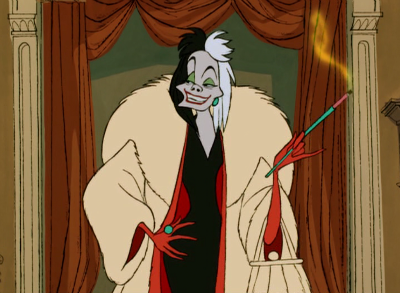
Disney has announced that a live action "origin" film about Cruella de Vil is in the works... You read that right, a live action origin film about the evil, vain, puppy-murdering villainess from One Hundred and One Dalmatians...

Yes, it was reported by /Film today and quite frankly, I don't care who is writing it, who is going to be in the cast, yadda yadda yadda. This is a foolish idea, and one that tells me that Disney has no faith in their live action studio after the failures of Prince of Persia, John Carter and The Lone Ranger. It doesn't help that Marvel and Lucasfilm are going to be the ones supplying them with live action hits and big franchises... And Bob Iger loves those franchises...

Look, it's not right to pre-judge it, but the problems I have with this project are the same ones I have with the upcoming Maleficent.

First of all, why does Disney feel the need to take the stories they adapted into their animated classics and re-imagine them as darker, grittier live-action films? To get teens into the theater? To cash-in on the already beloved classics? Why? Alice in Wonderland was huge for many reasons, it looked great, it was the first major 3D film after Avatar and the marketing made it look like something that made everyone say "I gotta go see that!" Oz did well because the original is beloved, and people went to see the new take on it out of curiosity. The marketing was good, too.

Soon, this rebooting fairy tales/family-friendly stories trend will come to an end. Alice in Wonderland's massive success was lightning in a bottle, as Oz couldn't recapture it neither could non-Disney fairy tale reboots like Snow White and the Huntsman and Hansel and Gretel: Witch Hunters. Maleficent probably won't set the box office on fire next summer, at best it'll perform like Oz. I'll be very surprised if it does much better than that film did.

But this rebooting fairy tales thing and the whole reaction to The Lone Ranger's box office performance makes me worry about the Walt Disney Studios. Now, not every live action release from the company over sixty years has been great, but at least there were different stories to be told. Walt Disney himself, not being too fond of sequels, usually opted for something different with many of his live action films, whether it was a period piece or a good old-fashioned family adventure or a zany goofball comedy or even a drama. Even during the 1970s and 1980s, at least they weren't trying to reboot the animated films as live action films, despite gravitating towards Herbie sequels and madcap comedies like the 1960s ones.

Now the plan is to explores stories that have already been told. I could care less for the Maleficent film because I don't need an origin story that paints the mistress of all evil as a sympathetic figure, plus she's a terrible villain, why have any shred of sympathy for that? Same goes for Cruella. Kenneth Branagh's Cinderella? Walt Disney was able to tell the story of Cinderella with all the drama and heart in less than 75 minutes, will this new film add another 50 minutes of pointless exposition, medieval violence and back story stuff? Will it include the violence that Walt Disney didn't opt to put in the original film? Because, you know, Disney's animated fairy tale adaptations suck because they aren't violent or gory like the original fairy tales. Right? Right?!

The Jungle Book? Disney already did a decent live action adaptation that was closer to Rudyard Kipling's original story than Walt's bizarrely-flawed but enjoyable animated film. Pete's Dragon? As if that 1977 family-friendly musical needed a remake that doesn't have (gasp) songs. The Rocketeer? Can we please leave an already good cult classic alone? Why not just give the original some kind of big re-release and do a sequel to it instead, like you did with TRON: Legacy? Flight of the Navigator? Again... Why not just introduce newer generations to the damn original, instead making a new film?

If anything, it seems like Walt Disney Studios will only be specializing in two things: Small-scale live action fare... And blockbuster re-imaginings of stories that they have already covered. I guess we won't be seeing the likes of The Stuff of Legend or Matched or Terra Incognita and the other fresh projects that Alan Horn happened to green light last year.

It baffles me that executives aren't figuring out why John Carter and The Lone Ranger, instead they assume that they should just drop that kind of approach to live action tentpoles and just be very, very safe. So you'll let Marvel and Lucasfilm go all out because they can, but you won't at least try something new for your own studio? Touchstone is doing okay with their small-scale stuff, as Disney should do well with that stuff too. (The Odd Life of Timothy Green, for example, was a profitable success.)


There is some hope. Brad Bird's Tomorrowland could very well blow the likes of Oz and Maleficent out of the water, while also being the success that John Carter and The Lone Ranger weren't. What if this thing is an all-out blockbuster that makes more than just a big profit? In 2014, they've also got Into The Woods, which is at least something they haven't done before - regardless of how it turns out! I'll be more than happy if those two films outdo Maleficent and show the suits that people want fresh, new live action fare from Disney. John Carter and The Lone Ranger? We all know why those two films flopped, so Disney should not assume that audiences don't want something fresh and new.

I mean... Pirates of the Caribbean, anyone?

Big risk. Paid off. Started a big multi-billion dollar franchise...

Oh, and the first was put into production when pirate films were considered box office poison. Oh, and it was a PG-13 Disney release. Not a Touchstone one.

Sometimes people want something fresh, new and even risky. They just have to go about it the right way. Disney didn't for John Carter, which could've very well launched a trilogy and subsequent franchise. They also screwed up with The Lone Ranger, and they're ignorantly showing TRON the door despite the fanbase and the newly-acquired fans brought on by the 2010 sequel... Meanwhile, they pour the marketing love into Pixar, Marvel and Lucasfilm's releases... Oh, and Walt Disney Animation Studios' films to a lesser extent.

I think the ambitious Pirates of the Caribbean should more than be a great lesson for the current Disney brass...

Monday, September 9, 2013

Staying Afloat


The boy on the moon has been having some trouble lately...

2013 hasn't been a stellar year for animation in general - regardless of the breakout performance of Illumination's Despicable Me 2 and some other notable happenings - it's actually a rather dour one, from layoffs to the VFX industry problems to DreamWorks' reaction to a certain film's box office performance...

In February, DreamWorks announced that up to 350 people were going to be let go and that a film on their upcoming slate was sent to the back burner. DreamWorks had plans to release three animated films this year, much like 2010 when they did so for the first time to enough success. In 2010, How To Train Your Dragon was a sleeper hit and then some. Shrek Forever After did good here, but became the biggest installment in the series in foreign markets partially thanks to 3D. Megamind on the other hand was viewed as something of an underperformer, but nothing too disappointing.

2011 and 2012 saw DreamWorks sticking to the usual two-a-year routine, this year was going to see three films from the studio: The Croods, Turbo and Mr. Peabody & Sherman (which was slated to open on November 1st). What happened?

Rise of the Guardians, the second 2012 release, was a box office dud.


Regardless of what happened, whether it was poor marketing or poor timing, Rise of the Guardians turned out to be a bump in the road for the studio. If one film could lead to such layoffs and the cancellation of a project (Me and My Shadow) that was less than 2 years away and already in production, then I think DreamWorks should rethink their business model a bit...

Rise of the Guardians would also be the last DreamWorks Animation film released under the Paramount distribution deal, and Paramount tripped up the marketing on a lot of their films: Guardians' marketing campaign was their biggest disaster, selling the whimsical, often dark fairy tale-esque story as an action-packed Avengers wannabe for little kids. The already-bland title didn't help, either. Why wasn't the film called The Guardians of Childhood? What goes on in these title-changing people's heads? (I'm looking at you too, Disney and Warner Bros.)

So you'd think that under 20th Century Fox, things would look up, right? The Croods was one hell of a rebound, making a lot here (the press immediately wrote it off as a disappointment when it opened with $43 million, short of the $50 million expectations) and a whole lot more worldwide, and it was backed by an overall effective marketing campaign. Not a great one that ensured a Kung Fu Panda-sized opening (when will DreamWorks ever score a non-sequel $55 million+ opening?), but one that certainly paid off. Having all of late March, April and even May to itself was a real advantage.

Unfortunately, the hope train slowed down to a snail's pace. Literally.


Turbo, I will admit, was at least backed by an aggressive marketing campaign that did get the word out. The problem is, the film just didn't appeal to adults or anyone else. The concept seemed too ridiculous for anyone over the age of 10 to take seriously, and worst of all, Despicable Me 2's momentum couldn't be stopped. It was unwise to open the movie at the time, DreamWorks should've opted for a late August release or perhaps an autumn release. Opening with a weak total, Turbo won't reach $90 million at the domestic box office and it may fail to double that sizable $135 million budget worldwide (it's not out in every other country yet). More layoffs ensued.

Next year gives us Mr. Peabody & Sherman, How To Train Your Dragon 2 and Home. We know which one will be the hit. Peabody is guaranteed to do okay given the source material and how much more marketable it sounds (it doesn't sound generic like Turbo), Home is a gamble with a terrible title.

2015? The Penguins of Madagascar, B.O.O. and Kung Fu Panda 3. The sequels/franchise films will do well, B.O.O. can do okay but it's being sandwiched between Paramount Animation's Monster Trucks and Pixar's Inside Out. It has to be more than just average in order to do well amidst that summer's animation tsunami. If Turbo was some great film, it would've done well despite being crammed between Despicable Me 2, The Smurfs 2 and Planes. If anything, DreamWorks should release this in August.

2016 has Mumbai Musical, which is going to go head to head with whatever Disney Animation has ready for the March 2016 slot (it's probably going to be Zootopia given how far along it's gotten), How To Train Your Dragon 3 will make bank, obviously. Trolls? Easy sell, so it should do well enough. Maybe. Are people willing to show up for a musical based on the Good Luck Troll dolls?

But it seems like DreamWorks wants to do this 3 films a year thing every year starting with 2014, now that Mr. Peabody & Sherman was moved from this autumn to the spring.

So what keeps DreamWorks above water?

It's the films, because the films are what they've really got.

Regardless of what one might think of the quality of the DreamWorks films, it must be acknowledged that DreamWorks is pretty gutsy for an independent studio that's not backed by a big safety net. If you look at the other studios, like Sony Animation and Blue Sky and Illumination, they're backed by known distributors but they don't spend much more than $100 million on their films because they know what the ramifications will be if one of them were to underperform. I commend them for that, actually. Look at Blue Sky. Epic didn't do so hot, but thank goodness they didn't spend more than $93 million on it.

On the other hand, DreamWorks spends more than $130 million on each film of theirs. Not a very smart move each time out, considering that they aren't owned by Disney or a mega-empire like that. Disney can handle a flop, which is probably why they let their animation studio and Pixar spend over $150 million (Pixar goes big with roughly $200 million) on their films, because there's still that aforementioned safety net that'll catch the two studios if they were to fall, not to mention lots of merchandise. Disney's marketing department also tries to make sure that these films do well, and their marketing machine is probably much bigger than that of the other studios'. (Though I question what they are doing.)

DreamWorks justifies their budgets, as their films do look great for the most part. They have top talent there, too. But... Is this overspending good for the company? Not quite...

It's surprising that they've had two money-losers recently, after a string of highly successful films. Everything released from Shrek The Third (mid-2007) to Madagascar 3 (last summer) has done well or made a profit. Sequels are essential because they need them, but luckily in this day and age, DreamWorks is beginning to put actual effort into their sequels. Jeffrey Katzenberg also jumped all over 3D, and went about it the right way (one thing I can actually praise about him) until 3D itself saw a collapse. Sad thing is, DreamWorks put their all into the 3D for their films. It was also a smart move due to 3D's success in foreign markets... But the domestic market does matter too. A good $200 million overseas gross couldn't save Rise of the Guardians and it won't save Turbo either, as the films needed to take in more than what they made here.

Reality has sunk in for them, now that two films of theirs have lost money. Now what do they do? They have three solutions to their little problem...

DreamWorks purchased Classic Media for a paltry $155 million last year, acquiring many beloved properties that they can distribute on home media and make some profits. They're also going to mine the different franchises for new ones, as they are planning to make a film based on Lassie. Classic Media also owns the likes of the UPA filmography (please DreamWorks, release it all on a collector's Blu-ray set!), Jay Ward cartoons, Filmation cartoons and several other things. Good investment for them.


DreamWorks also plans on expanding on their theme park plans as well as launching a family-oriented television channel. I admire these decisions, because with that and the live shows, DreamWorks could build up some sort of a safety net. I'm not saying that Katzenberg is aiming to make DreamWorks a Disney-sized empire, but expansion is nice. Fox's upcoming Malaysian theme park could also help, though they seem more interested in their own properties (i.e. the Alien franchise, Night at the Museum, Life of Pi) and Blue Sky Studios. Should DreamWorks opt for a theme park here in the states? Europe, maybe? It could happen, and it could be pulled off. But what else could DreamWorks do to justify spending so much on their movies each time out?

DreamWorks Oriental isn't just making animated films, they're actually making live action China-friendly films. Remember that project I talked about? The Tibet Code? Much to my surprise (how that slipped past me, I don't know), that's actually a live action film! Anyways, given how big China's market is and how big DreamWorks' films are there (The Croods actually had to pulled from theaters to let other Chinese animated films get some spotlight at the box office!), revenue from these kinds of films can keep them afloat. Other markets could also boost these films too, given 3D and whatnot. While I may not admire Katzenberg for his animation sense, I do admire his shrewd ways of running a business.

Now... Aside from possible safety nets and things to fall back on, what can they do about their films?

Well, if they are gung-ho about releasing three in a calendar year for the next 3-4 years (or possibly for a very long time), well they better crack down on both the quality of the films and the quality of the marketing.

Did Turbo really need to be a 96-minute long, $135 million movie for theaters? If anything, that could've made for a more inventive and even bizarre short film (given that concept) or a television series. Oh wait, a TV series is coming. Maybe that might help the film in the long run...

Maybe if DreamWorks made that snail tale a decidedly lighter film (with a smaller budget), it could've been a profitable gap filler for them so that they could move on to bigger things with ease. Maybe they should scale back on some films, go small scale and actually do what the other big studios (even Disney and Pixar) aren't doing. It would allow them to experiment more. Maybe DreamWorks should give hand-drawn another go (they almost partially did so with Me and My Shadow, but they had to indefinitely postpone it), but something with a smaller budget than their usual endeavors. The hopeful optimist in me suggests that someone will make a successful hand-drawn film, spurring Disney executives to invest in the medium.

DreamWorks very much wants to be more than just a studio, with the theme parks, live events, TV shows based on their hit films and the plans to create a channel (great idea). I think Katzenberg and the brass know that relying on big budgeted animated films is a strategy that could cause more harm than good, so these new routes are probably going to be taken. If anything, DreamWorks should strategically pursue building their company, making them more than just an animation house. They're the only ones who are really in that position, so there are opportunities there.

As for the channel... How about original programming? Instead of relying on feature films to kick off new shows, why not create an all-new show? Disney opted for that in the mid-1980s (partially for the wrong reasons) and look what happened? Disney proved with shows like Adventures of the Gummi Bears and Darkwing Duck that you can come up with original characters for successful shows, while relying on others that were based on pre-existing Disney characters (i.e. TaleSpin's Jungle Book cast) or other properties. DreamWorks could possibly reboot Classic Media properties for new cartoons, either for their channel or another network. What about actually giving those properties' early incarnations re-runs on their channel or another one?

It's all right there for them.

I mean, what are they going to do if another film of theirs doesn't recoup its costs? What if Peabody and Home struggle next year? Today's box office climate requires your film to either do well on opening weekend or to make a very good amount of money domestically. It's time that DreamWorks prepares themselves, they need to thrive. Their slate is both ambitious and risky in many ways.

Thursday, September 5, 2013

Cracking Nuts


Honor Hunter over at Blue Sky Disney assures us that nothing is wrong, whether it's at Burbank or at Emeryville. But a lot of people are worried... Director changes and people leaving is the cause for alarm, from Bob Peterson being removed from The Good Dinosaur to John Kahrs' departure from Walt Disney Animation Studios... It's been a rather downer couple of weeks for animation, and ones that made us question John Lasseter and how things were being run as a whole. Even I, optimistic as I like to be, had my doubts...

Honor wrote this in his blog post...

"And speaking of the younger sibling, Pixar is not crumbling because of micomanaging involvement. The biggest concern for the Lamp, as well as the Hat, is story. It has to work no matter how much you like the guy directing it. If it's not working out, you have to find someone that can make it work. There are hundreds of jobs and hundreds of millions of dollars at stake. Not to mention diminishing time. John Lasseter goes with how he sees a project is progressing. If it's not, after numerous attempts, something has to be done. If the project can be saved, you have to bring in people to do it. If the project can't be saved, then it will be canned or allowed to whither on the vine..."
Of course, Lasseter and Pixarians have stressed the importance of story over the years. "Story is king," Lasseter would say. But the recent events and the quality of certain films released in the last couple of years are making many doubt that Pixar cares about storytelling and creativity anymore, or more appropriately Mr. Lasseter. It's all for a dollar, they say. But Honor's post makes me think a bit...

The Good Dinosaur has been in some form of development for a while. The first concept art may have popped up in early 2009, but the film might've been in the works before that. Development could've started even before the merger. I'd believe that Peterson's film had problems but at the same time, it's hard to swallow that this happened to two directors in the last three years. One of those two directors is not quite happy with the studio's business model. "It's all John's show," this certain someone said two months ago...

One can argue that these films being the way they are, are a result of Lasseter's ego and micromanagement. But if that were the case... Why do people typically think highly of the recent Disney animated films? Personally, I think they're doing just fine - The Princess and the Frog and Wreck-It Ralph are great, Tangled is near-great and Winnie the Pooh was just plain charming despite the running time.


A lot of the recent Disney animated films have gone through director changes too. I don't hear too much about the evil Lasseter telling Glen Keane, Dean Wellins and Sam Levine to stop being creative and to obey his every command. Keane left Tangled due to health problems but still stayed on board the project itself, Wellins departed shortly after to focus on his own projects since the story wasn't entirely in fine shape. Replacement directors Nathan Greno and Byron Howard's results are just fine, as everything clicks. Who knows if Keane and Wellins' film was superior? It could've been worse. Hard to say, because Tangled's story is so tightly constructed it hasn't gotten much criticism. The same goes for Rich Moore and Wreck-It Ralph...

Cars 2 and Brave didn't click for many, and I saw problems in both. As for Disney Animation, I think Tangled has problems outside of the fine story, but I still think it's a film that should be celebrated. Tangled is on the third tier of my best-to-worst Disney animated features list; if Pixar films were counted, Brave would be down there too. I still think Pixar made a first-rate production with that film, director change or not. Cars 2 is definitely not good in my eyes, but enjoyable and packed with a few little surprises. At least it didn't rot my brain!

So there is one side that considers those two films and Monsters University (which didn't go through a director change midway through, though apparently Doug Sweetland was removed from the director's chair very, very early on) to be inferior to Pixar's past successes and indicative of a "decline". There's also a side that doesn't consider every Pixar film to be great or excellent, so they are okay with a few Brave-like films. Me? I think Pixar is just entering a new phase where not everything is utopia, heck, it's stunning that they even made eleven greats in a row. That's insane luck right there, and as I've said on my recent assessments of current Pixar, maybe things wouldn't be so uncertain if Pixar made a few not-so-phenomenal films in the past. Like for every WALL-E and Up, there would be something a little less great.

So... What to believe?

  • Honor is basically saying that Pixar is removing directors for the good of the films themselves, to ensure that they will be good... But that's implying that Brad Lewis, Brenda Chapman and Bob Peterson's visions weren't up to snuff. Three in a row. I find that a little hard to believe...
  • Others say that Lasseter just wants everything to go his way with the films produced at the Emeryville studio, and so directors will be removed because of that. I can't entirely believe this either...
  • Someone suggested in Cartoon Brew's comments section that there's a couple members of Lasseter's circle that are particularly scathing when it comes to the critiquing of the reels of upcoming films - maybe that's who Lewis, Chapman and Peterson went up against. Maybe Lasseter goes by what they say... But that's mere speculation, but the commenter may be on to something here. Maybe...
  • Lasseter is overprotective of his baby and is too afraid to take some major-league risks. He's a businessman now, and businessmen usually don't think like artists. Restraint is seen as essential to them. Lasseter the artist was far more okay with a crazy risk like Toy Story or The Incredibles or WALL-E. Today he seems a little worried about taking them, and maybe that's what it is.
  • Lasseter is nothing more than a patsy for Disney's executives, who are obtaining control over Pixar's films... Something unthinkable. It could explain Cars 2's existence. Cars 2 couldn't have been conjured up at Pixar. None of the Brain Trust even talked about it. Lee Unkrich only mentioned it twice. Ever since it came out, you barely heard anything about it from Pixar.

My top theory: The release schedule and the fact that projects are given release dates long before pre-production winds up.

I said this earlier, but maybe they shouldn't schedule them so soon and perhaps give them time to gel before actual production begins. Sometimes a good animated film has to take years - decades even - to come together. Look at Wreck-It Ralph. It went through countless versions, starting in the late 1980s as High Score only to become Joe Jump by the late 1990s... And that project sat and sat and sat until 2008, when Lasseter ultimately had to can the entire film that was then being handled by Sam Levine. Enter Rich Moore, who turned out a fine film and one of Disney's best in a decade. (And in my crazy opinion, it's superior to many of the post-Walt films including a lot of the Renaissance films.)


And in early 2008, you never knew what Wreck-It Ralph's release date was going to be. Back then, King of the Elves was penciled in for the holidays of 2012, and we all know that it's been put on the back burner and the directors were removed because the story problems were said to be so massive that they couldn't possibly meet the release date... Again, it's what happens if you schedule something that may take a little while to perfect. We'll probably see a completed King of the Elves until after 2018, which is saying a lot. We actually didn't get a date for Moore's film until early 2010, when it was called Reboot Ralph. The then-unorthodox March 2013 release date seemed to give Moore a lot of breathing room, but the story goes: Lasseter and the story trust loved how the film was progressing by early 2011, so it was moved up to fall 2012 since Disney Animation didn't have a film to release in that spot. They were confident that it would make it, since the story was pretty much to their liking by that time. Plus, by 2010, the story must've come a long way - so in hindsight, it's good that Disney didn't announce a 2011 or 2012 release date for this project back in April 2008. It gave Rich Moore and the crew a lot of time. Take a look at the film's deleted scenes - scenes like that could've been the problems that were plaguing Cars 2, Brave and The Good Dinosaur.

Walt Disney Animation Studios also wanted to adapt the Rapunzel tale as far back as the 1990s, ditto The Snow Queen. When Glen Keane was finally able to get his adaptation into production, it was at a time when a paranoid Michael Eisner wanted a princess film that would be similar to Shrek and deliberately un-Disney in every way possible, thus Rapunzel Unbraided was born. Thankfully, the merger saved Keane's film from being a terrible, dated, misguided mess. By then 2010 was still far away, so Keane and Dean Wellins worked hard and Lasseter did like where it was going for the next two years... But he felt that maybe Keane and Wellins couldn't make it work perfectly, so Nathan Greno and Byron Howard took Keane and Wellins' greatness and added that extra story polish. Tangled is a beloved film, and will be beloved for decades.

In these cases, sometimes a director removal is not a bad thing.

But with Pixar, it's happened three times in a row in a span of three years. With Disney Animation, there were three director changes in the span of four years, but not in a row: Chris Sanders with American Dog/Bolt in late 2006, Sam Levine with Joe Jump/Wreck-It Ralph sometime in 2008 and the Glen Keane-Dean Wellins duo with Rapunzel in 2008. Nothing happened with The Princess and the Frog and Winnie the Pooh, and a director was added to Frozen, the lead is still the lead. However, the first two director changes were followed by complete story overhauls.


Bolt and Wreck-It Ralph only have mere sheds of the films they replaced. Bolt is certainly nothing like what Sanders envisioned, it's an entirely new film. The same goes for Wreck-It Ralph, as it's said to be  radically different from Joe Jump.


Glen Keane stayed on board the Rapunzel/Tangled project until completion, and left the studio last year, nearly 2 years after Tangled was completed. Dean Wellins is still at Disney so obviously nothing too extreme happened there. It is true that Keane couldn't handle the project due to his own issues, and perhaps Wellins wasn't comfortable with carrying the weight - opting to go for his own projects instead (Tick Tock Tale and his space film that's in limbo right now). The timing was right too, as in October 2008, Byron Howard was fresh off of Bolt which would go on to get critical acclaim and signal Disney's new, better era that we're going through right now. Lasseter also wanted to give new-to-the-director's-chair Nathan Greno a shot. So it's still Keane's film at heart, just finished.

This is a far cry from Cars 2, Brave and The Good Dinosaur - which all entered production in their then-current forms with Lasseter and whoever replaced the original directors retooling what they felt didn't work. Brad Lewis stayed with Pixar until Cars 2 hit theaters, relegated to co-director status on that film... But Cars 2 is iffy because from what I've gathered, it was a mess to begin with and that Lasseter did what he could to save it. Brenda Chapman stayed too, but left and is quite vocal about her thoughts on Pixar and John Lasseter's micromanaging... But she's the only one who has badmouthed the studio out of all the replaced directors, which possibly speaks a bit negatively about her as well. Lewis left without saying much, and Bob Peterson seems to be taking it well unless that's all PR talk and he himself leaves Pixar next summer with not much to say.

We'll get news on The Good Dinosaur's new director soon, which is strange because when they announced that Lewis and Chapman were off of their respective films, the replacements were mentioned. All we know is that The Good Dinosaur's co-director is working with John Lasseter, Lee Unkrich and Mark Andrews to strengthen what they believe isn't up to snuff. How long have they been doing this? And if the film is in production, why is there no director? Is there one but they haven't announced it yet? Is co-director Pete Sohn currently seeing it through the production phase? So many questions.

But... That begs the question: Are Cars 2, Brave and The Good Dinosaur "salvaged" films? It's hard to believe that all three of these films needed salvaging to begin. I can believe that Cars 2 needed an eleventh hour fix up, even if it didn't do much. A lot of people assume that Brenda Chapman's Brave was deeper, more profound, had more of the magical elements and less comic relief. But Chapman herself said that Pixar "didn't ruin" her film whilst saying everything has to go John Lasseter's way... So how different is it, really? Was hers slightly better? Or did Pixar improve something that was almost good?

One thing, though... What will we be saying - and that goes for everyone who is convinced that Pixar is losing it (not talking about the trigger-happy schadenfreude-loving people you'll see popping up everywhere) - when The Good Dinosaur opens next summer and the reviews are not only great (think 95% or up on Rotten Tomatoes), but the film itself is phenomenal. Their best since Toy Story 3. What if?

If that ends up happening, what will everyone be saying? "A director change that worked!", "Pixar's back in business!", "Looks like they aren't on the decline after all!", "Lasseter knows something we don't know!"

I feel that we simply can't make heads or tails of the situation right now. If The Good Dinosaur isn't good, it won't be an indicator. I don't think it'll all make sense to us... Not until former Pixar directors and animators speak up about the studio and what the climate is...

Tuesday, August 27, 2013

The Maturing Phase


Yesterday, the animation community was struck by a rather troubling rumor that may very well be true. It seemed that another Pixar production had to go through a director change, always a rocky thing in the world of feature animation. Pixar had done this twice in the last 3 years, to two films - Cars 2 and Brave. Many viewers and critics were indifferent to those two films, and if Brave got positive reception, the reviewers would still say it wasn't up to "Pixar standards". You immediately heard about Pixar's "decline" and people shouting from the rooftops that the "Golden Boy" of animation was no longer golden.

Of course, I reject the notion that Pixar is on the "decline". Instead, I think Pixar has succumbed to reality. A studio, animation or not, can't just make excellent films forever. Cars 2 and Brave more than proved that to me, and it should prove that to others. I've said many times that I'm fine with Pixar not making absolute greatness every year, but the amount of backlash they are getting is misguided in my eyes. The way I see it, people are acting as if Pixar was their parent or something... A parent who betrayed them.

No, I think Pixar is just an animation studio like everyone else. Their first eleven films, I think, are some of the finest animated films out there... But it's totally okay if they make a string of not-so-great films, it was only a matter of when, not if. It's impossible for a group of people to make perfection or greatness with every outing, it's just that their first eleven films (or ten, or nine, depending on who you ask) came as a shock to the world - that many hits in a row!

Walt Disney did the same during the Golden Age, a great streak that was fueled by Steamboat Willie and the Silly Symphonies, one that kicked off with Snow White and the Seven Dwarfs and ended with Bambi. Notice in the early 1940s, the studio was still relatively young and the people there were young, hungry for ambition and risk-taking. But, alls well didn't end well. World War II not only cut into Walt's ambitions, but Walt was also at odd ends with a lot of his animators as his studio grew. The Disney strike, anyone? "The Reluctant Disney"? Losing great talent like Art Babbitt and Bill Tytla?

Look at where a lot of that talent went: The UPA, a promising, up and coming studio that people started to praise for their innovations and taking animation in new directions. Some even went as far as saying that they were superior to Disney, and that they made true animation. I somewhat liken this to people who are bowing to DreamWorks now that Pixar has made a few arguably disappointing films coupled with nasty studio politics (i.e. the Brave/Brenda Chapman fiasco), taking little PR things like "DreamWorks allows artists to be more creative" and running with that, thinking that they are now the studio to turn to... As if one studio can be the "great studio" in American feature animation.

The whole strike debacle also showed that Walt himself wasn't perfect, and many accounts of the man vary - he was either a great man or a vile monster. John Lasseter is often called the modern-day Walt Disney, and this is probably why. With such power and success, he's bound to make some big mistakes and ruin relations with others. Brave director Brenda Chapman herself is very vocal about her situation, saying to The New York Times that Pixar is "all John's show", but at the same time she burns bridges by saying that they do the same thing over and over again. Pixar is now being accused of the "buddy movie" formula because of this, as statements like let the dissenting voices come into the limelight. This "formula" is something that barely anyone mentioned 5 years ago... And by 2008, Pixar had many "mismatched buddies" as the leads of their films: Woody and Buzz, Mike and Sulley, Marlin and Dory, Lightning McQueen and Mater, Remy and Linguini, WALL-E and EVE, and that following year - Carl and Russell.

But with Pixar showing weakness, it's the cool thing to engage in schadenfreude and start picking apart their earlier films while also making a joke out of the studio in general. In my eyes, that's bending over backwards. I see a lot of the angry and snarky reactions to recent Pixar news as foolish, fueled by emotion and disappointment rather than logical thinking. I get the sense that a lot of people counted on Pixar to do no wrong, and were perhaps a little too connected to them and their films. They act as if the studio was a best friend that spit in their face. Pixar is a studio first and foremost, and a business at that. They are part of a massive corporate empire and have been for 7 years. John Lasseter is also in a very high and corporate position. People also change, whether we like to accept that or not.

It's easier to just dog on them and humiliate the mighty, rather than mourn or be concerned about what's going on and hoping for the best. If this rumor about director Bob Peterson and producer John Walker being removed from The Good Dinosaur recently is true, I'll be very, very concerned. I'm not going to run around saying "That's it! It's the end! Pixar is dead!" or "John Lasseter is a horrible, horrible man!" I'm just going to be a little disheartened, and if the film turns out to be good, I won't be too upset. I'll only fret if it's truly bad, but in my eyes, Pixar has yet to make a truly bad film. The dreaded Cars 2, in my eyes, wasn't even mediocre.

Many are questioning Lasseter's decisions, and I will do the same if the removal actually happened. I understood why Brad Lewis and Brenda Chapman might've been removed from their projects, as I highly doubt that Lasseter would just soullessly kick them off just to make the films his way or to dumb them down. I still thought Brave was good, and Cars 2 was in big trouble before Lasseter ever got to finishing it - just watch the deleted scenes on the Blu-ray (yes, I own it on Blu-ray) and also consider that Lasseter took it over at the eleventh hour. If anything, he probably salvaged it like he did with Disney's Meet The Robinsons. Brad Lewis was working with a flawed script, and maybe Lasseter felt that he couldn't handle it. Or maybe since Cars is his baby, he felt the need to take it over. We don't know.

To say that Lasseter wants all the films to be retooled his way sounds a bit plausible, since he has a lot of power right now and that Steve Jobs is no longer there... But Steve Jobs was still alive when the director changes happened on Cars 2 and Brave. This leads me to believe that Lasseter and maybe the rest of the Brain Trust know something we don't know. We have no idea if Lewis' Cars 2 and Chapman's Brave were better or worse than the finished products, and I wish people didn't assume that both were better and that Lasseter/the Brain Trust bastardized them. We don't even know if The Good Dinosaur is/was shaping up to be below par, or if it's a masterpiece that won't be. Our answers will come on May 30, 2014... But there's more to it than just director changes.

Let's also not forget that Lasseter has replaced many directors at Walt Disney Animation Studios, and the results have been very good: Bolt, Tangled and Wreck-It Ralph went through similar phases. But the difference is, with Bolt and Ralph, the directors were removed and new stories were created instead. Chris Williams and Byron Howard's Bolt replaced Chris Sander's American Dog, Rich Moore's Wreck-It Ralph replaced Sam Levine's Joe Jump. Tangled was a different story, as Glen Keane stepped down for health reasons even though his project hadn't quite been perfected in the eyes of Lasseter. Wellins stepped down as well, but he's still there and he's working on a new film for the studio. Keane didn't just leave Disney, he retired. It couldn't have been a Brave situation where things seemed to end badly.

Back to Walt. Walt Disney's studio didn't hit rock bottom after 1942, but they had to scale back. The package features released between 1942 and 1949 certainly weren't Snow White or Pinocchio. A lot of them were a lot safer than the first five films, but with flashes of brilliance. The cartoon shorts were erratic, some of them were on the bland side while others were strange, as if Disney was trying to mimic another style rather than cook up something new. Disney was known for not being like the competition, whether it was Termite Terrace or the Fleischer studio or the MGM studio. For instance, many have the noted similarities between the 1945 Donald Duck short Duck Pimples and Tex Avery's cartoons. In his 1994 book Enchanted Drawings: The History of Animation, animation historian Charles Solomon wrote "Duck Pimples is one of the first Disney cartoons that clearly emulates another studio's style - something that would've been unthinkable ten years earlier."

Of course, Cinderella lifted the Disney studio out of their little lull of sorts. Cinderella was not a very risky or daring film, but one that had a strong story nonetheless and the elements that made his first five films so great. Had Cinderella went ahead and tried some grand new things for the medium, it would've easily been a top three contender on my list. By 1950, Disney had adopted a new house style and one that they stuck to for the remainder of the decade, a style that was used after Walt's death until the 1980s. With the success of that film behind him and the live action plans going full steam ahead with Treasure Island that same year, did Walt continue to take risks? Sometimes...

Peter Pan and Lady and the Tramp, for all their polish and good storytelling, aren't huge daring feats like Pinocchio and Fantasia, but luckily they were still good films and ones that didn't try to recreate earlier successes. The Walt era gets a lot of praise for that and deservedly so, it's something I can't really say about the beloved "Disney Renaissance" era. Walt turned to television, live action and theme parks - he tackled a plethora of different things. But at the same time, Walt was possibly disillusioned with his failures, mainly Fantasia. From 1937 to 1942, Walt really tried to elevate the art form, and he succeeded... But he wanted to try even harder, and Fantasia sums it all up. Fantasia was not only a money-loser, but it was a very divisive film. Some critics praised it, but others ripped it to shreds. Classical music enthusiasts practically loathed it and felt it was an insult. Solomon singles out a particularly worrying review from the time, making one question what the reviewer was thinking and how ready the world was for something like this in the fall of 1940...

"Nazism is the abuse of power, the perverted betrayal of best instincts, the genius of a race turned into black magical destruction, and so is Fantasia."

Another critic also said that Walt was trying to be something he wasn't, which some believe was what brought him down. Walt's work afterwards was decidedly safer, though he took some last jabs at riskiness - The Three Caballeros, Alice in Wonderland and Sleeping Beauty - only for them to blow up in his face both critically and commercially. Oddly enough, those three films and Fantasia have been more than vindicated by history. They were certainly ahead of their time. But it was his safer work that was successful, and he stuck with that. Walt only felt disheartened after Sleeping Beauty lost money, resulting in Xerography completely taking over. He had little-to-no involvement with the following features, until he was struck by The Sword in the Stone's quality... So he got heavily involved with his swan song - The Jungle Book.

But some suggest that Walt went the safe route for many of his animated films after Disney's own Golden Age because of the reaction to Fantasia, and how his post-Bambi risks backfired. What does this all have to do with John Lasseter and Pixar?

Lasseter got into big studio animation in 1980, when he first came to Walt Disney Productions. He was enthusiastic about computer animation and what can be done with it, after a viewing of TRON. Unfortunately, Disney at the time was very conservative but also indifferent towards computer animation, such as fears of computer replacing animators. Lasseter and Glen Keane put together a test that put hand-drawn characters in a fully three-dimensional moving set, for a film based on Where the Wild Things Are, a project that sadly never materialized at the studio...


Of course, Lasseter was going to direct an adaptation of The Brave Little Toaster and see what he can do with combining computer animation and hand-drawn animation. He had big plans, but his plans were too big for a studio that was stagnant. It was canceled due to concerns over the cost, plus executive Ed Hansen felt that computer animation should only be used to go the "faster and cheaper" route. Producer Thomas Wilhite founded Hyperion Pictures, and Jerry Rees would take over. That film, completely hand-drawn, quietly came out in 1987.

So what did Lasseter do? Well, there was a time when Walt was shot down. The story of producer Charles Mintz and how he took away Walt and Ub Iwerks' own creation? Mintz taking all of Walt's animators after the Oswald character proved to be successful? Walt and Ub turn around and create Mickey Mouse, and the Disney studio soars from there.

Lasseter was hit with a lot disappointment - he came to a studio that he dreamed of working at, only to enter at a time when said studio wasn't in a good state. He ended up leaving, but did he stop there? No he didn't: He had made friends with Ed Catmull and Alvy Ray Smith, and found himself in Lucasfilm's Graphics Group in no time. John and Ed did their own ambitious things, namely a little short film - I'm sure you know of it - The Adventures of Andre and Wally B. - and developing the Pixar Image Computer. Lucas spins Graphics Group off from Lucasfilm, they become Pixar, enter Steve Jobs... Rest is history.

This was all when John Lasseter was in his 20s, like Walt, he was young and hungry for ambition. His colleagues were too. You could say that Pixar's initial run of 11 films were similar to Walt Disney's first five features, an unparalleled run that was beyond impressive. The big difference was, Pixar gained from it financially while Disney suffered losing money. But of course, reality had caught up to Walt and his crew. Now it seems reality has caught up with Pixar...

This is why I'm not fretting over the studio's future. Pixar was never going to be an almighty god amongst animation studios or live action studios, period. Such a long streak of great films may have obscured that for some, which is - I believe - why people are reacting the way they are. I am unhappy as many about the whole direction they seem to be going in right now, but it's reality. Something like this was bound to happen, if not something worse. Like I've said many times before, it makes me wish that for every excellent film they made in the last 10 years, there was a not-so-great one. Maybe people would be used to Pixar changing and possibly making a string of not-so-great films.

Pixar has simply matured. The young upstarts who made their mark in the 1980s and 1990s have grown up, and they've been through a lot. Failure, success, trials, tribulations... Success can possibly change these folks, and if it's true that Lasseter is really fire-happy and that the staff find him to be a stifling force to their creativity, then it's just a result of what happens in life. Lasseter is arguably on top of the world, being the chief creative officer of two acclaimed animation houses - one of which revolutionized the art form in so many ways for nearly a century. Becoming mad with power wouldn't seem implausible, especially when you have that much power and success.

But maybe it's an not egomaniacal thing at all. Maybe Lasseter is just very worried and paranoid, and he's actually afraid of a big failure. Pixar is, after all, his baby. Maybe he's removing directors because he's convinced his vision will work out in the end. Maybe.

Maybe he is being stifled by the suits. Executive interference isn't something that's a stranger to animation, even Disney and Pixar. After all, Pixar films make a lot of money and Disney sees the potential profits from sequels as vital. When the acquisition occurred, it seemed like the suits wouldn't have much say in Disney Animation and Pixar's future films. They'd just let them do their magic and that's the end of that. But what if that's all just rosy PR talk? What if the suits do want to control what Disney Animation and Pixar are doing? Or better yet, just Pixar? Disney plugs the Emeryville studio heavily, whilst somewhat giving Disney Animation the short end of the stick, which is very wrong. Maybe Lasseter is now their pawn, and he has to do what they say.

It's not set in stone, and we don't know what Lasseter's true motivations are. Is he afraid? Is he just power hungry (pictures Ratcliffe singing "Mine, Mine, Mine!")? Or is he being controlled? Who knows! But something like this was bound to happen. Pixar just can't be great forever, they are going to have ups and downs. Like human beings. I personally feel that it is better to realize all of this beforehand. Pixar may be an animation studio, but they are also a business. Moviemaking is both an art and a business, and sometimes, things may not always go as planned. Like they all say, that's business...

Of course, this is all one thing... Reality. Monsters University's ending more than resonates right now...

Sunday, August 25, 2013

Phases


I asked this question last summer... Are we going through a new Disney Renaissance? Or not? At the time, I felt... Yes. We are, and that it started with The Princess and the Frog. That was then, what do I think now?

Come to think of it, I think the term "Disney Renaissance" is kind of flawed. Of course, the real Renaissance referred to the great art movement in Europe, an era of innovative art, new ideas and many other great things. It was all at a time when it was big, when it was popular. The Renaissance was called what it was because it spread like wildfire all across Europe. Likewise, there was a renaissance in  rock music in the 1960s: Experimentation, growth, success, new ideas that were unheard of in music. Now, the "Disney Renaissance" refers to the period when Disney animation became popular again. It was really a product of a greater happening in film history - The Second Golden Age of Animation, which began before The Little Mermaid was even put into production or green lit.

It is true that Disney animation grew in popularity at a rather rapid rate at this time. The Little Mermaid's $84 million take in 1989 was impressive for an animated feature and it was good for a film in general, but Beauty and the Beast sat alongside 1991's giants, Aladdin topped them all and The Lion King became 1994's biggest film at the worldwide box office and still one of the biggest of all time. You could say the 1989-1994 period was a Renaissance...

In technical terms, you could say it was a Renaissance as well. The Little Mermaid made use of computer generated imagery, but so did the three films before it. Mermaid's biggest innovation was perhaps the first ever use of CAPS, but The Rescuers Down Under was the real breakthrough here. It was the first film done completely in that format, and it allowed the animators and creative team to bring back effects like the multiplane camera. It did more with pure CGI, trying to mesh it with hand-drawn animation unlike what we saw in films like The Great Mouse Detective, Oliver & Company and The Little Mermaid where the animators traced over photocopies of the computer-generated images.


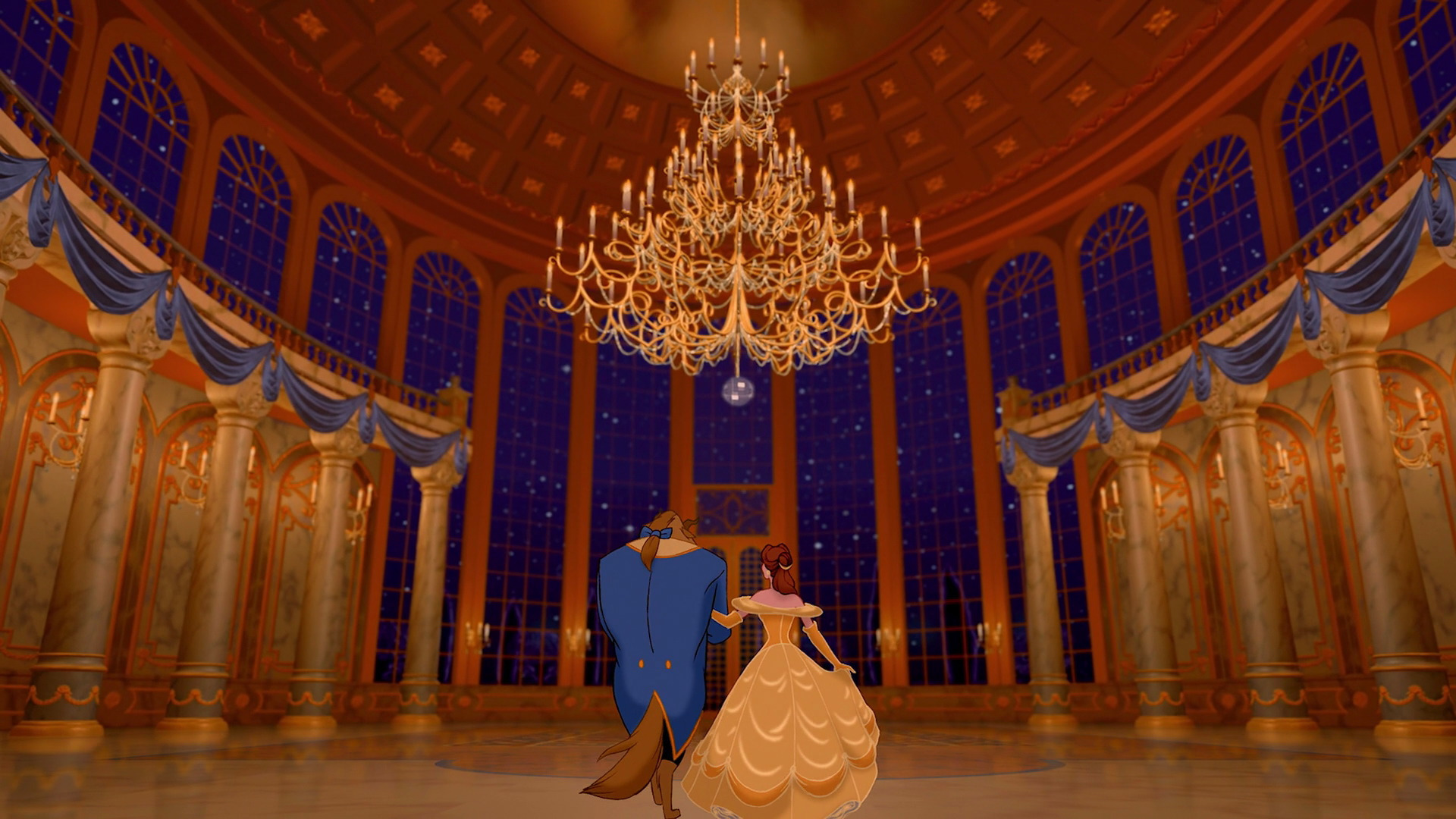
However, in The Rescuers Down Under, the traced over CGI (such as McLeach's monstrous bushwhacker truck) looks better than the pure CG imagery (New York City skyline, the Sydney Opera House), but this was an admirable first attempt to combine pure CGI images with hand-drawn art without making them look hand-drawn. Beauty and the Beast took these ideas further, with a dazzling Rococo ballroom that meshes almost perfectly with hand-drawn Belle and Beast. Aladdin's Cave of Wonders produced mixed results, but The Lion King has the incredible stampede sequence. The use of CGI and the integration of it continued to grow and go through its ups and downs, even after Tarzan... But most of the advancements were being explored during this period.


Quality? Well here's where I get iffy about the whole "Disney Renaissance" label (even though I use it from time to time)... The Little Mermaid, Beauty and the Beast, Aladdin and The Lion King are all very good films, but do they really try anything new? As far as I'm concerned, The Little Mermaid is a hark back to the Golden Age films like Snow White and Cinderella, but at least its story isn't a complete retread of those films' ideas. Beauty and the Beast, Aladdin and The Lion King however, are a bit on the formulaic side. Walt's films weren't, they were all unique and different. Some were even radically different than others (Fantasia is certainly no Cinderella, and Cinderella is definitely no Bambi), the 1990s Disney films feel like they are basically following Mermaid's basic template:

#1. Broadway/pop chart-topper musical numbers that consist of the love ballad, the villain song, the showstopper tune and the "I Want" song...

#2. Good vs. evil story with a love story.

#3. Has to have a cutesy sidekick in it, just for the sole purpose of making the films appeal to toddlers and selling Happy Meal toys. See the behind the scenes woes of Pocahontas for a good example of this. (hint, "If I Never Knew You".)

Not a terrible thing, per se, but certainly a far cry from what Walt was doing. It'd be okay if Disney used this formula for a film every once in a while (minus the pandering), but using it for film after film wasn't the risk-taking Disney should be associated with. The model was to make one film a year, but Jeffrey Katzenberg went about this in a flawed manner: Faster and cheaper. Cheap shouldn't apply to big event Disney animated films, though the budgets got bigger starting with The Lion King.

I also feel that the 1990s films, like example #3 of the formula, try too hard to please children. Walt's films didn't do that, as they took the audience seriously. I think the three rules of the formula are what deflated the Renaissance/hot streak. Adults are a big audience for these films, contrary to popular belief (kids are not the "target audience" of a Disney animated film, and never were), and films like Pocahontas, I believe, scared them off. At the same time, I think people just got tired of same ol' same ol' by that time. Hercules certainly didn't feel any different from the films that preceded it. It became cool to knock Disney for their formula, and it's part of the reason why Shrek was such a big hit. (Ironically, that Disney formula is a thing because of Jeffrey Katzenberg.)


Anyways, the "Disney Renaissance" is simply that time when Disney was huge and popular. Of course, when that supposedly ended in 1999, other animation studios became popular: Pixar, DreamWorks, Blue Sky... The Renaissance for Disney was said to end before the millennium even started...

So, a new "Renaissance"? Well, I don't necessarily think it's a new "Renaissance" per se... I consider the old Renaissance to be a "big era" of sorts. I would say Golden Age, but I usually use the term "Golden Age" to refer to all animation, not just Disney, but you can say 1989-1999 was the studio's own little Golden Age. But see, I think differently. From The Little Mermaid to The Lion King, it was a streak of good films. To me, Pocahontas ended that, but Hunchback was great! But then there was the enjoyable Hercules and the problematic Mulan, but the pretty good Tarzan followed that. The post-1999 films were certainly more experimental, regardless of how they all turned out. It was overall a good and successful era for them. I think Disney had their own Golden Age from 1928 to 1942, but that's another story.

I think this era is a new Golden Age for Walt Disney Animation Studios. When did it begin? In 2008, with Bolt, the first film completely produced under John Lasseter, the first from the fixed studio...


Of course, I have a great deal of respect for Meet The Robinsons. Lasseter did what he could with that film, as it was going to be an absolute disaster. Thankfully, half of it is great, focused and certainly not misguided. He literally steered the ship away from a whirlpool, and firing Chris Sanders from American Dog was an unfortunate happening... But from the way I see it, it had to happen. Bolt is essentially a building block to a better future for Walt Disney Animation Studios. Their reputation was rock bottom after Chicken Little, and Lasseter felt that Sanders' ambitious film couldn't go through at that rate.

It's a very rocky issue with the animation community, but I think Bolt is fine for what it is. Yes, I would love to see American Dog in any possible way, but I understand that the film was most likely riddled with issues and it would've perhaps been an unwise business decision to start production on it with the state that the story was in. Delaying it wouldn't have helped either. That being said, I take Bolt for what it is and I understand why we got this instead of Sanders' film. Lasseter was trying to rebuild Walt Disney Animation Studios reputation, and he had to sacrifice riskiness for the time being for the 2008 release, and then the two films that would follow. I'm sure that Lasseter probably would want something like American Dog to be made, but the timing just wasn't right.

That being said, Bolt may have been on the bland side in terms of the presentation, but it packed a very solid story with a great amount of heart, memorable characters and the good mix of laughs, emotional parts and pure fun. It was a laid-back road movie, and it may not have taken any great risks, but it on its own terms, it's a delightfully well-made film. However, I personally see sheds of what's to come in that film... The Bolt television show sequences are action-packed, reminiscent of the The Incredibles' great action sequences. They're pulled off well, and there's a brief bit towards the end with alien spaceships. Now those were designed well and I can see Disney doing an entire space film like that... In fact, they are!


The Princess and the Frog and Tangled are based on fairy tales, so I think Lasseter had a plan all along... I call this Phase 1 of the new Golden Age. Consider...

Lasseter turned the risky American Dog into the safe Bolt, and followed that up with two fairy tale adaptations that were not far removed from Disney's other fairy tales for a reason, methinks. He basically wanted to win audiences back, audiences who were left cold by Walt Disney Animation Studios' last couple of efforts, and the salvaged Meet The Robinsons most likely wasn't going to start bringing the crowds back in. (Though if you ask me, the bland paint-by-numbers marketing kind of held that film back from doing well at the box office.)

Phase 1 ended with Winnie the Pooh in my eyes, that project was gap filler. A new film based on the character had to be made for some rights reason, so Lasseter had Walt Disney Animation Studios make a good Pooh film rather than have DisneyToon make a bad cash-grab film. (Like we needed another film like Piglet's Big Movie or Pooh's Heffalump Movie?) Plus, 2011 was empty at the moment with King of the Elves set for fall 2012, and Reboot Ralph in spring 2013. Of course, we all know that didn't exactly happen.

But to me, Bolt, The Princess and the Frog and Tangled tread familiar ground and don't take any wild risks. Lasseter's game plan was to make a string of easily marketable films that would do well in the long run (i.e. Frog and Tangled being about princesses, merchandise), and Walt Disney Animation Studios did not slack off in that department. All three films were met with critical praise, Bolt and Frog did decently at the box office while Tangled was the big hit Disney Animation has been waiting for.

So now... We are in Phase 2. (Yes, Marvel is most likely in your right head now...)


Wreck-It Ralph, as I've said many times before, is more akin to something like Atlantis: The Lost Empire or Treasure Planet. It's not a fairy tale nor is it something you'd expect from a Disney animated film. It's about video games, it features settings that you wouldn't expect from a Disney film and in terms of the presentation, it's just different and a real breath of fresh air. That was one of the main reasons I was so stoked about it early on. But the writers and crew married these ideas to a very strong story that barely missed a beat, and one that packed the usual Disney heart and humor. On the other hand, Atlantis and Treasure Planet were risky and ambitious, but they were botched by suits who knew nothing about animation. Wreck-It Ralph gets to be what it wants to be, and as a result, it's such a fantastic film. It was a critical hit, audiences liked it, its loss at the Oscars even inspired a massive albeit misguided backlash. Disney Animation was finally allowed to make the great, risky film they wanted to make a decade ago.


Now, this autumn, Disney goes back to fairy tales once again with Frozen. Many skeptics argue that they are trying to recreate Tangled, which is something I myself was concerned about very early on. But having learned about the story itself, I don't think that'll be the case. Instead, I think it'll resemble Tangled in the way Cinderella resembles Snow White. Cinderella is not a rehash of Snow White, it's just a great story in the vein of Walt's first film. Plus, they are both fairy tales, of course there will be similarities. I think Disney will make fairy tales every once in a while to keep things going. Fairy tales are associated with Disney, so while experimenting, they can still give audiences the familiar fix with films like Frozen and Giants. It's like their top meal on the menu, they can't just stop doing that. At the same time, they look to entice audiences with new kinds of stories. Maybe one day, people will associate big action films - among many others from adventure films to thrillers to dramas - with Disney Animation, rather than just fairy tales and animal stories.

But the good thing is, they don't want to follow a formula. It's not like the 1990s anymore where the writers and artists had to obey the rules. The Princess and the Frog and Tangled are very different in tone, and their stories and structures are both different too. Frog has a big bad villain who toys with dark magic, Tangled has less powerful one that's manipulative. Frog is mostly classical in its dialogue and mood, Tangled is a little more modern and snarky. One involves a lot of magical elements, the other doesn't as much. Frog's musical numbers are big and Broadway-esque, Tangled's are quieter and small. I'm sure Frozen will be similar to both, but different at the same time. The basic plot is already different.


On the other hand, Disney will be trying something new with every other film. Big Hero 6 is something I probably would've never expected them to do ten years ago, adapting a Marvel comic (a lot of good came out of that acquisition, now did it?) that's very much like a manga. Imagine Disney doing a computer animated film that resembled Japanese anime... We're in for a real treat with this one, and Disney will have no problem marketing it since it'll automatically appeal to the demographic that the suits have been chasing for the last five years. It won't be an ordinary superhero film, as the film's team consists of a robot and a man who can transform into a Kaiju. It's set in a stylized city that's an already clever mix of Tokyo and San Francisco, and will probably have lots of sci-fi and action elements. This won't be a diet Incredibles, that's for sure. It's looking to be Disney Animation's first ever anime. That only hints that we'll see even more experimentation in the far future.


Zootopia will take us to a world where it's inhabited by human-like animals only, an extension of that trope that we've seen in countless animated films and cartoons - from Disney's own Robin Hood to DreamWorks' Kung Fu Panda. The concepts and ideas revealed at D23 earlier this month already show the gargantuan amount of potential that this film has, plus the whole framing story leading to a giant conspiracy plot already sounds intriguing. This ain't no Beauty and the Beast! Moana will take us to a Polynesian setting, and its story will most likely enthrall and intrigue. I like it when Disney attempts to look into different cultures for fantasy stories. Films like Pocahontas and Brother Bear, even if the finished films didn't turn out too well. At least there's great ideas there, from Pocahontas' "one with nature" aspect (which I felt should've really been explored) to Brother Bear's great spirits elements (which I felt they went all out with). Disney should do more with this kind of thing, but apply it to an excellent story. Maybe Moana will do just that.

If King of the Elves ever gets back on track, which I'm sure it will in the future, I can see that being a very big, epic fantasy with a touch of quirkiness. Big Hero 6 and Zootopia already seem different and out of Disney's comfort zone, and again, Disney Animation manager Andrew Millstein said that risk-taking is now a go thanks to Wreck-It Ralph's success, and that film's director Rich Moore added that the next slate films will open people's minds up to what a Disney film can be. That statement alone excites me. King of the Elves can be something like The Black Cauldron, except better. I think Disney Animation can pull off something big like The Lord of the Rings, something with compelling fantasy worlds and epic battles. Here's hoping director Chris Williams can get it off the ground soon.

Dean Wellins has had that "teenage space race" film - as Honor Hunter of Blue Sky Disney puts it - in the works for a while, and I can only imagine why it hasn't gotten off the ground yet. Disney Animation and an outer space, sci-fi setting would make for something truly amazing. I just hope that can get the greenlight soon, Honor Hunter seems to think that it'll be the studio's fall 2018 release. The Mickey Mouse film that Burny Mattinson confirmed a while back could be that as well, since Mickey turns 90 by that time... A Mickey Mouse movie would have to really deliver on all fronts as well, since it's the first proper feature-length film based on him. He's an icon, so they'll probably go all out with something amazing.

Now aside from the storytelling of these films, what about advancements in technology and the medium? Well, Bolt was the first Disney film to experiment with a new kind of computer animation - the painterly look. Bolt's art direction had the feel of a painting, and the computer animated characters and objects themselves blended with that. Tangled took this even further, as that had a traditional animation-style coating to it. Frozen is an extension of that, and Giants is rumored to take that style even further.


Then you had Paperman, which was pulled off with Meander. This shows that traditional animation really is alive and well at Walt Disney Animation Studios, and it's been rumored that Moana will be the first feature-length film done in this style, unless Giants does it first. It'll take computer animation to new heights while also differentiating the studio's work from the competition, so maybe people will stop calling Disney's computer animated films Pixar productions. And best of all, it'll keep hand-drawn alive in some form.

Going back to Millstein's "uncorked" comment, I think Wreck-It Ralph started Phase 2 for a reason. Unlike the four films before it, it was the big risk. The test to see if audiences would go see a Disney animated film that wasn't like the usual, and boy did it pay off. Now the game plan is to keep trying new things, like Walt would've done, whilst also visiting the Disney traditions every once in a while.

In all, I think we are going through a new Disney Golden Age. You can call it a Renaissance, but looking back on the Renaissance, I see it as more of a period of good, successful films. Just a solid Golden Age. If I did consider it a Renaissance, then I'd consider this a Renaissance as well. Of course, this opinion may be radical, but I consider this era that's coming to be the real Disney Renaissance in addition to just being a Golden Age. The so-called "Disney Renaissance" to me was just a successful Golden Age for them in terms of their success and their consistency of delivering good to above average films. But this coming era looks like Walt-era Disney reborn with a bite.

Nowadays, Disney is making films with great writing, but will also tackle different genres, themes, settings and stories much like their Emeryville comrades have. The Lasseter era of Disney has only gotten warmed up in the last 5 years, and now with Wreck-It Ralph behind them, they can truly take off.
Tuesday, August 20, 2013

For Future Reference...


Well, the summer animation battle has pretty much come to a close. Yes, Planes might have been out for ten days, but it's pretty much over... So, what are the results and what can they teach distributors in the far future?

The Hollywood Reporter's click-bait title of an otherwise okay box office article would lead you to believe that there was an animation "curse". The Los Angeles Times also gets it dead wrong with their headline, suggesting that the recent string of duds is the result of the amount of animated features out there rather than the quality. Hollywood cranking out too many? Think again.

When will people realize that animated films that bomb do so for a good reason? Cloudy with a Chance of Meatballs 2 is more than going to make these people eat their words (pun shamelessly intended), as its inevitably going to be a big hit. Why's that? It's a sequel to a film that critics loved, audiences of all ages loved and one that's just well-known. The sequel is being marketed right, and many are excited for it. It's clearing $120 million this autumn, guaranteed.

So with that, let's look at the last 5 animated releases...

Monsters University kicked things off to a good start after Epic quietly walked out of the gate (a film that was saddled with its own problems, its performance doesn't really have too much to do with its scheduling), with a big $82 million, certainly a good-sized debut for a Pixar film. So this film was on its way to $300 million domestically, right? Well, along came the minions. Despicable Me 2 opened with $83 million and got an even bigger boost from its Wednesday opening, and in no time in passed $300 million at the domestic box office - the first animated film to do so since Toy Story 3! It will end up with a sub-$400 million gross, which is great for this sequel. Universal calls it their most profitable release ever...

But did Monsters University and Despicable Me 2 perform well together? Well... Sort of... Monsters University, by the time its out of theaters, will have scored below a 3.3x multiplier. That's one above the lowest for a Pixar film: Cars 2. I think Minionmania really sucked the audiences away from Pixar's prequel, plus it's possible that families gravitated towards the Illumination film because Monsters University certainly was one of Pixar's quieter films, one that didn't have a lot of action or spectacle. Despicable Me 2 on the other hand had the laughs, but also the minions, lots of fun action and everything else. Perhaps Monsters University was released a little too close to Despicable Me 2, which was undeniably going to be a titan.

However, both films did very good and that's all that matters. Both were highly anticipated, both delivered, and both certainly appealed to audiences enough. The next three films... Well, that's a different story.

I will give props to Fox marketing for this...

Turbo was shackled by its concept and the marketing didn't differentiate it from everything else, plus it was opening inside the Despicable Me 2 tidal wave. The Smurfs 2 had little to no adult appeal, plus families already saw three other films before it. Had it opened in August, maybe it would've done a little better. Planes? Obviously that wasn't going to be big to begin with.

You need to give adults and teenagers a reason to go see your animated film, and that also includes parents who might not want to subject themselves to something like The Smurfs 2 in the theater. You not only have to have one that's good for them, but you need to make it look good to them. Monsters University is a prequel to a beloved animated classic that adults and children adore. Despicable Me 2 is a sequel to a recent animated hit that both adults and children loved. No surprise those two did very well, and they are the first animated films to cross the $250 million mark since the original Despicable Me... Three summers ago!

It all boils down to the content of the films, the marketing and timing. Perhaps if these studios spaced their films out a bit more, I think all of them would've done okay business. Why wasn't something like Epic or Turbo an autumn release? Or a Christmas release? What about... Mid-August?

Now, what does this mean for the future?

2015 is crammed. Monster Trucks kicks off a similarly large animation battle that'll end in late July with the Smurfs three-quel. I think this isn't going to be pretty, and many other planned 2015 animation releases haven't even been scheduled yet, such as Aardman's Shaun the Sheep, Rainmaker's Ratchet & Clank and if one is coming, a Planes three-quel. (Going by what Blue Sky Disney's Honor Hunter said recently, there will be definitely be a third one.) That year's holiday season is going to get a bit hairy as well.

Which makes me wonder, how come studios aren't spacing their work out a little more? Shouldn't someone opt for an August release? Or an April one? I don't know, it just seems like a couple of them may underperform because they're being released so close to each other. We also don't know what the quality be like on films like Monster Trucks and B.O.O.. Also, 20th Century Fox's plans to open their own animated releases on the same days/months as some Disney or Pixar films (i.e. Blue Sky's Peanuts vs. Finding Dory in 2015, How To Train Your Dragon 3 vs. Dia De Los Muertos in summer 2016) could possibly backfire, or their plans to release them very close to whatever Disney or Pixar is releasing. People will go see the films that will appeal to them the most.

But aside from the timing, we need better quality films from all the studios and a much more diverse selection of films. I know that's a lot to ask for, but you can't just throw a cute family-friendly animated film out there expecting it to do well just because it's cute and it'll appeal to family audiences. You need to get the adults in the theater too! To do so, you got to make a film that will appeal to them or market it so that it will appeal to them!


Next year might just prove my point, look at what we're getting: The Lego Movie, Mr. Peabody & Sherman, The Good Dinosaur, How To Train Your Dragon 2, Big Hero 6. To me, those movies are guaranteed hits because they'll appeal to adults and some of them are sequels to beloved films (How To Train Your Dragon 2 might just pull a Despicable Me 2 next summer), and there's potential money to be made in films like Mr. Peabody & Sherman and Rio 2. The Boxtrolls and Book of Life are the risky types, but I've rambled about this before - we need to make these films successful. Things people should get excited about after seeing a trailer or commercial. It's time we really make more kinds of animated films successful with mainstream audiences, in theaters! More adults-only animation! A diverse selection of animated films from the big studios! Family films, adult films, independent films! Animation is more than just family films and silly comedies. That's another story, though...

So yeah, maybe some studios might want to look into the quality of their films and the timing. Some studios might want to try something new and not follow a formula. Not to sound like a broken record here, but look! Rango did it!

In the mean time... Shut up, press. And to the LA Times writer, animation is not genre. How many times does it have to be said?