Wednesday, April 18, 2012

Best Animated Short - 1997


Ah, we have now arrived at the year of the very first Oscar ceremony that I had watched, the one transformed me into an Oscar maniac. The ceremony was held on March 23, 1998. At the time I knew the Oscars were the major film awards, and I had watched parts of the ceremony from 1993 (when Deborah Kerr received an Honorary Oscar) and 1995 (when Babe won Best Visual Effects and Anne Frank Remembered won Best Documentary Feature). However, I didn't pay attention to it and didn't even know they were being held that night until I came downstairs and saw it playing on the TV. I came down around just as the show was starting, catching parts of Billy Crystal's opening movie when he inserts himself into the Best Picture nominees. It didn't mean much to me, since the only Best Picture nominee that I knew of was Titanic, which I hadn't seen since I elected to stay home when my family went to watch it. Still, even though I wasn't invested in any of the nominees, I decided to stay and watch the ceremony.

Read more »

Tuesday, April 17, 2012

"Wreck-It Ralph"'s First Poster Makes Its Debut

It's about time. Disney has finally released something that has to do with their upcoming animated feature Wreck-It Ralph. It's not a trailer, unfortunately, but a poster... A great poster at that! It's not like the usual posters for Disney animated films, or most animated films in general. A great retro design that reminds us of the days when video arcades ruled, the poster shows Wreck-It Ralph himself in his 8-bit form with the release date in the 8-bit font. It's certainly an attention-grabbing poster (it's already getting praise for its retro design), and it shows that this is not going to be your typical animated film.


... Which is a good thing, because Walt Disney Animation Studios (as I've said many times before) have made some really good films in the past five years since Michael Eisner stepped down as CEO of The Walt Disney Company, and they need to show audiences and movie-goers early on that these films are worth seeing in theaters. Compare this to the posters for, say, Bolt... Big difference! Like I said, this will be something different, and this poster proves it. No cutesy stuff or what you'd come to expect on a Disney poster. It's minimalist, retro and interesting.

There's only one thing this poster is missing: THE TITLE! Oh well, the Facebook page is on it. So Disney might be learning their lesson after the way they marketed The Princess and the Frog, John Carter and several other films. The good thing is, they at least got a poster out. This also means that we may get a trailer for the film very soon. I'm hoping they release one before Aardman's The Pirates! In an Adventure with Scientists! (or Band of Misfits, if you want to go by the US title) or before The Avengers. The Avengers would be a smart choice, since that's obviously going to be huge. I'm just hoping they don't wait until Brave comes out to unleash the trailer.

If they go ahead with a very strong marketing campaign, Walt Disney Animation Studios might see another Tangled-sized smash hit, but this time, an ambitious film will be the box office champion and open people up to what a Disney animated feature can be. If it goes over well, we'll probably see more risky efforts like this one.

What are your thoughts on this poster? Are you anticipating this film? Do you think it will be another home run for the Mouse House? Sound off!

Saturday, April 14, 2012

Documentary Short Highlight - Sunrise Over Tiananmen Square (1998)


Ah, the Best Documentary Short category. Of the three short film categories, it seems like this one is the one that is most frequently overlooked. At least it's the one I always overlook, especially now since I am so biased towards the Animated Short category. I can look back at the nominees and even winners from the years since I started following the Oscars and be like, "What? I never heard of this before." However, by ignoring this category I am missing out. One thing we learned about the short categories from looking over the rules back in the 2000 review was that animated documentaries can qualify for either the Best Animated Short category or the Best Documentary Short category. If you're too lazy to look it up yourself, the rule reads: "Documentary short subjects that are animated may be submitted in either the animated short film category or the documentary short subject category, but not both." That is how When Life Departs was nominated for the Best Animated Short category in 1998, because the makers submitted it in that category.

Read more »

Friday, April 13, 2012

Python 3.2.3. released.


Python 3.2.3. was released yesterday, it's the next stable version. Python is an open source object oriented dynamic programming language, becoming the standard in all major 3D graphics software. It is used today in Autodesk Maya and 3ds Max, Nuke, Houdini, Cinema 4D, Fusion and Blender. Python is also used to create games, like 'Sid Meier's Civilization IV' (2k Games) and Battlefield 2142 (EA).

Python was developed by Dutchman Guido van Rossum in 1989 at CWI Amsterdam ('Centrum Wiskunde en Informatica' or 'National Research Institute for Mathematics and Computer Science'), one of the leading European research centers in the field of mathematics and theoretical computer science, founded by Johannes van der Corput and his collegues in 1946.

Van Rossum's work is greatly respected in the open source community, earning him the BDFL title ('Benevolent Dictator for life') as he's still the authority behind Python and decides it's future course.  See what's new in Python 3.2 or check the main site and download it for free here.

As of version 3.0, Python programmers are sort of in a state of dilemma. Version 3 is actually a mutation and incompatible with previous versions, which are widely used all around. Both versions are now updated and available and it will take a long time before the newer Python has completely taken over. So while 3.2.3 is the latest, version 2.7.3. was also released. The 2.7 series is scheduled as the last major version in the 2.x series.

Below left: Guido van Rossum is still a big fan of 'Monty Python's Flying Circus' (after which he named his project in 1989). He now works for Google, who's search engines rely heavily on his programming language. Right: Mark Lutz's bestselling two-volume set from O'reilly is excellent if you want to get into learning Python. Guido van Rossum's blog.


2011's Animation Box Office: An Alternate History

Alright ladies and gentlemen, it's time for a rather optimistic, strictly opinion-based alternate history of one of animation's lousiest years... This past year. Let’s just say 2011 wasn’t the depressing year in box office that it was, how would 2011’s animated crop perform at the domestic box office? Here's my take...

January 2011... Animation fans fondly look back on the previous year as it was a great year in animation. It’s animation domination. Toy Story 3 becomes the highest grossing animated film of all time worldwide (and gets a Best Picture nomination, indicating that the Academy Awards are finally starting to realize that animation is an art form), DreamWorks steps up their game with How to Train Your Dragon which goes on to become one of their most successful non-sequel films while getting excellent reviews. Disney scores their first box office smash hit since the 1990s with the critically acclaimed Tangled. Illumination enters the field successfully with the wildly successful Despicable Me, which still manages to get good reviews. Most of the good animated features do well at the box office, while the crappy ones (Alpha and Omega, for instance) don’t fare so well. 2010 was a fine year for the medium and it went on to show that audiences will show up for quality films. Where do we go from there? In this alternate history, the economy doesn’t take the huge dip that it did. In fact, it only gets better.

2011's animated crop has lots of potential. We have a sequel to one of DreamWorks' more popular films, a new Pixar film as always that's also a sequel, a wildly original Western directed by Pirates of the Caribbean trilogy director Gore Verbinski, a fun film from Blue Sky about colorful birds set in Rio de Janeiro, a sequel to Happy Feet, a film starring the well-liked Shrek character Puss in Boots, and a hand-drawn film from the Mouse House about the beloved Winnie the Pooh. Then there's stuff like The Smurfs, Hoodwinked Too! Hood vs. Evil and Hop, who knows how that stuff is going to do.

The first film out of the gate is Touchstone/Starz’s Gnomeo & Juliet. A project that was on and off at the Mouse House for years that was pretty much Elton John's pet project. It opens with $25 million and shocks everyone. It does well because it’s the only family-friendly film that’s available at the moment in theaters. It comes close to $100 million, despite getting mixed reviews.

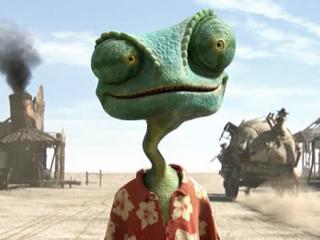
All of a sudden, Paramount’s Rango appears at the beginning of March. With confident marketing behind it, this decidedly more adult animated film scores $60 million on its opening weekend since March is a hot spot for big blockbuster releases. While several parents complain that the film is too risque for kids, it goes on to make $190 million at the domestic box office and $350 million worldwide. This indicates that audiences are now warming up to artistic experiments in animation, and the critics had nothing but great things to say about it. The success of the film gives Paramount confidence in setting up their own animation studio to do equally groundbreaking projects. Other studios take note of this and start green lighting experimental animated films for mass audiences.

The week after Rango debuts comes Disney and ImageMovers' motion-capture disappointment called Mars Needs Moms. Critically panned, the film becomes one of Disney’s biggest bombs and only grosses less than $60 million worldwide against a $150 million. It singlehandedly kills Robert Zemeckis’ brand of motion capture, thus leading Disney to scuttle his planned remake of Yellow Submarine. Disney considers dropping "Mars" from its upcoming sci-fi action epic John Carter of Mars, but the studio realizes that Mars Needs Moms bombed because it wasn't good, so John Carter of Mars' title isn't changed.

On April 1, Illumination released the Easter-themed Hop, which only cracks $90 million domestically because of the holidays. It doesn’t interest anyone else, being more kid-friendly than Despicable Me. On April 27th, the long-delayed Hoodwinked Too!: Hood vs. Evil (an unwanted sequel to a film that really wasn't that successful to begin with) comes and goes. In the middle of the month, we get Rio from Blue Sky, a colorful romp that's sure to please everyone. It does so, from critics to audiences. Grossing $46 million on its opening weekend, it has no competition for a month and grosses $165 million. It's an Ice Age-sized hit for Blue Sky. Worldwide, it's a huge hit.

Now we move into May, this is when the heavy-hitters come. Paramount and DreamWorks realize early on that releasing Kung Fu Panda 2 against The Hangover Part II isn’t such a bright idea. They schedule it for May 13th, with absolutely no competition going against it. The marketing is given an extra kick, so it isn’t lazy. Kung Fu Panda 2 trumps its predecessor’s opening weekend with $80 million. Given the popularity of the first film, the sequel took off from there. With a multiplier that equals its predecessor, the film takes in over $280 million domestically and with a $580 million overseas gross, the sequel makes $860 million worldwide. It puts it alongside the highest grossing animated films ever, and on top of that, it gets great reviews as it indicates that DreamWorks is getting better and better.

The big animated event for 2011 comes, the Pixar film, but wait... It disappoints critics and audiences. Cars 2 still pulls in $85 million on its opening weekend due to people trusting Pixar and kids loving the first film, but with poor legs, it grossed over $210 million, even less than what the first film made without 3D six years ago. Still, it takes in over $650 million worldwide so it isn’t viewed as a financial disappointment. Disney rolls in the dough and figures they don’t have to ask Pixar for another one since a direct-to-video spinoff is sure to make more for them when it hits shelves in 2013. While people are disappointed with the film, they don’t lose an ounce of respect for Pixar. The teaser trailer for Brave already generates lots of buzz for being different from the usual Pixar teasers.

Next up is Walt Disney Animation Studios’ next hand-drawn film, the simplistic and charming Winnie the Pooh. Disney originally planned on releasing the film on July 15th, the day the final Harry Potter was slated to open. Someone with common sense asks Disney to move the release date, so they move it to the first weekend of August. Marketing fires up after the first trailer premieres before Tangled in November 2010, playing up the nostalgia to the teen crowd like some of Toy Story 3’s marketing did while also making it look appealing to adults.

Winnie the Pooh opens in August and opens with a decent $28 million and pulls strong legs, working its way up to $100 million domestically while getting critical acclaim left and right, and taking in $200 million worldwide. Meanwhile, Sony Pictures Animation’s shameless attempt at modernizing the characters from a popular comic strip and cartoon, The Smurfs, opens before it but it crashes and burns. The film misses $100 million domestically. Audiences are smart enough to avoid it, although the kids eat it up so it still grosses $70 million. Worldwide grosses save the film.

Then all of a sudden, out of nowhere, a 3D re-release of Disney’s The Lion King pops up (also in 2D, to satisfy those who are sick of pointless 3D) and grosses $150 million domestically and $100 million worldwide. With the re-release totals added to the original and 2002 re-release grosses, the film now has grossed $478 million domestically making it the highest earning animated film domestically defeating DreamWorks' Shrek 2. With the worldwide totals, it has grossed $1 billion worldwide and is only behind Pixar's Toy Story 3. The title has been in the vaults since the Platinum Edition DVD went out of print, which is why the re-release is a success, and the Diamond Edition will follow after the re-release. The success of this re-release plus the success of Winnie the Pooh proves that hand-drawn animation is still alive and well. Disney plans several re-releases of their classics, including the Pixar films. Beauty and the Beast 3D is scheduled for January 2012, with more planned for 2012, 2013 and even 2014.

DreamWorks’ next and last release for the year, Puss in Boots, opens with $44 million as people reject it at first being sick of all the countless Shrek films. But to their surprise, it’s actually a good film and it has very strong legs. The film crosses $200 million by the time it’s out of theaters, another $200 million grosser for DreamWorks. A few weeks later, an unwanted, unnecessary sequel to Happy Feet hit theaters. With bad critical reception and barely any marketing, it comes and goes, deservedly. It doesn’t make half of what the original made.

On Thanksgiving week, Sony Pictures Animation and Aardman Animations roll out Arthur Christmas. This sweet, sentimental Christmas film satisfies audiences. It takes in $30 million on its opening weekend. It competes with two big family films, The Muppets and Hugo, but all three films clear $100 million domestically. Arthur Christmas becomes the first Aardman film to make that amount since Chicken Run.

Last but not least is Steven Spielberg’s The Adventures of Tintin, despite being a performance capture film, it still looks good. The film has already taken in $200 million overseas. The marketing mentions the original comics by Herge while also reminding 90s kids of the Tintin animated series that aired on Nickelodeon back in the day by attaching Nickelodeon’s name to the film, which also attracts family audiences the same way Rango did. The Adventures of Tintin opens amidst a box office battlefield (Mission: Impossible - Ghost Protocol, The Girl with the Dragon Tattoo and Sherlock Holmes: A Game of Shadows) but it takes in a good $35 million on its opening weekend and finishes up with $155 million thanks to holiday legs. Family audiences see the Raiders of the Lost Ark-style action adventure film instead of the movie with the chipmunks singing pop songs that will already age horribly by next Christmas.

So basically, 2011 repeats the success of 2010, though there isn't any $400 million or $300 million grossers. It's still a fantastic year for the medium, as all the good stuff succeeds. Rango gives mass audiences a different kind of animated film, the DreamWorks films entertain and tell good stories, Rio entertains audiences while not completely pandering to kids, Pixar has one minor flub that still does well, Winnie the Pooh's success paints a good future for hand-drawn animation along with the re-release of The Lion King, and Arthur Christmas opens audiences up to the works of Aardman. The Smurfs only entertains kids, and leaves adults alienated, ditto Hop. Happy Feet Two fails to live up to its predecessor and underperforms. Mars Needs Moms bombs. Hoodwinked Too! is ignored. It's a great follow-up to 2010 and it gives animation fans high hopes for the future.

Domestic Totals
1. Kung Fu Panda 2 - $280 million
2. Puss in Boots - $214 million
3. Cars 2 - $210 million
4. Rango - $190 million
5. Rio - $165 million
6. The Adventures of Tintin - $155 million
7. The Lion King in 3D - $150 million
8. Arthur Christmas - $130 million
9. Winnie the Pooh - $110 million
10. Hop - $91 million
11. The Smurfs - $70 million
12. Happy Feet Two - $64 million
13. Mars Needs Moms - $21 million
14. Hoodwinked Too! Hood vs. Evil - $8 million

Worldwide Totals
1. Kung Fu Panda 2 - $860 million
2. Cars 2 - $650 million
3. Puss in Boots - $629 million
4. Rio - $523 million
5. The Adventures of Tintin - $466 million
6. The Smurfs - $423 million
7. Rango - $358 million
8. Arthur Christmas - $256 million
9. The Lion King in 3D - $250 million
10. Winnie the Pooh - $215 million
11. Hop - $160 million
12. Happy Feet Two - $140 million
13. Mars Needs Moms - $49 million
14. Hoodwinked Too! Hood vs. Evil - $12 million

And there you go... That's my alternate 2011 story. Again, this was only for fun and who knows if this would've happened or not. If you have an alternate history of sorts, be sure to share yours? Did you think 2011 was really all that bad of a year for animation? Or do you think otherwise? Please share your thoughts and what you think the year should've been like for animation.

Thursday, April 12, 2012

"Dr. Seuss' The Lorax" Crosses $200 Million at the Domestic Box Office

Yesterday, Universal/Illumination's Dr. Seuss' The Lorax crossed $200 million at the domestic box office, the first animated film to do so since Disney's Tangled in spring 2011. It currently stands at $200.7 million, as well being the second highest grossing animated film released in March behind DreamWorks' How to Train Your Dragon. (It's possible that this will outgross it by a hair) To me, this is both a good thing and a bit of a bad thing for animation at the domestic box office. While I didn't think The Lorax was mediocre, it surely wasn't great either. Parts of it were entertaining and enjoyable, and most of the characters were likable. On the other hand, it was filled with some of the sugary things that tend to make animation look like a kid's thing. I'm all for animated comedies, and when they are pulled off well, they are good. The Lorax somewhat succeeds in doing this, but what doesn't soar is close to mediocre and at times cringe-worthy. All in all, it was a romp that was pretty much Despicable Me meets Dr. Seuss, but this time around, there isn't as much charm. It does feel very conventional and audience-friendly, and at times it panders to the younger set. It's an average animated film at best that's got its fair share of entertaining moments. However, you may disagree, and that's fine. What did you think of the film? Did you like it? Did you hate it? Was it just "meh" to you? I'm all ears.

Anyways, the fact that this was a success while films like RangoArthur Christmas and The Adventures of Tintin struggled at the box office somewhat annoys me. Again, I enjoyed The Lorax and thought it was a pleasant little diversion, but nothing more than that. Let's go back to March 2011, when Paramount's Rango hit theaters. This groundbreaking collaboration between ILM, Blind Wink and GK Films was surreal, off the wall and unlike anything else while still being conventional enough to entertain audiences. Yet this film was a moderate success at best, grossing $123 million domestically and getting mixed reactions from audiences. Dr. Seuss' The Lorax, with its candy-coated visuals and tone, was more family friendly and ultimately outgrossed every animated film that was released in 2011. Arthur Christmas was another one, it was coming from a studio who only scored one hit in the states, and it was lost in the shuffle. The Adventures of Tintin might've been directed by Steven Spielberg and produced by Peter Jackson, but it seems like Americans weren't too familiar with the source material. Both films had good legs, but they both missed $100 million domestically.

This is somewhat telling, that the domestic market (remember domestic doesn't just refer to the US) might only like derivative comedies, but if that is so, why did the recent Alvin and the Chipmunks movie underperform? While its legs were strong, it still wasn't the smash hit that the first two were. The Lorax got to where it got because of that opening weekend. I don't think anybody expected $70 million for this film. I thought my $45 million opening weekend prediction was a little too high. Anyways, The Lorax will probably finish with less than $220 million. If it does, it'll indicate that it certainly wasn't a huge hit with audiences after its opening. (You got to remember the aggressive marketing behind this thing, and the fact that it's based on a Dr. Seuss book) This means that the film will probably score a 3x multiplier at best, which is lower than the multiplier Dr. Seuss' Horton Hears a Who! pulled back in 2008, without 3D. Also consider that this isn't a summer release, and family films do better during the summer since kids are out of school. If The Lorax was released around the time Despicable Me hit in 2010, $250 million would've been in play. Maybe, but this was clearly an audience-friendly animated film outside of Pixar and DreamWorks' films.

I'm perfectly fine with Pixar's films grossing $200 million every year, since they don't pander to any specific audience, ditto some of DreamWorks' recent efforts. Disney's films don't do so well because they are crippled by awful marketing campaigns. (I already voiced my frustrations about that on the last post) Then you've got your Blue Sky and Sony films that do reasonably well. Then you have your Rangos and Tintins that just don't catch on. How come films like these are ignored? Why can't they catch on? How come they aren't appealing to audiences? Here's some theories as to why they didn't do so well. Rango could've been a huge success, but it wasn't. Why? Too weird for family audiences, maybe? The problem is, there's still tons of adults and teens who won't attend an animated film or will regard it as a "kids only" flick (I always to have to point that out), and without family audiences, an animated film just seems to crumble. This is why anything animated that has a PG-13 or R rating won't come anywhere near $100 million at the domestic box office, unless it's based on something everyone knows that has been loved over the years. (The Simpsons Movie) Okay, maybe Rango was a little unconventional with its character designs and surreal tone, but certainly something like Arthur Christmas could catch on right? It's got appealing characters, funny elves and it's a warm sentimental Christmas story. Sounds like box office gold... It didn't even reach $50 million! Maybe it's because it was crammed between other family films that also disappointed at the box office (remember, The Muppets didn't really take off after its solid opening). The Adventures of Tintin was arguably more conventional than Rango, and that too missed $100 million. Okay, maybe American audiences aren't familiar with the source material, but even if they weren't, they would still see a classic action-adventure film regardless of what it's based on, right? The marketing didn't really establish who Tintin is, the trailers and commercials didn't really clue American audiences in on the original comics, and it wasn't an easy sell to begin with. It just looked like a generic action film to those who don't know about the original comics. Paramount probably assumed that audiences would go see a Raiders of the Lost Ark-style Spielberg film regardless of what it was based on and kids would beg their parents to take them because it has a comical dog in it. It was released amidst heavy competition and had to rely on legs to get it up to $77 million. Thankfully, it was a bigger success worldwide.

Anyways, enough with the debbie-downer stuff, it's nice to see an animated film actually clearing $200 million at the domestic box office. Sure, Cars 2 came close, but it seemed like $200 million was unreachable for this year's animated crop, even Brave. Well, with The Lorax doing well along with films like The Hunger Games breaking records, 2012 might be a great year for animation since it's already a great year for box office in general. I once referred to The Lorax as being the great decider of the fate of animation here in the states, and with it breaking $200 million, I am confident that we'll see a few other $200 million grossers this year. Maybe even a $300 million grosser. (I'm hoping that will be Brave) Now I know box office does not equal quality filmmaking, but if very high quality films (other than Pixar's) catch on at the box office, we might see a bright future for animation here in America.

As a side note, here are my current predictions:
The Pirates! In an Adventure with Scientists! - $66 million
Madagascar 3: Europe's Most Wanted - $117 million
Brave - $302 million
Ice Age: Continental Drift - $148 million
ParaNorman - $78 million
Hotel Transylvania - $102 million
Frankenweenie - $90 million
Wreck-It Ralph - $152 million (Come on Disney, start marketing this film!)
Rise of the Guardians - $204 million

The success of The Lorax indicates that there will be a good future for the medium, and that audiences are still interested in animation. Let's just look at 2011 and chalk it up to it being a bad year for box office in general. I wonder what would've happened if Rango or Tintin or Arthur Christmas were released this year, or better yet Cars 2, DreamWorks' two films and Rio. Would they have made more? What do you think? Do you think The Lorax being a success is a good thing or bad thing for animation here in the states? Also, how much do you think the other animated films will make this year? Sound off!

Wednesday, April 11, 2012

Best Animated Short - 1998


We have arrived to the wonderful year of 1998, currently my favorite year for reasons that are beyond this blog. That was the year that I became a fan of the Oscars. I'll go into more detail about this in the next entry, but suffice it to say I was hooked after watching the ceremony in March. I committed the list of Best Picture winners to memory, and would spent the next several months watching as many of them that I can. So when the nominations were announced in January, I was all over it. Of course, at the time I was all over the Best Picture category, and that was where I focused most of my attention. That was the year Saving Private Ryan burst onto the scene, showing that there was still hope for the summer blockbuster. I saw it on its re-release after the nominations were announced and that was who I was rooting for, but even then I had heard about the Weinstein Machine, and knew nobody could top Shakespeare in Love.

Read more »